Workforce strategy basics: reduce turnover & boost potential

TL;DR:
- A structured workforce strategy addresses root causes of turnover, such as misaligned roles and unmanaged strengths.
- Psychometric assessments reveal personality and motivation, improving role fit and reducing turnover up to 32%.
- Combining competency, skills, and psychometric frameworks with digital tools enhances team performance and retention.
Salary increases feel like the obvious fix when people keep leaving. But most executives who chase that solution find themselves right back at the same problem six months later. The real issue runs deeper: people leave managers, misaligned roles, and environments where their strengths go unrecognized. A structured workforce strategy, anchored by psychometric assessments and smart talent allocation, addresses those root causes directly. This guide walks you through the core frameworks, the tools that work, and the mindset shifts that separate companies with thriving teams from those stuck in a costly revolving door.
Table of Contents
- What is workforce strategy and why does it matter?
- Core frameworks for workforce strategies
- How psychometric assessments drive better outcomes
- Putting workforce strategy into action: From plan to outcomes
- Why classic workforce strategy advice misses the mark
- Elevate your strategy with the right tools
- Frequently asked questions
Key Takeaways
| Point | Details |
|---|---|
| Strategy beats guesswork | A defined workforce strategy enables smarter hiring, lower turnover, and better team performance. |
| Assessment drives fit | Psychometric assessments match people to roles, drastically cutting churn and boosting engagement. |
| Frameworks enable action | Modern frameworks and digital tools make it easier to implement, track, and iterate successful strategies. |
| Continuous improvement wins | Iterative feedback and analytics are essential for keeping your workforce strategy effective in a changing environment. |
What is workforce strategy and why does it matter?
A workforce strategy is a structured plan that aligns how you attract, develop, and retain talent with your actual business goals. It is not just a headcount plan or a hiring calendar. It is a living framework that answers: Do we have the right people, in the right roles, with the right support, to achieve what we are building?
For companies under 20 employees, informal approaches often work. Everyone knows everyone, gaps are visible, and adjustments happen naturally. But once you cross that threshold, complexity multiplies fast. Communication breaks down. Role clarity blurs. The cost of a bad hire or a disengaged team member becomes significant. This is the workforce complexity inflection point, and most companies hit it without a plan.
One of the biggest myths is that workforce strategy simply means hiring more people. In reality, the most effective strategies focus on smarter allocation, clearer development paths, and understanding what motivates each person on your team. You might find that a high performer is stuck in a role that fights their natural personality, and a simple shift unlocks enormous value without a single new hire.
The data backs this up. Companies with a defined workforce strategy retain talent 35% longer, according to the Workforce Planning 2026 Strategic Impact Review. That is not a marginal gain. That is a structural advantage that compounds over time through lower recruiting costs, stronger institutional knowledge, and better team cohesion.
With 2026 employment law trends pushing new compliance requirements around pay equity, worker classification, and psychological safety, having a documented strategy is no longer just smart, it is increasingly necessary.
Here is what a well-built workforce strategy delivers:
- Reduced turnover through better role alignment and clearer growth paths
- Higher engagement because people understand how their work connects to company goals
- Faster onboarding when roles are clearly defined and matched to personality fit
- Stronger team dynamics through intentional team composition
- Better compliance readiness as documentation and process become embedded
“Strategy is not about doing more. It is about doing the right things with the people you already have.”
Exploring talent retention strategies built around personality fit, rather than perks alone, is a strong starting point. And if you want to see how smarter talent allocation methods can optimize team performance without adding headcount, that shift in thinking is where real leverage begins.
Core frameworks for workforce strategies
Not all workforce frameworks are created equal. The one you choose should match your company’s stage, culture, and the specific problem you are trying to solve. Let us break down the three most widely used approaches.
Competency-based frameworks define the behaviors and capabilities required for each role. They are excellent for performance reviews and promotion decisions, but they tend to be static and miss the nuance of how personality shapes long-term fit.

Skills-based frameworks catalog what employees can do. Skill-based frameworks reduce hiring mismatches by 40%, according to Harvard Business Review, making them powerful for recruitment and gap analysis. The limitation is that skills can be learned. They do not tell you whether someone will thrive in a role or burn out within a year.
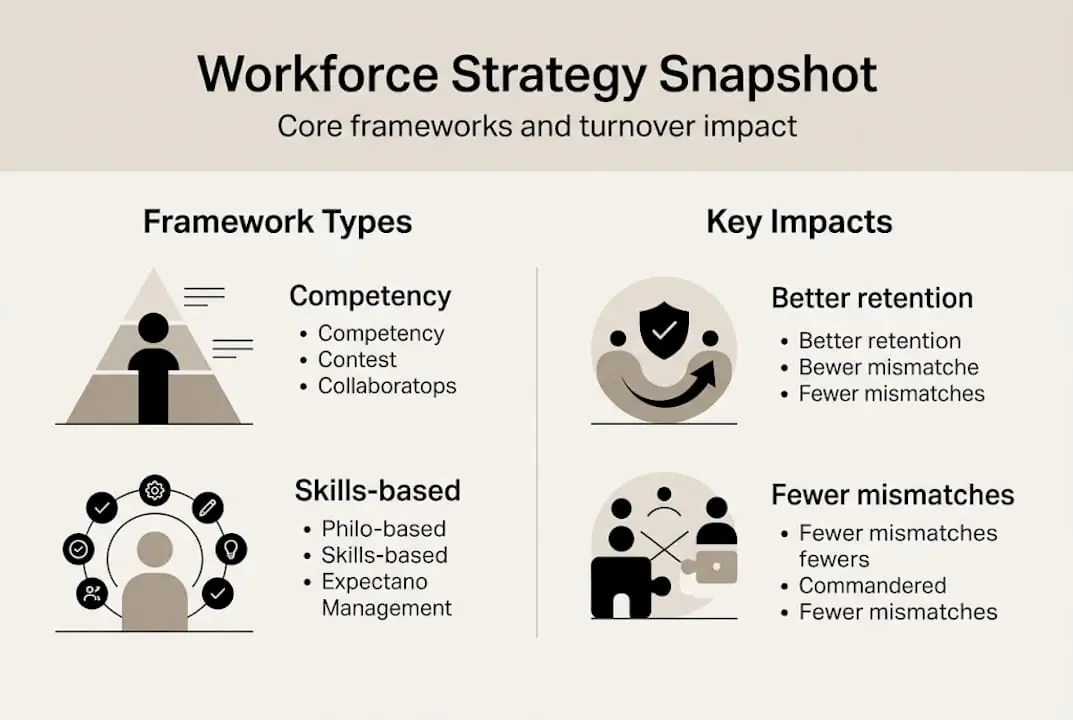
Psychometric frameworks go deeper by assessing personality, cognitive style, and work preferences. They reveal why someone performs the way they do, not just what they can do.
| Framework | Best use case | Key limitation |
|---|---|---|
| Competency-based | Performance reviews, promotions | Static, misses personality fit |
| Skills-based | Recruitment, gap analysis | Skills can be learned; no depth on motivation |
| Psychometric | Role alignment, team design, retention | Requires skilled interpretation |
The smartest companies blend all three. Here is a practical sequence for implementing workforce models:
- Audit current roles against business objectives to identify misalignments
- Map competencies required for each function at each level
- Run a skills inventory to surface gaps and hidden strengths
- Layer in psychometric assessments to understand personality and work style fit
- Redesign roles or shift team members based on combined data
- Review outcomes quarterly and adjust as the business evolves
Before rolling this out, make sure your recruitment planning process is aligned, so new hires enter a system designed for their success. And if leadership is still debating whether investing in talent through personality-focused assessment is worth the effort, the retention and performance data make a compelling case.
Also keep an eye on compliance trends for 2026, as new regulations are reshaping how assessments must be administered fairly.
Pro Tip: Do not wait until you have the perfect framework in place. Start with one team, blend two frameworks, and let real data guide your next move. Perfection is the enemy of progress here.
How psychometric assessments drive better outcomes
Psychometric assessments measure what resumes and interviews often miss: personality traits, cognitive preferences, emotional tendencies, and intrinsic motivators. When used well, they do not just inform hiring decisions. They reshape how you design roles, build teams, and support people over time.
There are several types worth knowing:
| Assessment type | What it measures | Best-use scenario |
|---|---|---|
| Personality profiles | Traits, work style, social preferences | Role fit, team composition |
| Cognitive ability tests | Problem-solving, reasoning speed | Complex or analytical roles |
| Emotional intelligence | Self-awareness, empathy, resilience | Leadership, client-facing roles |
| Work preference surveys | Motivation, environment needs | Retention, job redesign |
At Sparkly, we focus primarily on personality because skills can be learned. What cannot be easily changed is whether someone is wired for deep independent focus or thrives in high-collaboration environments. Placing the wrong personality in the wrong structure creates friction that no training budget can fix.
📈 Statistic callout: Using psychometric assessments can reduce turnover by up to 32%, according to the Deloitte Global Human Capital Report 2026. For a company of 50 people, that translates to significant savings in recruiting, onboarding, and lost productivity.
Here is what businesses consistently report after implementing psychometric tools:
- Faster identification of high-potential employees who were previously overlooked
- Stronger team cohesion when personalities are mapped and balanced intentionally
- Reduced conflict because managers understand communication preferences
- More confident hiring decisions backed by data, not gut instinct
- Higher engagement scores within six months of role realignment
Leading businesses do not just run assessments and file the results. They act on them. They use HR analytics essentials to interpret patterns across teams and track how role changes affect performance over time. They also apply talent assessment tips to continuously improve team dynamics rather than treating assessment as a one-time event.
What makes Sparkly’s approach different is the fusion of four data sources: human judgment, AI analysis, psychometric results, and Human Design. Each source alone is unreliable. Together, they create a higher-probability picture of who someone really is and where they will genuinely thrive.
Putting workforce strategy into action: From plan to outcomes
Frameworks and assessments are only as valuable as the action they inspire. Here is how to move from strategy on paper to measurable outcomes in your organization.
- Audit your current team by role, personality profile, and performance data
- Identify misalignments where people are in roles that conflict with their strengths
- Redesign or shift roles based on assessment insights, not just seniority
- Choose digital tools that track engagement, performance, and retention in real time
- Communicate transparently with your team about what the strategy is and why it matters
- Measure outcomes at 30, 60, and 90 days post-implementation
- Iterate continuously based on what the data and your people are telling you
Digital tools are essential here. The right HR team management tools make it practical to track progress without drowning your HR team in manual reporting. And integrating analytics in HR into your regular rhythm means you catch problems early, before they become turnover events.
⚡️ Businesses using continuous workforce analytics report 25%+ improvement in team performance, according to the Gartner Workforce Analytics Benchmark 2026. That kind of lift comes from consistent measurement and willingness to act on what the data reveals.
Pro Tip: Do not try to roll out your full workforce strategy across the entire company at once. Start with one pilot team, gather real data, refine your approach, and then scale. This reduces resistance and gives you proof points that build internal buy-in.
The metrics that matter most: retention rate, employee engagement scores, time-to-productivity for new hires, and business performance tied to team output. Track these consistently and your strategy will sharpen itself over time.
Why classic workforce strategy advice misses the mark
Most workforce strategy guides lead with compliance checklists and policy templates. They treat people as variables to be managed rather than individuals with distinct strengths, motivations, and potential. That framing is exactly why so many strategies fail on contact with reality.
We have seen companies invest heavily in competency frameworks and skills matrices, only to watch their best people leave anyway. Why? Because the data told them what someone could do, but not whether they felt seen, challenged, or aligned with the work they were doing every day.
Real transformation happens when analytics inform decisions without overriding empathy and cultural context. A data point should prompt a conversation, not replace one. The leaders who get the best results from personality-based retention strategies are those who use assessment data as a starting point for genuine dialogue, not as a verdict.
💡 The uncomfortable truth: most turnover is predictable. The signals are there in personality misalignment, role friction, and unmet motivational needs. The companies that act on those signals early, with the right tools and the right mindset, are the ones building teams that actually stay.
Elevate your strategy with the right tools
You now have a clear picture of what workforce strategy looks like when it is built around people, not just policies. The next step is putting the right tools behind that vision.
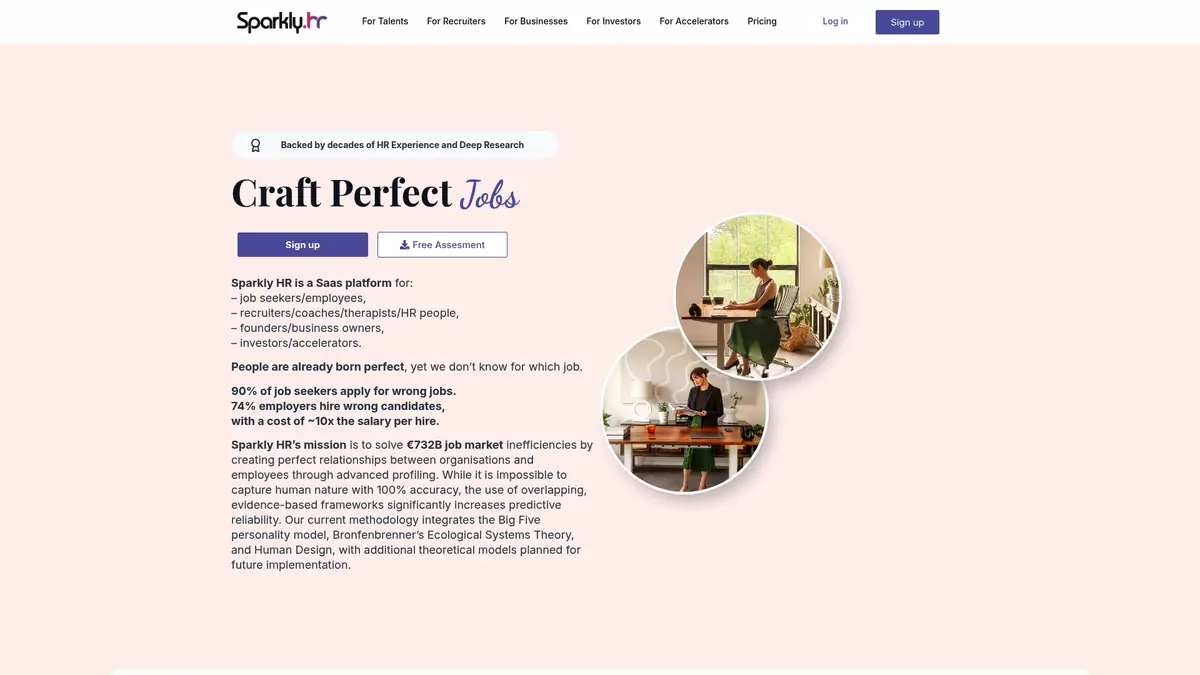
Sparkly is built specifically for companies ready to move beyond guesswork. Our platform merges personality assessments, AI analysis, and Human Design data to give HR teams higher-confidence insights they can actually use. Whether you are exploring HR SaaS transformation for the first time or looking to sharpen your personality-focused assessment strategies, we have the resources to support your next move. You can also explore our top talent evaluation SaaS options to find the right fit for your team size and goals.
Frequently asked questions
What is a workforce strategy in HR?
A workforce strategy is a plan aligning talent management, recruitment, and development with business goals to ensure optimal staffing, reduce turnover, and support growth. Companies with a defined workforce strategy retain talent 35% longer.
How do psychometric assessments reduce turnover?
Psychometric assessments help match employees to roles that fit their personality and strengths, which is why using psychometric assessments can reduce turnover by up to 32%, according to Deloitte’s 2026 research.
What are examples of workforce strategy frameworks?
Popular frameworks include competency-based models, skills inventories, and personality-focused assessments. Skill-based frameworks reduce hiring mismatches by 40%, making them especially valuable during recruitment and team restructuring.
How can technology support workforce strategies?
Digital workforce platforms streamline analytics, track employee growth, and automate role-to-talent matching. Businesses using continuous workforce analytics report 25%+ improvement in team performance, according to Gartner’s 2026 benchmark.