Workforce evaluation tips that build stronger teams

TL;DR:
- Clear evaluation goals distinguish development feedback from compensation decisions to build trust.
- Continuous, specific feedback paired with coaching enhances employee growth and retention.
- Simplicity, clarity, and deliberate design in evaluation systems outperform complex, data-heavy approaches.
Choosing the wrong employee evaluation strategy costs more than most HR leaders realize. High turnover, disengaged teams, and missed promotion decisions trace back to one root problem: evaluation systems that are unclear, misaligned, or built on criteria that never quite fit the actual goals. Mid-sized companies feel this pressure sharply, operating without the sprawling HR infrastructure of enterprise organizations yet facing the same talent retention demands. This article walks you through actionable evaluation tips covering goal alignment, continuous feedback, multi-source assessment, and digital tool selection so you can build a system that genuinely strengthens your teams and reduces costly turnover. ⚡️
Table of Contents
- Clarify evaluation goals and criteria
- Embrace continuous feedback and coaching
- Leverage 360° and multi-source evaluations
- Select and integrate digital assessment tools
- The uncomfortable truth about workforce evaluations
- Unlock innovative SaaS tools for workforce evaluation
- Frequently asked questions
Key Takeaways
| Point | Details |
|---|---|
| Set clear evaluation goals | Define the purpose and outcome for every evaluation—development and compensation should use separate criteria. |
| Pair feedback with coaching | Multi-source systems work best when coaching guides employees to interpret and act on their feedback. |
| Utilize digital tools | Employ SaaS and assessment platforms for streamlined evaluation and reliable team performance improvements. |
| Reduce complexity | Fewer, clearer metrics and transparent decision logic foster a feedback culture and boost retention. |
Clarify evaluation goals and criteria
Before you redesign anything, get crystal clear on what your evaluation system is actually meant to do. This sounds obvious, but most mid-sized companies blend development feedback and compensation decisions into a single performance review, creating confusion for both managers and employees.
“Clarify whether evaluations drive development versus compensation/promotions.”
The consequences are real. When employees suspect their candid self-assessment will be used against them in salary negotiations, they stop being honest. When managers know their ratings determine raises, they inflate scores to avoid difficult conversations. That cycle produces data you cannot trust. Evaluation systems should distinguish between development and compensation decisions, using separate criteria for each.
Here is what well-clarified evaluation goals look like in practice:
- Development evaluations focus on growth areas, skill gaps, and behavior patterns. The employee feels safe being vulnerable because the conversation leads to support, not pay cuts.
- Compensation and promotion evaluations focus on measurable contributions, impact on team outcomes, and demonstrated performance over time.
- Feedback culture is built separately from ratings. Specific, timely feedback on day-to-day work should not be bundled into a once-a-year event.
- Peer input is gathered with clear framing. Let people know exactly how peer feedback will be used and what happens with the data.
Understanding why evaluate job roles before launching any evaluation system helps you anchor criteria to actual business needs rather than generic templates borrowed from other industries. That specificity makes a real difference in both manager adoption and employee engagement.
Pro Tip: Document the decision logic behind each evaluation type and share it with every manager before the first review cycle. Transparency about how data gets used dramatically reduces anxiety and improves participation quality.
Building high-performing workforce strategies starts with this foundation. Without clear criteria, every downstream tool, feedback method, and coaching session will deliver muddled results. Get this right first, and everything else becomes easier to align.
Embrace continuous feedback and coaching
Annual reviews are fading out for good reason. A single yearly conversation cannot capture the complexity of a person’s growth, and it creates a pressure-cooker dynamic that benefits no one. Continuous feedback is essential in modern evaluation systems and must be aligned with clear decision logic to prevent information overload.
The shift to real-time feedback loops sounds simple, but it requires deliberate design. Here are the core best practices:
- Keep feedback specific and timely. Tie feedback to a concrete event within 48 hours. “Your presentation to the client last Tuesday was strong because you anticipated their pricing objection” is infinitely more useful than “you communicate well.”
- Make feedback actionable. Every piece of feedback should point somewhere. If you cannot attach a next step, the feedback is not ready to deliver.
- Establish a regular cadence. Weekly check-ins, bi-weekly one-on-ones, or monthly coaching sessions create a rhythm that normalizes growth conversations.
- Train managers, not just employees. Feedback quality rises or falls with manager skill. Invest in manager coaching programs as much as employee development.
- Close the loop. Follow up on previous feedback to show that the conversation mattered and progress is being tracked.
Common pitfalls to avoid:
- Unclear metrics that make it impossible for employees to know what good actually looks like
- Feedback without follow-up, which signals the conversation was just a formality
- Over-reliance on forms and surveys without actual human dialogue
- Mixing positive and corrective feedback so thoroughly that neither lands clearly
Multi-source feedback systems deliver better results when paired with coaching. Without that pairing, employees receive scores and ratings but lack the context to interpret what they mean or the support to act on them. That is where most feedback programs stall.
Pro Tip: Schedule standing feedback and coaching sessions on recurring calendar blocks, not as ad-hoc events. When coaching is a permanent fixture, it stops feeling like a crisis intervention and starts feeling like a normal part of working life.
For practical guidance on team alignment best practices and how feedback loops support them, it helps to map your feedback rhythms to your team’s project cycles. Also, explore employee development tools that integrate directly with your feedback workflows, reducing the administrative burden on managers.
The best effective feedback tips center on growth rather than judgment, making employees feel invested in rather than evaluated.
Leverage 360° and multi-source evaluations
360-degree feedback collects input from managers, peers, direct reports, and sometimes clients to build a fuller picture of an employee’s performance and impact. When it works, it is genuinely powerful. When it fails, it creates score confusion and resentment. The difference usually comes down to design and follow-through.

Multi-source feedback works best when paired with coaching. Without that integration, employees end up with a stack of numerical ratings from different directions, no clear story about what the data means, and no structured path to improvement.
Here is a quick comparison of the main feedback system types:
| System type | Coverage | Accuracy | Key risk |
|---|---|---|---|
| Manager-only | Narrow, single perspective | High for observable tasks | Blind spots in peer dynamics |
| Peer-only | Broad, team-level view | Variable, depends on trust | Friendship or conflict bias |
| 360-degree | Full, multi-directional | High when well-designed | Score confusion without coaching |
| Self-assessment only | Internal, reflective | Limited, often inflated | Disconnect from reality |
To get the most out of multi-source feedback, keep these principles in mind:
- Anchor ratings to behaviors, not traits. Ask “how often does this person communicate project updates proactively?” not “is this person a good communicator?”
- Limit the number of raters per person. Four to six reviewers is usually enough. More creates noise.
- Provide rater training. Even a 15-minute briefing on what the scale means reduces score drift significantly.
- Debrief results with a coach or manager. Never drop a report in someone’s inbox and walk away.
- Protect anonymity carefully. If employees suspect their peer ratings are traceable, honesty drops fast.
Use team dynamics assessment tips to frame your 360° program around team health, not just individual performance. That framing shifts the entire energy of the process. You can also use an employee potential checklist to complement multi-source evaluations with personality-based insights that skills data alone cannot surface.
A note on information overload: more data is not always better. If your 360° report runs to 20 pages, most employees will not know where to start. Summarize findings into three to five priority themes and build the development conversation around those.
Select and integrate digital assessment tools
The right digital tools do not just automate existing processes. They change what is possible. Modern HR SaaS platforms can surface patterns across teams, flag turnover risk before it becomes a resignation letter, and give managers real-time dashboards that replace spreadsheet chaos. Aligning evaluation logic with assessment tools is essential to reliably drive retention and team performance.
💡 Digital assessment tools can reduce turnover by up to 30% when properly aligned with your evaluation goals and decision logic.
When selecting a platform, look for these features:
- Analytics dashboards that surface trends across teams, not just individual scores
- Customizable feedback workflows that adapt to your specific evaluation criteria
- Integration with existing HRIS systems to avoid data silos
- Mobile-friendly interfaces for field or remote teams
- Role-specific configurations that let you adjust criteria by job function or seniority level
Here is a practical comparison of assessment tool categories:
| Tool type | Best for | Usability | Integration | Cost range |
|---|---|---|---|---|
| Full HR SaaS | Mid-sized to enterprise | High | Strong | $$$$ |
| Standalone 360° tools | Focused feedback programs | Medium | Moderate | $$ |
| Personality-based platforms | Culture fit, team dynamics | High | Varies | $$$ |
| Skills assessment tools | Technical role screening | Medium | Moderate | $$ |
| AI-enhanced platforms | Predictive analytics, pattern spotting | High | Strong | $$$$ |
For a curated look at what is available, explore top talent evaluation SaaS options built for teams that prioritize retention. If your focus is on the hiring pipeline, assessment tools for recruitment offer specialized features for that stage. And for day-to-day team management, HR management tools that blend feedback, scheduling, and analytics in one platform can reduce manager workload significantly.
The evidence-based retention approach reinforces this: companies that choose tools based on clear evaluation logic outperform those that adopt tools based on feature lists alone. Match the tool to the decision it needs to support. That alignment is what creates lasting impact.
The uncomfortable truth about workforce evaluations
Here is something most HR content will not say directly: adding more data to a broken evaluation system makes things worse, not better. We see it constantly. A company rolls out a new 360° feedback program, adds an AI scoring layer, purchases a competency framework, and six months later managers are more confused than before. Employees feel surveilled instead of supported. The system collapses under its own weight.
The real problem is not a lack of tools or data. It is a lack of clarity about what decisions the evaluation system is supposed to support. When that clarity is missing, every new feature just adds noise.
The most effective evaluation systems we have seen are strikingly simple. They have two or three specific criteria per evaluation type. They separate development conversations from compensation conversations with a hard wall. They give managers one or two clear actions after every feedback cycle, not a 12-point improvement plan.
Genuine culture change does not come from richer data. It comes from consistent, specific feedback conversations that employees actually trust. It comes from managers who know what they are evaluating and why. It comes from HR teams that protect the integrity of the process rather than layer on complexity to appear thorough.
If you want a practical starting point, use a cut turnover checklist to audit your current evaluation system against clear criteria before you add anything new. Often, the best move is to remove a layer, not add one.
Pro Tip: Use fewer, clearer metrics across your entire evaluation process. Three criteria evaluated consistently will always outperform ten criteria evaluated inconsistently.
📈 The companies that get this right are not the ones with the most sophisticated tech stacks. They are the ones that made a deliberate choice to prioritize clarity, follow-through, and genuine coaching over impressive-looking dashboards.
Unlock innovative SaaS tools for workforce evaluation
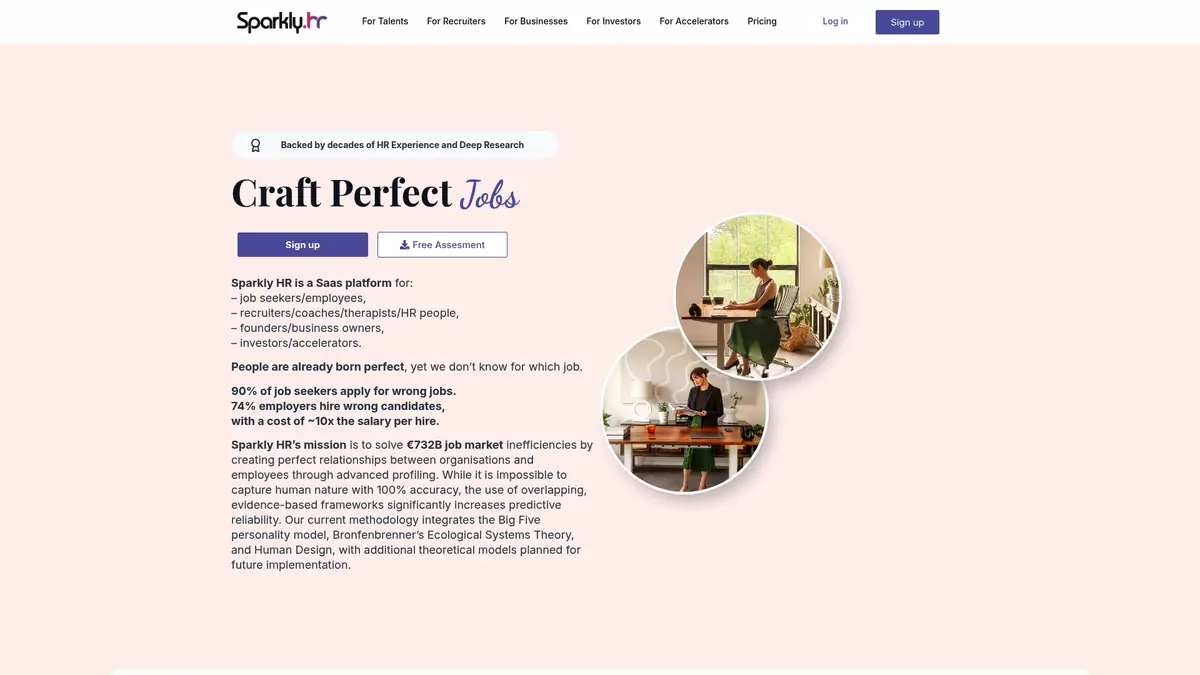
If you are ready to move from fragmented evaluation practices to a system that actually builds team strength and reduces turnover, Sparkly.hr was built for exactly that moment. Unlike platforms that focus primarily on skills assessment, Sparkly takes a personality-first approach, recognizing that skills can be learned but character and fit are far harder to develop. By merging human insight, AI analysis, psychometric assessments, and Human Design data, Sparkly extracts higher-probability insights that HR professionals can use in interviews, team placement decisions, and job redesign conversations.
Explore top talent SaaS solutions that integrate seamlessly into your current workflows. Use team assessment tips to understand how personality-based evaluation changes team dynamics from the ground up. And if you want to get ahead of turnover before it starts, the employee fit guide shows how aligning role design with individual potential is one of the most powerful retention moves available to mid-sized companies today.
Frequently asked questions
How do I avoid confusion when using performance data for raises and promotions?
Use separate criteria for compensation decisions and development discussions, and clarify the purpose of each evaluation to prevent overlap and protect data integrity.
What is the key to successful 360-degree feedback systems?
Pair multi-source feedback with structured coaching sessions so employees can interpret their scores accurately and build targeted improvement plans.
Which digital tools are best for workforce evaluation in mid-sized companies?
Choose SaaS platforms with customizable feedback workflows and team-level analytics; they streamline evaluation, reduce manager workload, and support better retention outcomes.
How can continuous feedback impact employee retention?
Continuous feedback increases clarity and engagement, making employees feel seen and valued, which directly reduces the likelihood of quiet disengagement and voluntary turnover.
Recommended
- 7 Talent Assessment Tips for Better Team Dynamics
- How to Assess Employee Fit for Tech Teams Effectively
- 7 Hiring Process Best Practices to Boost Team Alignment
- 7 Types of HR Assessments to Boost Team Performance
- INUSUAL | 7 claves prácticas para mejorar el trabajo en equipo
- How to Build an Effective Team Through Team Building - Recipe For Success