What is cultural fit: your guide to better hiring

TL;DR:
- Cultural fit often determines employee retention and performance but is frequently assessed through biased gut instincts.
- A shift toward structured, values-based evaluations and technology-backed assessments can ensure fairer, more effective hiring processes that promote diversity and long-term success.
When a talented hire walks out the door six months in, it rarely comes down to skills. The real culprit is almost always cultural fit, and most HR managers are assessing it with tools that are no better than gut instinct. Research shows culture and values alignment ranks among the top five reasons employees stay in their roles. Yet many companies still screen for fit by asking whether a candidate “feels right†for the team. That gap between what matters and how we measure it is costing organizations real money, real time, and real talent. This guide is here to close it. âš¡ï¸
Table of Contents
- Understanding cultural fit: what it really means
- The limitations and risks of traditional culture fit assessments
- Best practices for assessing culture fit fairly and effectively
- How cultural fit influences team performance and retention
- Integrating culture fit into innovative employee assessment solutions
- Why the culture fit concept needs a rethink for sustainable HR success
- Leverage Sparkly.hr to enhance cultural fit assessments and reduce turnover
- Frequently asked questions
Understanding cultural fit: what it really means
The term “cultural fit†gets thrown around a lot, but the meaning often stays fuzzy. Let’s sharpen it.
At its core, cultural fit means how closely an employee’s values, behaviors, and working style align with the way your organization actually operates, not just the mission statement on your website, but the day-to-day reality of how decisions get made, how conflict gets handled, and how people communicate.
Think about it this way: a candidate might ace every technical interview and still spend their first year grinding against the current. Maybe your team runs on radical transparency and they prefer guarded communication. Maybe you move fast and they thrive in structured environments. Neither is wrong. But the mismatch creates friction that bleeds into performance, morale, and eventually, attrition.
Cultural fit covers several distinct dimensions:
- Values alignment: Does the candidate genuinely believe in what the organization stands for?
- Behavioral style: How do they approach collaboration, feedback, and conflict?
- Communication preferences: Do they match the team’s rhythm of interaction?
- Work ethic and autonomy: How much structure or independence do they need to perform?
- Goal orientation: Are their personal growth goals compatible with where the company is heading?
The importance of cultural fit becomes especially clear during onboarding. New hires who align culturally contribute faster, build trust with teammates sooner, and require less course-correction. That speed to contribution is worth far more than most job descriptions acknowledge.
Here is the part many organizations overlook: technical skills can be taught. Personality, values, and behavioral defaults are far more fixed. Hiring someone whose communication style clashes with your team’s is a much longer fix than upskilling someone on a software tool.

The limitations and risks of traditional culture fit assessments
Understanding cultural fit is one thing. Assessing it reliably is another. And the way most companies do it right now is quietly causing damage.
The typical culture fit screen looks like this: a hiring manager has a conversation with a candidate, feels a sense of connection or comfort, and labels that feeling “good culture fit.†The problem is that comfort and fit are not the same thing. Comfort usually means similarity. And hiring for similarity builds teams that think alike, challenge each other less, and adapt more slowly.
“Culture fit often functions as an intuition filter rewarding familiarity over merit, leading to homogeneous teams. The shift to culture add asks what a candidate would bring that is missing.â€
This distinction matters enormously. When fit becomes a code word for “people like us,†you end up excluding candidates who could introduce the perspectives your team actually needs. Research backs this up: homogeneous teams consistently underperform on creative problem-solving compared to diverse ones.
The risks of poorly defined culture fit assessments include:
- Unconscious bias: Interviewers favor candidates who share their background, communication style, or social references.
- Legal exposure: Subjective fit judgments with no documented criteria can create patterns that disproportionately exclude protected groups.
- Talent loss: High-quality candidates from different backgrounds get screened out because they “didn’t click.â€
- Cultural stagnation: When everyone already fits perfectly, there is no friction to spark new ideas or challenge the status quo.
The smarter path is culture add versus culture fit. Instead of asking “does this person fit our existing culture,†ask “does this person share our core values AND bring something we currently lack?†That reframe preserves alignment without sacrificing diversity. 💡
Best practices for assessing culture fit fairly and effectively
The good news: assessing culture fit fairly is absolutely possible. It just requires replacing instinct with structure.
Here is a practical framework you can begin applying today:
-
Codify your culture explicitly. Write down the behaviors that reflect your organization’s values in observable terms. Not “we value integrity†but “we share bad news early, even when it is uncomfortable.†Vague values produce vague assessments.
-
Build structured cultural fit interview questions. Every candidate should face the same behavioral questions, scored against the same rubric. Questions like “Tell me about a time you disagreed with a decision your team made. What did you do?†surface values-driven behavior far better than “What kind of work environment do you prefer?â€
-
Use psychometric assessments as one input, not the final word. Personality tools add a data layer that reduces reliance on interviewer impressions. But they work best when interpreted alongside other evidence.
-
Add multiple evaluators. A panel of two to three people from different functions reduces the influence of any single person’s comfort bias.
-
Monitor your outcomes. Track whether your culture fit criteria are producing diverse, high-performing hires or quietly filtering out specific demographic groups. EEOC best practices recommend establishing neutral, objective criteria to prevent subjective bias from influencing hiring decisions.
Following culture fit assessment best practices also means revisiting your criteria regularly. Culture evolves. Your fit benchmarks should evolve with it.
Pro Tip: Before your next hiring round, ask your three highest-performing team members to describe how they make decisions and handle conflict. Use their answers to draft your behavioral rubric. Real culture lives in those responses, not in your company values page.
You can also explore using AI for culture fit assessment to add a layer of data consistency that human judgment alone cannot provide.
How cultural fit influences team performance and retention
The business case for getting culture fit right is hard to ignore. The numbers are clear.
High-performing teams scored 38 to 50 percentage points higher than non-high-performing teams across every culture dimension measured. That is not a marginal difference. That is a structural advantage built on how well people align with each other and the organization around them.
“Culture and values alignment is one of the top reasons employees stay in their roles, placing it firmly among the most powerful retention levers available to HR.â€
Here is a practical look at the impact across key metrics:
| Outcome | Low culture fit | High culture fit |
|---|---|---|
| Average tenure | Under 12 months | 3 or more years |
| Time to full productivity | 6 to 9 months | 2 to 4 months |
| Engagement scores | Below team average | Above team average |
| Likelihood to refer others | Low | High |
| Turnover-related cost | 50 to 200% of annual salary | Significantly reduced |
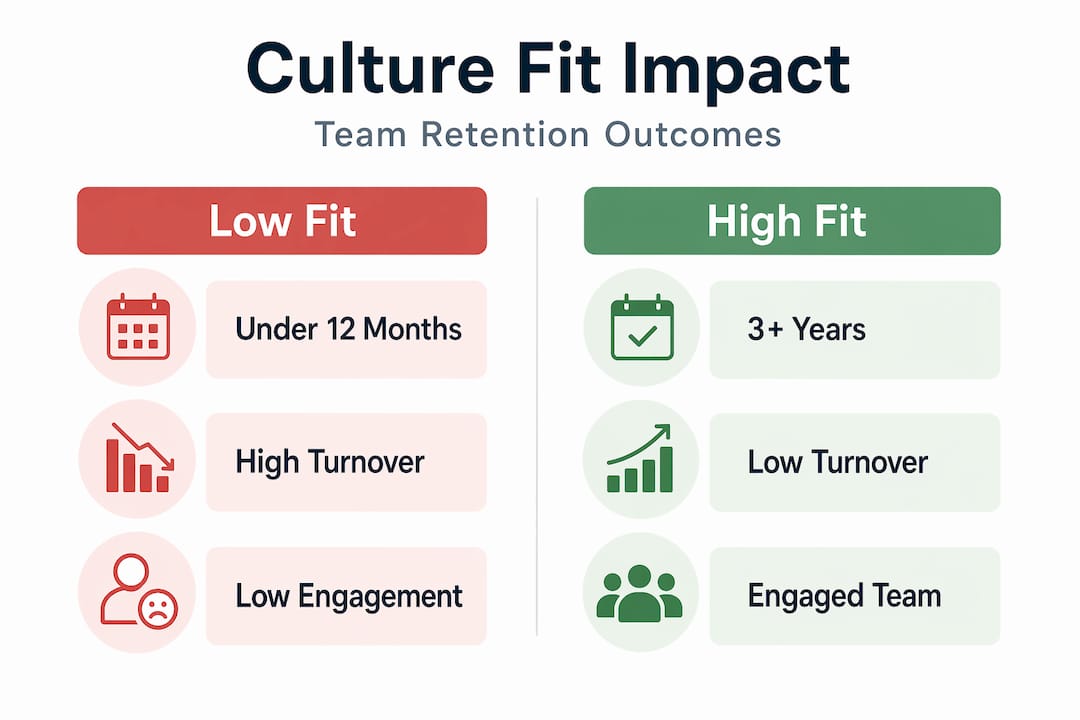
The turnover cost figure alone should get attention. When a misaligned hire exits at the six-month mark, you are not just losing salary investment. You are losing recruiting fees, onboarding time, manager bandwidth, and the opportunity cost of a role sitting vacant again.
The flip side is equally powerful. Employees who feel deeply aligned with company culture are more engaged, more likely to stay, and more likely to advocate for the company as a place to work. That advocacy matters. It directly feeds your talent pipeline and reduces sourcing costs over time.
Prioritizing retention and engagement strategies built around culture alignment is one of the highest-return investments a growing HR team can make. 📈
Integrating culture fit into innovative employee assessment solutions
Traditional assessments, think one-page personality tests or gut-feel scorecards, are not enough for the complexity of real team dynamics. Modern SaaS platforms give you something far more useful: layered, quantifiable data.
Here is how the approaches compare:
| Feature | Traditional assessment | Modern SaaS platform |
|---|---|---|
| Data sources | Single test or interview | Personality, values, AI, behavioral data |
| Bias controls | Minimal | Algorithmic monitoring built in |
| Role fit analysis | Broad | Job-specific and team-specific |
| Output | Pass/fail impression | Scored insights for decision-making |
| Compliance monitoring | Manual | Automated adverse impact tracking |
Platforms that combine psychometric assessments (structured tools measuring personality traits and behavioral tendencies), cognitive data, and values mapping give HR managers a much more complete picture of how a candidate will actually behave inside your specific environment.
A few principles to guide your technology selection:
- Choose tools that assess personality and values first, not just skills. Skills change. Personality patterns are far more stable.
- Look for platforms that flag potential adverse impact on protected groups automatically, in line with EEOC guidance on AI tools.
- Prioritize tools that surface role-fit and team-fit separately. A person can be a great cultural fit for the organization but a poor fit for the specific team they would join.
- Ensure the platform integrates with your existing ATS (applicant tracking system) so fit data travels with the candidate record.
Pro Tip: When evaluating any personality-focused assessment strategy, ask the vendor for validity studies. A good assessment tool should be able to show you data on predictive accuracy, not just feature lists.
The goal is not to replace human judgment. It is to give that judgment better raw material to work with.
Why the culture fit concept needs a rethink for sustainable HR success
Here is an uncomfortable truth most HR content will not say out loud: the way most organizations define and apply culture fit is actively working against them.
The conventional wisdom says hire for fit, protect the culture, keep the team cohesive. That logic sounds reasonable until you realize that the “culture†being protected is often the culture of whoever already has power in the organization. Fit becomes a mirror. And mirrors do not challenge you.
We have seen this pattern repeatedly. Companies with strong, celebrated cultures hire so tightly for fit that their teams become echo chambers. Everyone agrees. Everyone communicates the same way. And when the market shifts or a real problem surfaces, the team lacks the range to respond well. Innovation stalls. Adaptability shrinks. And the very culture they worked so hard to protect becomes a liability.
The reframe we believe in is this: culture fit should mean shared values and compatible working behaviors, not shared backgrounds, social styles, or gut-level comfort. When you codify fit around behaviors rather than aesthetics or vibes, you make room for genuine diversity without sacrificing alignment.
And here is what that actually looks like in practice. Two people can have completely different personalities, communication styles, and life experiences while still sharing a deep commitment to transparency, accountability, and customer focus. That is real culture fit. The version where everyone laughs at the same references and went to similar schools is not fit. That is just familiarity.
The organizations winning the talent game right now are the ones treating culture as something to build forward, not preserve backward. They are asking “what kind of culture do we need to achieve what comes next,†not “how do we find people who already match what we have.†That shift requires courage, clear criteria, and assessment tools that can tell the difference between someone who genuinely shares your values and someone who just interviews well.
Leverage Sparkly.hr to enhance cultural fit assessments and reduce turnover
Putting all of this into practice requires more than good intentions. It requires better data. That is exactly where Sparkly.hr was built to help.
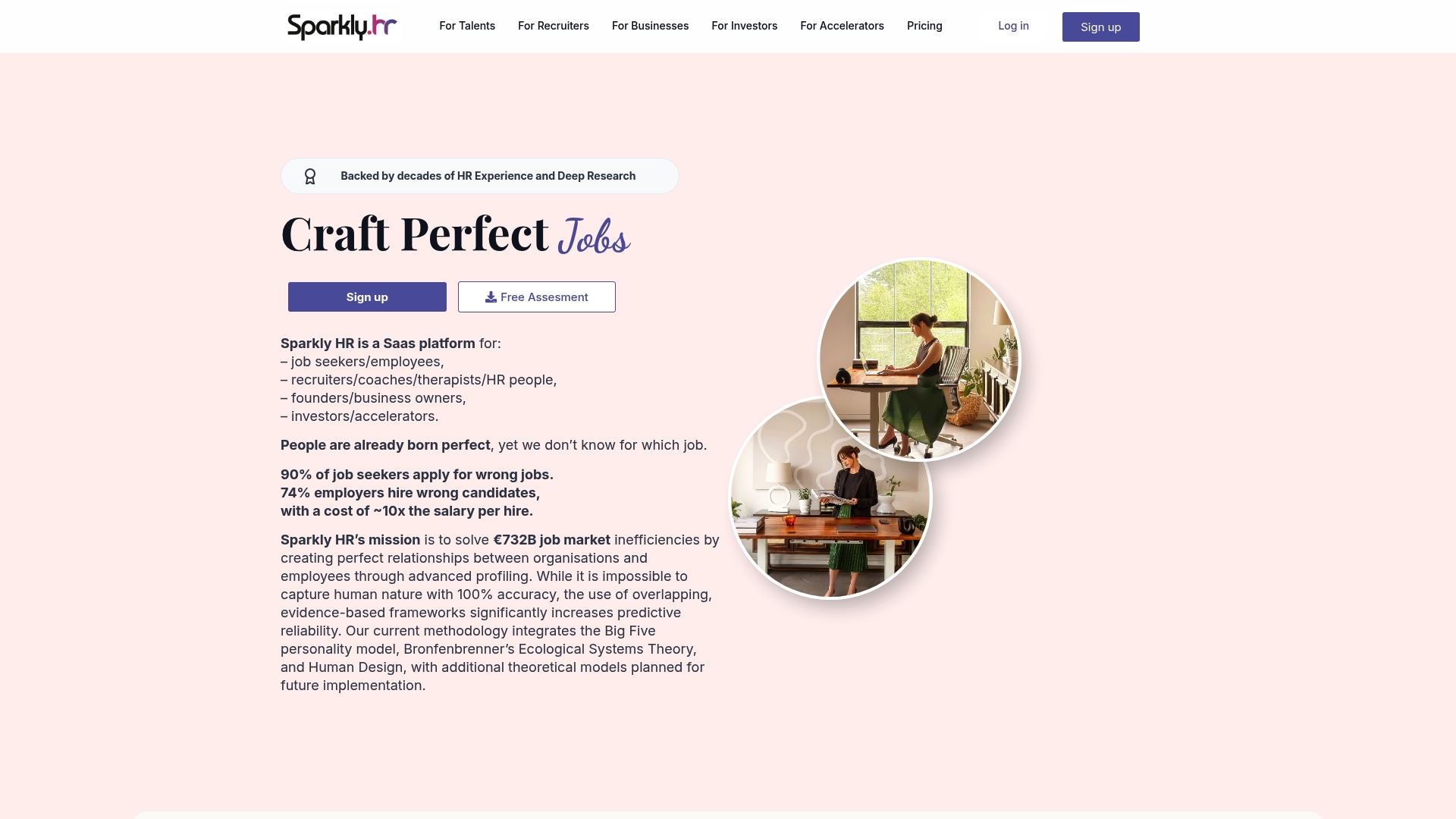
Sparkly.hr is an employee assessment platform that prioritizes personality over skills, because skills can be taught and personality shapes everything else. By merging four distinct data sources, human evaluators, AI analysis, psychometric assessments, and Human Design insights, Sparkly extracts higher-probability fit data that HR managers can actually use in interviews and hiring decisions. The result is a much clearer picture of how a candidate will behave, contribute, and align with your team before they ever start. Explore the employee fit assessment guide to see how this approach reduces turnover costs, or dive into personality assessment strategies to understand how Sparkly redesigns roles around real strengths. You can also learn more about the SaaS impact on employee potential to see the full picture.
Frequently asked questions
What does cultural fit mean in hiring?
Cultural fit in hiring describes how well a candidate’s values, behaviors, and goals align with an organization’s culture, enabling faster integration and a stronger contribution from day one.
How can focusing only on culture fit be problematic?
Relying on culture fit alone can function as a bias filter that rewards familiarity, leading to homogeneous teams with reduced diversity, creativity, and long-term adaptability.
What are best practices to assess culture fit fairly?
Use structured behavioral interviews with documented, values-linked criteria and validate tools for potential bias. EEOC best practices recommend neutral, objective criteria to keep culture fit assessments legally sound and fair.
How does cultural fit impact employee retention?
Employees who feel aligned with company culture stay longer and perform better, with values alignment consistently ranking among the top five drivers of employee retention.
Can technology help assess cultural fit objectively?
Yes, modern SaaS platforms use psychometric and behavioral data to assess fit with greater consistency, though any software producing cultural fit scores must be monitored for adverse impact on protected groups under EEOC guidance.