Unlock Employee Engagement: 7 Benefits of Team Member Shifting

TL;DR:
- Team member shifting is a strategic way to improve retention, engagement, and skill development within organizations. It should be targeted at high-performers with the right personality fit to maximize positive outcomes and reduce stress. Proper planning, clear communication, and data-driven decisions are essential for successful implementation and long-term benefits.
Turnover is costing mid-sized companies more than they realize. Replacing a single employee can cost anywhere from 50% to 200% of their annual salary, yet most HR strategies still default to hiring externally rather than optimizing what’s already inside the organization. Team member shifting, the deliberate practice of moving employees across roles, teams, or departments, is gaining serious traction as a smarter, evidence-backed alternative. This article walks you through who should be shifted, what the real benefits look like, and how to avoid the common mistakes that undermine the whole effort. ⚡️
Table of Contents
- Criteria for selecting candidates for team member shifting
- Top 7 benefits of team member shifting for HR retention
- Comparing outcomes: High-performers vs. low-performers
- Challenges and mitigation: Avoiding disruption and stress
- Building engagement: Real-world scenarios and best practices
- Why most HR teams make costly mistakes with shifting — and how to fix it
- Next steps: Enhance retention and engagement with new HR tools
- Frequently asked questions
Key Takeaways
| Point | Details |
|---|---|
| Target high-performers | Shifting high-performing employees delivers measurable engagement and retention gains. |
| Structured planning essential | Successful shifting requires strategic frameworks and clear communication to avoid disruption. |
| Beware stress risks | Low-performers may face increased stress or resistance if shifted without proper support. |
| Build versatile teams | Team member shifting develops versatile teams with improved internal mobility. |
| Leverage technology tools | Modern HR tools and assessments maximize the benefits and efficiency of team member shifting. |
Criteria for selecting candidates for team member shifting
Once the need for higher retention and engagement is clear, your next priority is knowing exactly which employees to shift. Not everyone benefits equally, and targeting the wrong people can create more problems than it solves.
Research makes this point clearly. Rotated high-performers gain a 10% higher bonus, while low-performers rotate more frequently but show no measurable performance improvement. That gap matters enormously when you’re building a business case for shifting programs inside your organization.
So what should you actually look for when selecting candidates? Consider these key factors:
- Performance tier: Prioritize employees who consistently meet or exceed expectations. High-performers are motivated by challenge and growth, making them the most receptive to new environments.
- Personality fit: Skills can be learned on the job, but personality drives how well someone adapts to new team dynamics. Reviewing retention with personality fit data helps predict who will thrive in a new role.
- Team needs: Shifting should solve a real gap. Map each candidate’s strengths against the receiving team’s current blind spots before making any move.
- Readiness signals: Employees expressing boredom, asking for new challenges, or showing signs of disengagement are often the best short-term candidates for shifting.
- Tenure in current role: Employees who have been in the same position for two or more years without a clear promotion path are prime candidates for a lateral shift.
Structured frameworks also matter here. Following leadership hiring best practices means building a consistent selection rubric so bias doesn’t creep into shifting decisions, just as it shouldn’t in hiring. Without a framework, shifting can feel arbitrary to employees, which breeds resentment rather than engagement.
Pro Tip: Before approving any shift, run a short personality-based assessment alongside performance data. When you combine both sources, you dramatically reduce the guesswork and give the receiving manager a realistic picture of what to expect.
Following a clear team member shifting workflow also reduces the risk of shifting becoming a chaotic, ad hoc process. Structure it, document it, and make it repeatable.
Top 7 benefits of team member shifting for HR retention
With selection criteria in place, it’s time to examine what shifting actually delivers. These are the seven most impactful benefits backed by research and real organizational experience. 📈
-
Improved employee engagement. Moving into a new role reignites curiosity and motivation. Employees who feel stagnant are often one step away from quiet quitting, and a well-timed shift can reset that trajectory entirely.
-
Accelerated skills development. Exposure to different functions builds a broader skill set without the cost of external training programs. Employees learn by doing, which tends to be faster and more memorable than classroom-style learning.
-
More versatile teams. When multiple people understand overlapping functions, your teams become more resilient. Covering absences, supporting peak demand, and pivoting on projects all become easier. As job rotation programs drive internal mobility and skills growth, the organizational benefits compound over time.
-
Higher retention for high-performers. Top talent leaves when they stop growing. Shifting gives high-performers a visible path forward without requiring a formal promotion, which is valuable when budget or headcount limits promotions in mid-sized companies.
-
Fresh perspectives in stagnant teams. Bringing someone new into a team disrupts group-think and introduces new problem-solving approaches. This is especially powerful in teams that have been working together for years without much change.
-
A stronger internal talent pipeline. When you shift team members for team dynamics, you’re building a map of who can do what across your organization. That knowledge becomes invaluable during succession planning or when a key person leaves unexpectedly.
-
Reduced burnout for high-potential employees. High-potential employees often carry disproportionate workloads. A lateral shift distributes their energy more sustainably and prevents the kind of burnout that leads to sudden resignations.
“Structured job rotation programs build versatile teams and drive engagement, especially in high performers, but they require careful planning to avoid workflow disruptions.” — Adapted from SHRM research on internal mobility
Pairing these benefits with strong recruiting best practices creates a full-cycle talent strategy that reduces your dependence on constant external hiring. The result is a leaner, more engaged workforce that grows from within.
Comparing outcomes: High-performers vs. low-performers
To make data-driven decisions, compare the real outcomes for different employee segments. The research here is clear, and the contrast is stark.

| Outcome | High-performers | Low-performers |
|---|---|---|
| Bonus impact | 10% higher bonus after rotation | No measurable bonus gain |
| Frequency of rotation | Moderate, planned | Higher, often reactive |
| Engagement change | Increases significantly | Minimal or no improvement |
| Stress response | Generally positive | Risk of increased stress |
| Retention impact | Strong positive effect | Neutral or negative effect |
| Performance trajectory | Upward after adjustment | Flat or declining |
This table tells a story that many HR managers miss: low-performers are often rotated more than high-performers in practice, yet low-performers rotate more without any performance gain and with potential stress risks. That’s a critical finding because it flips the intuition that shifting is a useful performance improvement tool for struggling employees.
📊 Statistic callout: High-performing employees who go through structured rotation programs earn measurably higher bonuses and show sustained engagement improvements. Low-performers, by contrast, face a real risk of stress escalation and even sabotage behaviors when placed in unfamiliar roles without adequate support.
The takeaway is strategic. Use shifting to reward and develop your best people, not to manage out underperformers. For the latter group, dedicated coaching, clearer role expectations, and performance plans are far more effective interventions.
Understanding how internal talent shifts cut turnover is also essential when presenting the ROI of shifting to leadership. The data supports a targeted, high-performer-first approach. If you need a clearer framework for this conversation, reviewing the talent mobility definition as a foundational concept will help align your leadership team on terminology and expectations.
Challenges and mitigation: Avoiding disruption and stress
Knowing the risks is half the battle. The next step is managing them proactively so shifting programs deliver on their promise.
The most common challenges HR managers encounter include:
- Initial productivity dip. Every employee needs an adjustment period in a new role. Plan for a four to eight week window where output may be lower than usual, and communicate this expectation to receiving managers in advance.
- Resistance to change. Not every employee welcomes a shift, even when it’s framed positively. Some see it as disruption to a comfortable routine. Transparency about the reasons and benefits of the move makes a significant difference.
- Stress in low-performers. As research confirms, stress for some employees is a real risk when shifting is applied indiscriminately. Low-performers placed in new roles without support can become disengaged, anxious, or even disruptive.
- Loss of institutional knowledge. When a key person moves out of a team, they take tacit knowledge with them. A structured handover period of two to four weeks significantly reduces this risk.
- Manager resistance. Sending managers can be reluctant to let go of strong team members. Build a culture where developing talent for the wider organization is recognized and rewarded at the managerial level.
According to job rotation best practices, structured support during transitions is not optional — it’s what separates successful programs from ones that quietly collapse after the first few difficult rotations.
Equipping your HR team with a clear job shift workflow with personality assessments removes much of the guesswork from these decisions. When you know how a person processes change and handles ambiguity at a personality level, you can predict resistance before it becomes a problem.
Pro Tip: Schedule a check-in at the 30-day and 60-day marks for every shifted employee. Use those conversations to catch friction early and adjust support levels before a small frustration becomes a resignation.
Building organizational agility in HR also means designing your shifting program with the flexibility to pause, adjust, or reverse a shift if circumstances change. Rigid programs that can’t adapt to reality are the ones that generate the most backlash. For teams at the leadership level, looking at executive recruiting team structures can also reveal how high-performing organizations build flexibility into their talent management structures from the top down.
Building engagement: Real-world scenarios and best practices
To see how these principles work in practice, consider a few scenarios that represent common situations in mid-sized companies.
A financial services firm with 400 employees noticed that three of its top analysts were repeatedly flagging interest in customer-facing roles. Rather than viewing this as a flight risk, the HR team designed a six-month cross-functional shift into the client success team. Engagement scores for those three employees jumped significantly, and the client success team reported measurable improvements in data-driven decision making within the first quarter.
A logistics company struggling with burnout in its operations team shifted two high-potential coordinators into a newly formed process improvement unit. Neither shift required additional hiring, and both employees reported feeling re-energized within eight weeks. The operations team, meanwhile, gained new energy as two adjacent roles were backfilled with motivated junior staff who had been waiting for development opportunities.
These outcomes align with talent allocation methods that prioritize strategic placement over reactive reassignment.
Here’s what the data looks like across typical shifting programs:
| Metric | Before shifting program | After 6 months |
|---|---|---|
| Employee engagement score | 58% | 74% |
| Voluntary turnover rate | 22% | 14% |
| Internal promotion rate | 11% | 19% |
| Skills coverage per team | 2.1 roles/person | 3.4 roles/person |
Best practices that drive these kinds of results include:
- Communicating the “why” behind every shift before it happens
- Pairing shifted employees with a buddy or mentor in the new team
- Setting 90-day success milestones so both parties know what good looks like
- Reviewing personality data alongside performance before every placement decision
- Running quarterly retrospectives to refine the shifting program over time
Investing in talent development for tech teams also shows how structured internal mobility programs can be adapted across different functional groups, not just operations or finance. Building a community around talent shifting, similar to approaches highlighted in talent networking best practices, accelerates adoption and reduces resistance at every level of the organization. 💡
Why most HR teams make costly mistakes with shifting — and how to fix it
Here’s the uncomfortable truth most HR content won’t say out loud: the majority of team member shifting programs fail not because of poor strategy, but because of poor targeting. HR managers implement shifting universally, treating it as a perk or a restructuring tool rather than a precision instrument for talent development.
When shifting is applied to everyone, the program loses its signal. High-performers feel their growth is being diluted alongside colleagues who are simply being moved around reactively. Low-performers feel exposed and unsupported in unfamiliar roles. Both groups disengage. The program gets a bad reputation, leadership loses confidence in it, and it quietly disappears within 18 months.
The fix isn’t a new framework or a more sophisticated spreadsheet. It’s a mindset shift about what shifting is actually for. It’s a retention and development tool for your most valuable people, not a performance management shortcut. When you use it that way, the results compound.
What we’ve also seen consistently is that HR managers underestimate the role of personality in shifting outcomes. Two employees with identical skill sets placed in the same new role will have dramatically different experiences based on how they handle uncertainty, how they build relationships, and how they process change. Focusing only on skills misses the deeper drivers of success.
That’s why the most effective shifting programs prioritize talent optimization explained at the personality level before any placement decision is made. When you understand the person, not just the resume, you place them with far greater precision. And precision is what turns a shifting program from a cost center into a competitive advantage.
Review your shifting strategy quarterly. Ask which placements worked, which didn’t, and what the personality data predicted. Adjust accordingly. Programs that iterate survive. Those that don’t, disappear.
Next steps: Enhance retention and engagement with new HR tools
If these strategies resonate with you, the next question is how to put them into practice without adding complexity to an already stretched HR team. The good news is that the right tools make precision shifting far more manageable than it sounds.
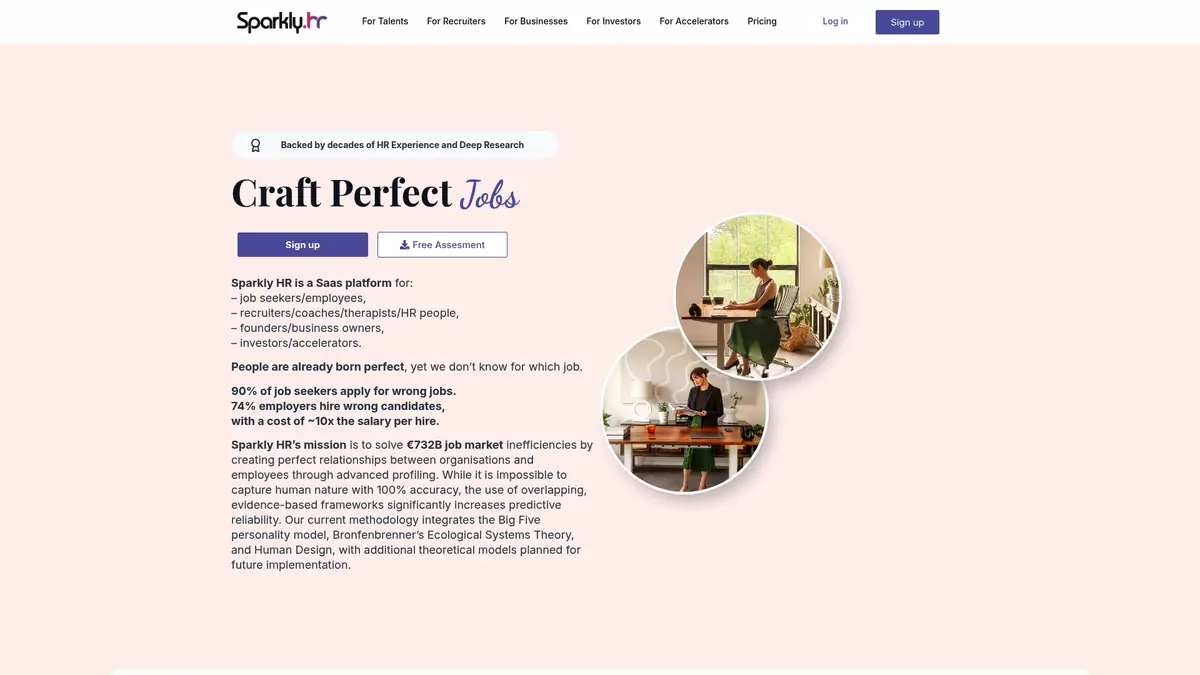
Sparkly is built specifically for mid-sized companies that want to stop guessing about talent placement and start making decisions backed by multi-source data. Our platform combines personality assessments, AI insights, psychometric data, and Human Design signals to give you higher-confidence profiles for every employee — current and future. Explore SaaS in HR employee potential to see how these tools work in practice. For a sharper starting point, our talent assessment tips guide walks you through exactly how to build better team dynamics before your next shift.
Frequently asked questions
What is team member shifting in HR?
Team member shifting, also known as job rotation, is the practice of moving employees among different roles or teams to build skills, increase engagement, and improve retention across the organization.
Does team member shifting improve employee performance?
High-performing employees who are shifted into new roles often see a measurable performance boost, with research showing rotated high-performers gain a 10% higher bonus compared to those who are not rotated.
Who should not be included in team member shifting?
Low-performing employees are typically not good candidates for shifting because they tend to rotate more frequently with no performance gain and face real risks of increased stress or disruptive behavior based on longitudinal research findings.
What are common challenges with team member shifting?
Challenges include initial productivity dips, employee resistance to role changes, and stress during transitions, all of which can be significantly reduced through structured planning, transparent communication, and dedicated support as outlined in job rotation best practices.
How can HR maximize retention with team member shifting?
Retention improves most when high-performers are targeted first, personality fit is assessed before placement, and shifting is supported by clear communication and regular check-ins, consistent with findings from SHRM’s internal mobility research.