Types of Team Dynamics: A Manager’s Guide to Better Teams

TL;DR:
- Team dynamics are recurring interaction patterns that determine how effectively teams work toward shared goals. Psychological safety, communication, role clarity, and conflict management are core dynamics that influence long-term performance. Recognizing these patterns and applying deliberate interventions enhance team cohesion, productivity, and resilience.
Team dynamics are defined as the recurring patterns of interaction, communication, and behavior that determine how effectively a group of people works together toward shared goals. Google’s Project Aristotle research identified psychological safety as the single most powerful predictor of team effectiveness, outranking talent, experience, and even team composition. Tuckman’s stages of group development offer a complementary lens, mapping how these patterns shift as teams mature. For managers and team leaders, understanding the distinct types of team dynamics is not optional. It is the foundation for building teams that actually perform. ⚡️
1. Types of team dynamics every manager should recognize

The most important distinction to make upfront: team dynamics vs. composition are fundamentally different things. How a team works together matters far more than who is on the team. That finding from Google’s re:Work research should reshape where you focus your energy as a manager. Stop obsessing over hiring the perfect mix of skills and start designing the right interaction patterns.
Here are the core types of group dynamics you will encounter in any organizational setting:
- Psychological safety dynamics: Team members feel free to speak up, ask questions, and flag problems without fear of embarrassment or retaliation. Psychological safety enables earlier problem identification, higher engagement, and more open communication across the board.
- Communication dynamics: These range from fully open (transparent, frequent, multi-directional) to closed (top-down, filtered, siloed). Open communication patterns build trust and accelerate decision-making. Closed patterns create information bottlenecks and erode accountability.
- Role clarity dynamics: When every team member understands their responsibilities and decision rights, accountability follows naturally. Clear roles and shared goals correlate directly with stronger follow-through and performance.
- Conflict dynamics: Constructive conflict drives innovation. Avoidant conflict dynamics, where teams suppress disagreement to maintain surface-level harmony, stall progress and breed resentment.
- Collaboration styles: Some teams operate cooperatively, pooling resources and sharing credit. Others run competitively, where individual performance is prioritized over collective output. Both can work, but only when the style matches the team’s actual goals.
Pro Tip: Map your team’s current dynamics before trying to change them. A 15-minute anonymous survey asking team members to rate psychological safety, communication openness, and role clarity gives you a baseline that is far more reliable than your own perception.
2. Psychological safety as the anchor dynamic
Psychological safety is not a soft culture concept. It is a functional risk-control mechanism that determines whether your team surfaces problems early or buries them until they become crises. Google’s Project Aristotle, which studied 180 teams over two years, found that psychological safety was the number one factor separating high-performing teams from average ones.
The practical implication for managers is direct: you cannot build effective communication dynamics, healthy conflict dynamics, or strong collaboration without psychological safety as the foundation. Teams that lack it default to self-protection. Members withhold dissenting opinions, avoid flagging mistakes, and perform below their actual capability.
Operationalizing psychological safety requires more than posting values on a wall. Leaders must model fallibility by openly acknowledging their own mistakes in meetings. They must establish explicit norms for how dissent is handled, such as a standing rule that any team member can challenge a decision without it being taken personally. These behavioral signals, repeated consistently, are what actually shift the dynamic.
3. Communication dynamics: open vs. closed patterns
Communication dynamics describe the flow, frequency, and quality of information exchange within a team. Open communication patterns are characterized by direct feedback, transparent goal-setting, and psychological permission to raise concerns. Closed patterns restrict information to certain roles or hierarchies, creating blind spots at the team level.
The impact of team dynamics rooted in poor communication is measurable. Sales teams with strong collaboration and open communication exceeded revenue targets by 17%, while teams with weak communication fell behind targets by up to 19%. That is a 36-point performance gap driven entirely by interaction norms, not talent.
In practice, communication dynamics show up in meeting behavior. Does your team speak freely in group settings, or do the real conversations happen in side channels after the meeting ends? If it is the latter, you have a closed communication dynamic that is costing you information quality and speed. Fixing it starts with restructuring how meetings are run, not with telling people to “speak up more.”
4. Role clarity and accountability dynamics
Role clarity is one of the most underrated team dynamics characteristics. When team members are uncertain about who owns what, decisions stall, work gets duplicated, and conflict emerges not from disagreement but from confusion. Teams with clear expectations and transparent responsibilities consistently outperform those operating in ambiguity.
This dynamic is especially critical in cross-functional teams, where reporting lines are dotted and authority is shared. A product manager, a UX designer, and an engineer may all believe they own the final call on a feature decision. Without explicit role clarity, that ambiguity produces friction that looks like a personality conflict but is actually a structural problem.
The fix is not a lengthy RACI matrix that nobody reads. It is a 30-minute conversation at the start of each project where the team explicitly names who decides, who advises, and who executes for each key deliverable. That conversation, done consistently, builds an accountability dynamic that sustains itself.
5. Conflict dynamics: constructive vs. avoidant
Conflict dynamics sit on a spectrum. At one end, teams engage in structured, respectful disagreement that sharpens ideas and surfaces better solutions. At the other end, teams avoid conflict entirely, defaulting to false consensus that leaves real problems unaddressed. Teams stuck in avoidant patterns show reduced collaboration and lower innovation output over time.
The counterintuitive truth is that conflict-free teams are rarely high-performing teams. They are teams where people have stopped caring enough to disagree. The goal is not to eliminate conflict but to channel it. Consulting firms like McKinsey and Bain build structured debate into their project methodology precisely because productive disagreement produces better client recommendations.
Managers who intervene too quickly to smooth over disagreements often create a worse dynamic. They signal that conflict is dangerous, which pushes it underground. The better move is to name the disagreement explicitly, set a time limit for resolution, and facilitate a decision. That approach moves the team forward without suppressing the underlying tension.
6. How Tuckman’s stages shape team dynamics over time
Tuckman’s four stages of group development describe how team dynamics evolve as groups mature. Understanding these stages helps managers anticipate what they will see and when to intervene.
- Forming: Team members are polite, cautious, and dependent on the manager for direction. Dynamics are surface-level. Trust has not been established yet.
- Storming: Conflict and role uncertainty peak. Members push back on authority, compete for influence, and test boundaries. This is the most critical phase for managers to navigate actively.
- Norming: The team establishes shared norms, roles clarify, and trust begins to build. Communication opens up and collaboration improves noticeably.
- Performing: The team operates with high autonomy and effectiveness. Psychological safety is strong, communication is open, and conflict is handled constructively.
- Adjourning: The team disbands or restructures. Dynamics shift again as members process the transition.
“The storming phase is not a sign that something is wrong with your team. It is a sign that your team is developing. Managers who try to skip it by suppressing conflict usually find it resurfaces later, harder to manage.” — Tuckman’s research, as interpreted through structured disagreement frameworks.
The most common managerial mistake is misreading the end of storming as readiness to perform. Conflict cessation does not equal norming. Teams need deliberate coaching through the transition, including explicit conversations about norms and role agreements, before they reach genuine performing-stage dynamics. For tech teams specifically, talent development steps that align with each Tuckman stage can accelerate this progression significantly.
7. Comparing Google’s Project Aristotle and Tuckman’s model
Both frameworks address team dynamics but from different angles. Google’s Project Aristotle identifies the conditions that make teams effective. Tuckman’s model describes the sequence through which teams develop. Used together, they give managers a complete picture.
| Framework | Core Focus | Key Insight | Best Used For |
|---|---|---|---|
| Google’s Project Aristotle | Interaction conditions | Psychological safety is the top predictor of team effectiveness | Diagnosing current team health |
| Tuckman’s Stages | Development sequence | Teams move through predictable phases with distinct dynamics | Planning interventions by stage |
| Combined Application | Conditions + timing | Safety enables faster progression through Tuckman’s stages | Ongoing team management |
In practice, psychological safety is what allows teams to move from storming to norming without getting stuck. A tech team at a startup that builds psychological safety early will resolve role conflicts faster and reach the performing stage in weeks rather than months. A sales team that skips this work often stays in a low-trust, competitive dynamic that caps collective performance even when individual contributors are strong.
Pro Tip: Use Google’s five pillars (psychological safety, dependability, structure and clarity, meaning, and impact) as a diagnostic checklist at the start of each quarter. Rate your team on each pillar from 1 to 5. The lowest-scoring pillar is where you intervene first.
8. Actionable strategies to improve team dynamics
Understanding team dynamics is only useful if it changes how you manage. Here are the strategies that produce the most reliable results:
- Model fallibility publicly. Open a team meeting by sharing a recent mistake you made and what you learned. This single act does more to build psychological safety than any team-building exercise.
- Establish communication norms explicitly. Decide as a team: How do we give feedback? How do we raise concerns? How do we handle disagreement in meetings? Write it down and revisit it quarterly.
- Clarify decision rights at the project level. For every major initiative, name the decision-maker, the advisors, and the executors before work begins. Use a simple one-page document, not a complex framework.
- Facilitate conflict, do not suppress it. When tension surfaces, name it: “It sounds like we have a real disagreement here. Let’s spend 10 minutes working through it.” That framing makes conflict productive rather than threatening.
- Build a feedback culture through structure. Continuous learning and feedback are hallmarks of high-performing teams. Schedule monthly retrospectives where the team reflects on what is working and what is not, without blame.
- Use assessment tools to diagnose dynamics objectively. Self-perception is unreliable. Structured surveys, personality assessments, and team-fit tools give you data that removes guesswork from your interventions. Sparkly’s approach of assessing personality over skills is particularly useful here, since personality drives interaction patterns in ways that skills never will.
Pro Tip: When you shift team members to address a dynamic problem, do it based on personality and working style data, not just performance metrics. A high performer in the wrong role can destabilize team dynamics faster than an average performer in the right one. Sparkly’s team member shifting framework is built exactly for this scenario.
Key takeaways
The most effective teams are built on psychological safety, clear roles, and managed conflict. These three dynamics, more than any staffing decision, determine whether your team reaches its potential.
| Point | Details |
|---|---|
| Dynamics beat composition | How teams interact matters more than who is on the team, per Google’s re:Work research. |
| Psychological safety is foundational | Without it, communication, conflict, and collaboration dynamics all underperform. |
| Tuckman’s stages are predictable | Managers who recognize each stage can intervene at the right moment with the right approach. |
| Conflict avoidance is costly | Teams stuck in avoidant patterns lose innovation capacity and long-term cohesion. |
| Assessment drives precision | Personality-based tools give managers objective data to diagnose and shift dynamics effectively. |
What I’ve learned about team dynamics that most managers miss
I have worked with dozens of teams across industries, and the pattern I see most often is this: managers focus on the wrong variable. They hire for skills, restructure for headcount, and run team-building events for morale. None of those interventions touch the actual dynamic.
The real work is unglamorous. It is sitting in a meeting and noticing that three people never speak unless directly asked. It is recognizing that your team’s “consensus” is actually one person’s opinion that nobody challenged. It is understanding that the conflict between your two best performers is not a personality clash but a role clarity problem you created six months ago.
What I find genuinely exciting about tools like Sparkly is that they make the invisible visible. Personality data, Human Design inputs, and psychometric assessments give you a map of why your team behaves the way it does. That map does not replace your judgment as a manager. It sharpens it. You stop guessing and start making decisions grounded in actual data about how people are wired to interact.
The managers I respect most treat team dynamics as a discipline, not a one-time fix. They assess regularly, intervene deliberately, and stay curious about what is actually happening beneath the surface of their team’s behavior. That discipline is what separates teams that perform from teams that merely function.
— Mikk
How Sparkly helps you understand and optimize your team dynamics
Sparkly is built for exactly the challenge this article describes: getting beneath the surface of team behavior to understand what is actually driving performance, friction, or stagnation.
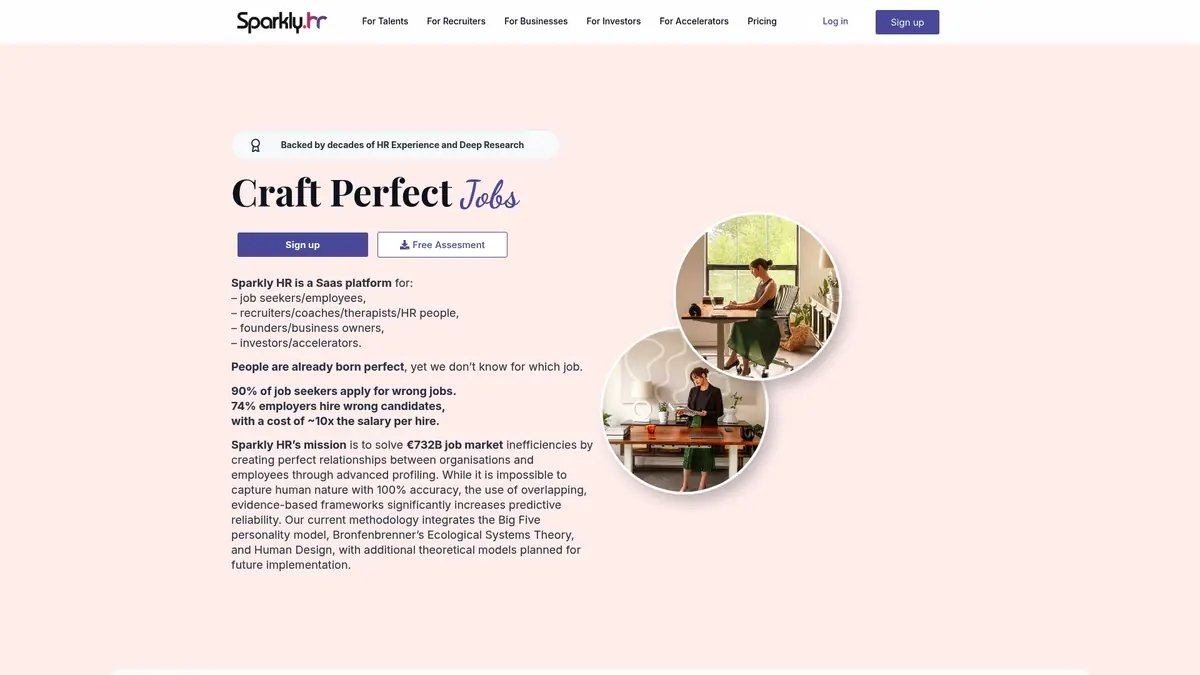
Sparkly merges personality assessments, psychometric data, AI analysis, and Human Design inputs to give HR leaders and managers a computed view of role fit, team interaction patterns, and burnout risk. Unlike tools that focus on skills, Sparkly prioritizes personality because personality drives the dynamics that skills never can. If you want to know why your team communicates the way it does, or why a high performer is creating friction, Sparkly gives you the data to find out. Explore talent assessment tips that connect directly to team dynamics improvement, or see how SaaS transforms employee potential at the organizational level.
FAQ
What are the main types of team dynamics?
The main types include psychological safety dynamics, communication dynamics, role clarity dynamics, conflict dynamics, and collaboration style dynamics. Each pattern shapes how team members interact and directly affects team performance and cohesion.
How do Tuckman’s stages relate to team dynamics?
Tuckman’s forming, storming, norming, performing, and adjourning stages describe how team dynamics evolve over time. Managers who recognize which stage their team is in can apply the right intervention at the right moment to accelerate development.
Why is psychological safety the most important team dynamic?
Google’s Project Aristotle research identified psychological safety as the top predictor of team effectiveness across 180 teams. It enables open communication, early problem identification, and higher engagement, making all other positive dynamics possible.
How can managers improve team dynamics quickly?
The fastest improvements come from modeling fallibility publicly, establishing explicit communication norms, and clarifying decision rights at the project level. These three actions shift interaction patterns without requiring structural changes or new hires.
What is the difference between team dynamics and team composition?
Team dynamics refer to interaction patterns and behavioral norms within a group. Team composition refers to who is on the team. Research from Google re:Work confirms that interaction norms are far more predictive of team effectiveness than composition alone.