Top types of employee assessment for retention and team fit

TL;DR:
- Choosing validated, reliable assessment tools is essential for improving employee retention.
- Combining personality assessments with performance feedback provides a comprehensive view of employee potential.
- Innovative tools like AI and gamification complement core assessments but require external validation to ensure effectiveness.
Voluntary turnover is quietly draining budgets, morale, and momentum at companies of every size. The 2026 US average sits at 13% overall, with retail and hospitality reaching 26.7%, healthcare at 19.5%, and tech at 17%. Those numbers represent real costs: lost institutional knowledge, recruiting fees, and months of productivity gone. The good news? Choosing the right mix of employee assessment tools is one of the most direct levers HR teams have for reversing those trends. This article walks you through the selection criteria, the main assessment types, innovative new approaches, and a side-by-side comparison to help you find the right fit for your team. 📈
Table of Contents
- How to evaluate employee assessment tools
- Top types of employee assessment and their uses
- Innovative approaches: AI-powered and game-based employee assessments
- Comparison of employee assessment types for retention and team fit
- Why validated basics plus innovation beats hype: A practitioner’s view
- Ready to transform your team with the right assessments?
- Frequently asked questions
Key Takeaways
| Point | Details |
|---|---|
| Assessment choice impacts retention | Selecting the right employee assessments significantly boosts retention and team success. |
| Innovation needs validation | Combine innovative tools like AI with proven methods for optimal results, not hype. |
| Prioritize culture and fit | Personality and behavioral assessments are essential for building strong team dynamics. |
| Compare for your situation | Use structured comparisons to choose the best assessment mix for your industry and goals. |
How to evaluate employee assessment tools
With high average turnover in mind, your first step is a rigorous approach to choosing the right tools. Not every assessment on the market deserves a spot in your process. The difference between a tool that meaningfully improves retention and one that wastes everyone’s time usually comes down to four core criteria.
Validity and reliability are non-negotiable. Validity means the tool actually measures what it claims to measure. Reliability means it produces consistent results over time and across different evaluators. Assessments must ensure validity and reliability to minimize error, and ethical use requires informed consent, bias checks, and avoiding off-label applications to prevent misuse. An assessment designed to measure communication style should not be repurposed to make promotion decisions without proper validation for that use case.
Here are the core criteria to apply before committing to any tool:
- Validity and reliability: Does the tool measure what it claims, consistently?
- Scalability: Can it grow with your organization without ballooning costs or administrative burden?
- Bias mitigation: Does the vendor provide documentation on adverse impact and demographic fairness?
- Alignment with goals: Does it connect to your specific retention, culture, or performance objectives?
- Ethical use and informed consent: Are candidates and employees told how their data will be used?
- Integration: Does it connect cleanly with your existing HR tech stack?
Understanding the assessment’s role in HR also means recognizing that these tools are not just screening devices. They inform onboarding, team design, career development, and succession planning. A tool that only helps you screen candidates but tells you nothing about long-term fit or development potential is leaving value on the table.
“The best assessment strategy is not about using the most sophisticated tool. It is about using the right tool for the right decision, with a clear understanding of its limits.”
Pro Tip: Before rolling out any new assessment organization-wide, pilot it with a single team or department. Gather feedback from both administrators and participants, measure predictive accuracy over 3 to 6 months, and then decide whether to scale. This approach saves budget and prevents poor tools from embedding themselves in your culture.
Top types of employee assessment and their uses
Once you have your selection criteria, review the main types of assessments available. Each type is suited to different needs and outcomes, and the best HR programs typically combine more than one.
-
Personality and behavioral assessments. These evaluate stable traits like openness to collaboration, leadership orientation, integrity, and stress response. Personality and behavioral assessments evaluate traits like teamwork, leadership, and integrity to predict cultural fit and team dynamics. They are especially powerful for roles where attitude and interpersonal style matter as much as technical ability. At Sparkly, we believe this is the category that deserves the most attention, because skills can be taught but personality shapes how someone actually shows up every day.
-
360-degree and peer feedback assessments. These gather structured input from managers, peers, direct reports, and sometimes clients. The multi-source format gives a holistic picture of how someone is perceived and where development opportunities exist. They work best for leadership development and culture-building initiatives, not initial hiring decisions.
-
Skills and aptitude tests. These measure job-relevant technical abilities, cognitive reasoning, and problem-solving speed. They are highly useful for roles with specific skill requirements, like data analysis or software engineering, but they say little about how someone will collaborate, handle conflict, or grow over time.
-
Behaviorally Anchored Rating Scales (BARS). BARS use specific behavioral examples to reduce subjectivity in performance ratings. Instead of rating someone as “good communicator” on a vague 1-to-5 scale, BARS anchors each rating level to a concrete observable behavior. This makes performance reviews more consistent and defensible.
-
Management by Objectives (MBO). MBO aligns employee goals with organizational objectives and focuses on measurable outcomes. It is less about personality or behavior and more about whether agreed targets were met. MBO works well as part of a broader performance management system but should not be the only lens through which you evaluate people.
Each of these methods covers a different dimension of performance and potential. Personality-focused assessments tend to have the strongest link to long-term retention, because they capture who someone fundamentally is, not just what they know right now. Exploring the full range of HR assessment types helps you build a layered strategy rather than relying on any single method.
“No single assessment type tells the whole story. Combining personality data with performance feedback and goal tracking gives HR teams a far richer and more accurate picture of each employee.”
Pro Tip: For companies with 20 to 100 employees, a combination of a validated personality assessment at hiring and a structured 360 review at the 6-month mark provides early signal on both fit and development trajectory.
Innovative approaches: AI-powered and game-based employee assessments
Many teams want scalable, innovative solutions. Here is where AI and gamification genuinely shine, and where they need to be kept in check.
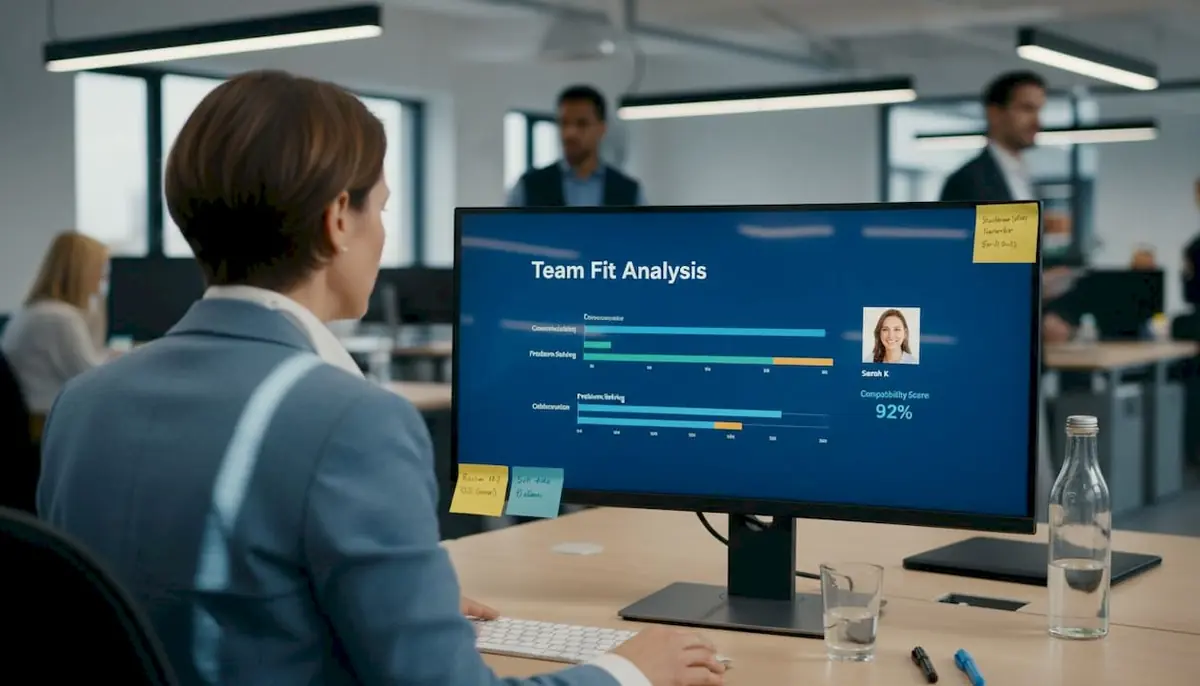
Innovative tools like AI-powered 360s (such as Incompass), game-based assessment platforms (such as Accelium), and behavioral analytics platforms (such as Predictive Index) reduce bias, scale efficiently, and are being linked to retention gains for organizations with 20 or more employees. These tools bring three real advantages: automation of data collection, the ability to surface behavioral patterns at scale, and the potential to reduce certain types of rater bias found in traditional methods.
| Tool type | Key strength | Main limitation | Best use case |
|---|---|---|---|
| AI-powered 360s | Automates multi-source feedback | Algorithm transparency concerns | Leadership development |
| Game-based assessments | Engaging, low-stakes data collection | Validity not always established | Early-stage candidate screening |
| Behavioral analytics platforms | Continuous performance insight | Requires clean data inputs | Ongoing team health monitoring |
| Psychometric assessments | High validity and reliability | Can feel clinical to candidates | Hiring and role redesign |
| Hybrid AI + psychometric | Combines breadth and depth | Integration complexity | Full talent lifecycle |
However, evidence shows these innovative tools supplement but do not replace core psychometrics. Prioritizing validated tools over hype is still the right call for turnover reduction. Game-based platforms are particularly engaging for younger workforces, but if the underlying methodology has not been peer-reviewed, the engagement data may not actually predict performance or retention.
Understanding AI’s role in recruitment is increasingly important for HR leaders who want to stay ahead of the curve without overpromising to their executive teams. There are also excellent assessment tools for recruiters that blend technology with human judgment in ways that improve decision quality.
Pro Tip: When evaluating an AI-powered assessment vendor, always ask for independent validation studies, not just internal case studies. Real validity data from external researchers is the benchmark that separates credible tools from clever marketing.
Comparison of employee assessment types for retention and team fit
After exploring individual options, a clear comparison makes it easier to map tools to your unique goals. ⚡️
| Assessment type | Retention impact | Bias risk | Ease of use | Best industry fit |
|---|---|---|---|---|
| Personality and behavioral | High | Low (when validated) | Medium | All industries |
| 360-degree feedback | Medium to high | Medium (rater bias) | Medium | Leadership roles |
| Skills and aptitude tests | Medium | Medium (can disadvantage groups) | High | Tech, engineering |
| BARS performance ratings | Medium | Low (structured anchors) | Medium | Healthcare, retail ops |
| MBO goal assessments | Low to medium | Low | High | Sales, project-based roles |
| AI-powered 360s | Medium to high | Low to medium | High | Mid-size and large teams |
| Game-based assessments | Medium | Medium | Very high | High-volume hiring |
The 2026 voluntary turnover benchmarks by industry tell you which stakes are highest. Retail and hospitality at 26.7% need fast, scalable tools that work for high-volume hiring. Game-based screening and AI-assisted filtering make sense there. Healthcare at 19.5% requires high-validity assessments that predict performance under pressure and reduce costly rehires of clinical staff. Tech at 17% benefits from a combination of skills tests and personality assessments, since both technical capability and cultural fit are critical for team cohesion in fast-moving product environments.
Here are quick guidelines to match tools to your team’s specific needs:
- High-volume hiring (retail, hospitality): Prioritize scalable, automated tools like AI screening and game-based assessments, then validate finalists with a personality assessment.
- Leadership pipeline development: Use 360-degree feedback combined with personality assessments to identify both current performance and long-term potential.
- Remote and distributed teams: Behavioral analytics platforms offer continuous visibility when managers have less daily face time with their teams.
- Culture-focused hiring: Personality and values-based assessments predict cultural alignment better than skills tests alone.
- Performance management: Combine BARS with MBO so employees are rated on both observable behavior and goal attainment.
Use the employee fit assessment guide to build a shortlist based on your specific industry context, and explore assessment tips for team dynamics to refine how you use data to structure and shift teams effectively.
💡 The companies seeing the most measurable improvement in retention are not necessarily using the most expensive tools. They are using the most relevant tools, applied consistently across hiring, onboarding, and development.
Why validated basics plus innovation beats hype: A practitioner’s view
With the landscape laid out, it is time to address the core question: does the latest tech replace the proven basics, or complement them?
Every few years, a new category of assessment technology captures the industry’s attention and promises to solve retention, culture, and performance in one platform. Right now that excitement is concentrated around AI-powered tools and gamified assessments. Some of that excitement is justified. Automation genuinely reduces administrative burden. AI can surface patterns across thousands of data points faster than any human reviewer. And game-based formats reduce the anxiety some candidates feel in traditional assessment settings.
But here is what gets lost in the enthusiasm. Many of these tools are built on proprietary algorithms with limited external validation. The vendors are often incentivized to sell engagement and novelty, not predictive accuracy. When you look beneath the polished dashboards, you frequently find that the connection between assessment scores and actual retention outcomes is either thin or unproven.
The organizations achieving the most durable improvements in retention and team performance are the ones anchoring their strategy in validated, research-backed personality and behavioral assessments, and then layering in innovative tools selectively. They are not chasing every new platform. They are asking: does this tool have independent evidence that it predicts what we care about, and does it complement our existing foundation?
Personality-driven hiring is not a trend. It is a durable strategy because personality is genuinely hard to fake over time and genuinely predictive of how someone will behave in a team, under stress, and in the face of ambiguity. Skills can be developed. Attitudes and core traits are far more stable. The future of assessment is not a choice between the basics and innovation. It is a connected system where both work together to give you richer data, less bias, and clearer decisions.
Ready to transform your team with the right assessments?
Building a smarter assessment strategy starts with having the right tools and the right framework. Sparkly’s SaaS in HR platform is designed specifically to help organizations with 20 or more employees move beyond guesswork. We merge personality assessments, psychometric data, AI, and Human Design into a single high-probability insight engine that HR teams can use confidently in interviews, job redesign, and team restructuring.
Whether you are looking for a complete talent evaluation system or want to explore top talent evaluation SaaS options to reduce turnover, Sparkly gives you the clarity to act. Our personality assessment strategies help you look beyond resumes and skills checklists to find candidates and team members who will genuinely thrive in your culture. Ready to see what the right assessment mix can do for your team? Explore Sparkly and take the next step toward building a workforce that stays, grows, and performs.
Frequently asked questions
What is the most reliable type of employee assessment for reducing turnover?
Personality and behavioral assessments evaluate traits like teamwork, leadership, and integrity to predict cultural fit, giving them the strongest evidence base for improving long-term retention.
How do AI-powered assessments differ from traditional assessments?
AI-powered tools automate multi-source data collection and scale efficiently, but they work best as a complement to validated psychometric methods rather than a standalone replacement.
Are there risks to using unvalidated or unlicensed employee assessments?
Yes. Unvalidated tools introduce bias and measurement error that can lead to poor hiring decisions, discriminatory outcomes, and mismatched teams that drive turnover higher rather than lower.
Which assessment type aligns best with building a strong company culture?
Personality and behavioral assessments are the most direct way to evaluate values alignment and predict how a candidate or current employee will contribute to team culture and dynamics.