Employee engagement explained: innovative strategies for HR in 2026

Many HR professionals believe employee engagement is just about running satisfaction surveys and checking boxes. That’s a costly misconception. True engagement involves emotional commitment, discretionary effort, and genuine ownership of work outcomes. Mid-sized companies face unique engagement challenges in 2026, from competing for talent to managing hybrid teams effectively. This guide cuts through the confusion, explaining what engagement really means and sharing innovative, personality-driven strategies that reduce turnover and unlock your team’s full potential. You’ll discover measurement approaches beyond surveys, personalization tactics using AI, and practical ways to balance enthusiasm with sustainable productivity.
Table of Contents
- Understanding Employee Engagement: Definitions And Nuances
- Innovative Strategies To Personalize And Boost Engagement In 2026
- Measuring And Evolving Engagement: From Surveys To Effectiveness Diagnostics
- Addressing Engagement Risks: Managing Workload And Avoiding Burnout
- Enhance Engagement With Sparkly HR’s Innovative Solutions
Key takeaways
| Point | Details |
|---|---|
| Emotional connection drives engagement | Engagement means employees feel emotionally invested in work, not just satisfied with their paychecks. |
| Broader metrics reveal true impact | Moving beyond annual surveys to real-time effectiveness diagnostics gives actionable insights. |
| Personalization boosts commitment | Tailoring benefits, using AI nudges, and peer mentorship create deeper employee connections. |
| Balance prevents burnout | Monitoring workload and destructive engagement patterns sustains productivity without sacrificing wellbeing. |
Understanding employee engagement: definitions and nuances
Employee engagement isn’t a synonym for satisfaction or happiness at work. Engagement is defined as emotional commitment employees have to their work, team, and organization’s goals, involving discretionary effort, enthusiasm, and ownership. When someone is engaged, they don’t just show up and complete tasks. They invest energy beyond what’s required, advocate for the company, and align personal success with organizational outcomes.
Satisfaction measures how content employees feel with compensation, benefits, and work conditions. Engagement goes deeper, capturing whether they’re willing to go the extra mile. Commitment reflects loyalty and intent to stay, but an employee can be committed without being engaged, simply staying for stability rather than passion. Research shows engagement overlaps with satisfaction and commitment but emphasizes effectiveness and empowerment over sentiment alone.
HR professionals in 2026 are shifting focus from measuring how employees feel to understanding how empowered and effective they are. This evolution addresses methodological challenges in engagement research and aligns with the needs of mid-sized companies seeking competitive advantage through their people. The employee engagement checklist 2026 offers a practical framework for implementing these insights.
Engagement has distinct components that HR teams should recognize:
- Emotional connection to the mission and values of the organization
- Discretionary effort that exceeds job requirements and expectations
- Ownership mindset where employees treat company success as personal success
- Advocacy behavior, promoting the organization to peers and potential hires
“The shift from sentiment-based engagement to effectiveness and empowerment metrics reflects a maturation in how we understand and measure employee commitment. Methodological heterogeneity in engagement research demands more nuanced approaches tailored to organizational context.â€
Understanding these nuances helps you design strategies that target the right levers. Satisfaction surveys tell you if people are happy. Engagement diagnostics reveal if they’re contributing at their highest capacity and whether they feel empowered to make meaningful impact.
Innovative strategies to personalize and boost engagement in 2026
Generic engagement programs fail because they treat all employees the same. Personalization transforms engagement by recognizing individual preferences, strengths, and motivations. Top strategies for mid-sized businesses include lifestyle and wellness benefits tailored to employee needs, AI-driven nudges that encourage productive behaviors without micromanagement, and peer mentorship programs that foster authentic team connections.
Lifestyle benefits go beyond standard health insurance. Offer flexible work arrangements, wellness stipends employees can use how they choose, or professional development budgets aligned with career aspirations. When employees see their unique circumstances acknowledged, emotional commitment grows naturally. AI tools can analyze work patterns and send timely nudges, like suggesting breaks during intense focus periods or recommending collaboration opportunities based on project synergies.
Peer mentorship creates engagement through relationship building. Pair experienced team members with newer hires, not just for skills transfer but for cultural integration and support. These relationships generate belonging and investment that formal training can’t replicate. HR team management tools streamline matching mentors with mentees based on personality compatibility and development goals.

Managing workload is critical to preventing destructive over-engagement. Some employees become so committed they work unsustainable hours, leading to burnout and eventual disengagement. Monitor workload distribution, encourage boundaries, and model healthy work habits from leadership. Balance enthusiasm with sustainability to maintain long-term productivity.
Moving beyond annual surveys to dynamic effectiveness diagnostics gives you real-time insights. Continuous feedback loops, pulse checks, and behavior analytics reveal engagement trends before they become problems. The employee potential checklist 2026 helps identify when team members are thriving versus struggling, enabling proactive intervention.
Key strategies to implement immediately:
- Personalize benefits packages based on employee life stages and preferences
- Deploy AI tools that track engagement signals like collaboration frequency and project ownership
- Launch peer mentorship matching based on personality assessments for better compatibility
- Establish workload monitoring systems that flag burnout risks early
- Replace annual surveys with monthly pulse checks and real-time feedback channels
Pro Tip: Integrate technology platforms that consolidate engagement data from multiple sources, like project management tools, communication apps, and performance systems, to get a holistic view of employee commitment and effectiveness without survey fatigue.
These strategies work because they respect individual differences while creating systems that scale. Mid-sized companies have the agility to implement personalized approaches without the bureaucracy of large enterprises, making 2026 the ideal time to innovate engagement practices.
Measuring and evolving engagement: from surveys to effectiveness diagnostics
Traditional engagement surveys like Gallup’s Q12 measure sentiment at a point in time. They ask if employees have a best friend at work or if someone cares about their development. While useful, these tools don’t capture the dynamic nature of engagement or provide actionable insights for continuous improvement. Research emphasizes shifting to effectiveness and empowerment metrics over sentiment, addressing methodological heterogeneity in how engagement is measured.
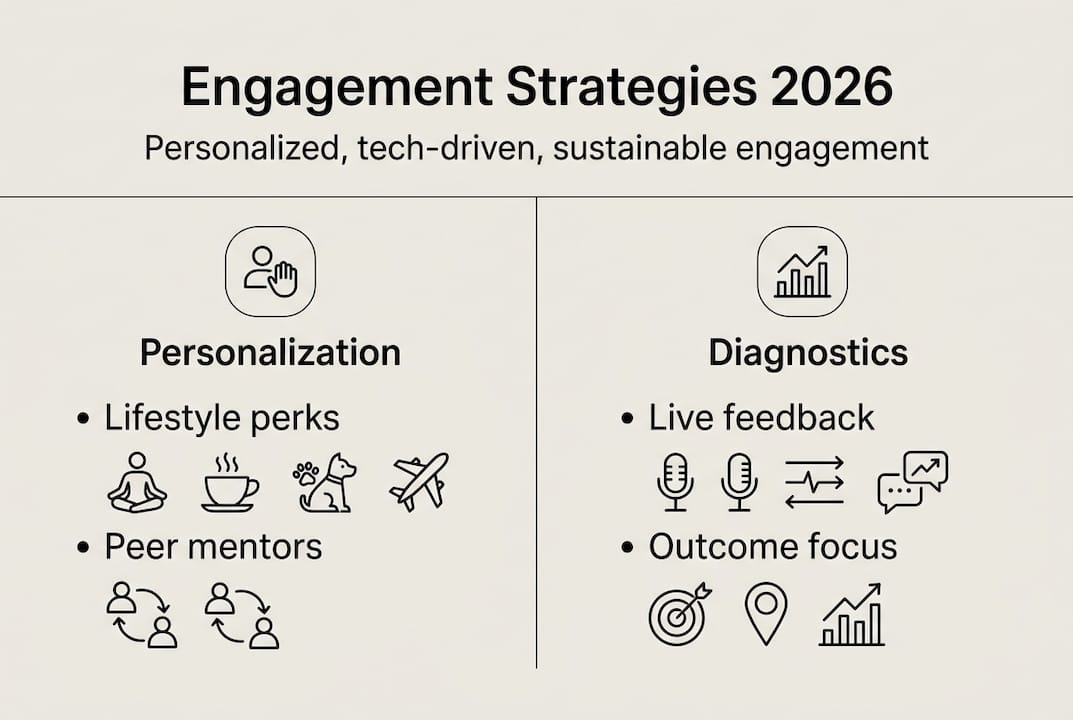
Effectiveness diagnostics focus on outcomes and behaviors rather than feelings. Are employees taking initiative? Do they collaborate across teams? Are they solving problems independently? These indicators reveal engagement through observable actions, not self-reported satisfaction. Empowerment metrics assess whether employees have the autonomy, resources, and support to perform at their best.
| Approach | Survey-Based Measurement | Effectiveness/Empowerment Diagnostics | | — | — | | Frequency | Annual or biannual | Continuous, real-time | | Focus | Employee sentiment and satisfaction | Observable behaviors and outcomes | | Actionability | Delayed insights, broad themes | Immediate insights, specific interventions | | Data Sources | Self-reported surveys | Performance data, collaboration metrics, peer feedback | | Adaptability | Static questions, slow to change | Dynamic indicators, evolves with organizational needs |
Implementing modern engagement metrics requires a structured approach:
- Define effectiveness indicators relevant to your organization, like project completion rates, cross-functional collaboration frequency, or innovation contributions.
- Integrate data collection into existing workflows using project management software, communication platforms, and performance tracking systems.
- Establish baseline measurements to understand current engagement levels across teams and departments.
- Create feedback loops where employees see how their input drives organizational changes, reinforcing their sense of impact.
- Train managers to interpret engagement data and have meaningful conversations with team members about empowerment and effectiveness.
- Iterate measurement approaches based on what predicts retention, productivity, and innovation in your specific context.
Methodological challenges include ensuring data privacy, avoiding surveillance culture, and interpreting metrics accurately. Tailor measurement to your company size and industry. Mid-sized companies benefit from simpler, more focused metrics that leadership can act on quickly. The employee potential evaluation guide offers frameworks for assessing engagement through performance and potential lenses.
Continuous feedback mechanisms replace the annual survey cycle with ongoing conversations. Weekly check-ins, monthly pulse surveys with rotating questions, and always-on feedback channels give employees voice without survey fatigue. Actionable insights emerge when you analyze patterns across multiple data sources, identifying which teams thrive and which need support.
Talent retention strategies that incorporate personality assessments help you understand what drives engagement for different employee types. Some thrive on autonomy, others on collaboration. Personalized approaches to measurement and intervention respect these differences, making engagement efforts more effective and sustainable.
Addressing engagement risks: managing workload and avoiding burnout
High engagement isn’t always positive. Destructive engagement occurs when employees are so committed they sacrifice wellbeing, working excessive hours and ignoring personal needs. This pattern leads to burnout, decreased performance, and eventual turnover. Addressing destructive engagement requires workload balance and effectiveness diagnostics that catch warning signs early.
Symptoms of destructive engagement include consistently working beyond scheduled hours, skipping breaks and vacation time, declining physical or mental health, and irritability or cynicism about work. These employees appear highly engaged on surveys but are heading toward collapse. HR professionals must distinguish between sustainable enthusiasm and unsustainable over-commitment.
Signs HR should monitor:
- Persistent overtime without corresponding productivity gains or project urgency
- Declining quality of work despite increased hours invested
- Withdrawal from team activities or social interactions at work
- Physical symptoms like fatigue, headaches, or frequent illness
- Emotional exhaustion expressed in one-on-one conversations or feedback
Pro Tip: Implement workload monitoring dashboards that track hours worked, project load, and time off utilization across teams. Set alerts when employees exceed healthy thresholds for consecutive weeks, triggering manager check-ins before burnout sets in.
Balancing enthusiasm with sustainable effort requires cultural and structural changes. Leadership must model healthy boundaries, taking vacation and disconnecting after hours. Policies should explicitly discourage after-hours emails and reward efficiency over face time. Flexible scheduling allows employees to manage energy levels, working when they’re most productive rather than conforming to rigid schedules.
Team workflow adjustments prevent overload on high performers. Team member shifting redistributes work based on capacity and strengths, ensuring no one becomes a bottleneck or burnout risk. Cross-training creates redundancy so critical functions don’t depend on single individuals working unsustainable hours.
Regular conversations about workload and wellbeing normalize discussing limits. Managers should ask not just about project progress but about how employees feel about their workload and whether they have resources to succeed without overextension. Creating psychological safety around saying no or asking for help prevents destructive engagement patterns from taking root.
Engagement thrives when employees feel challenged but supported, stretched but not broken. The goal is discretionary effort applied strategically, not constant overdrive. By monitoring risks and intervening early, you sustain the positive aspects of engagement while protecting your team’s long-term health and productivity.
Enhance engagement with Sparkly HR’s innovative solutions
Transforming engagement strategies from theory to practice requires the right tools. Sparkly HR’s employee assessment SaaS unlocks the full potential of current and future employees by focusing on personality over skills. Skills can be learned, but personality drives how people engage, collaborate, and contribute. Our platform merges insights from human judgment, AI analysis, psychometric assessments, and Human Design to extract high-probability data that informs smarter hiring and team optimization decisions.
For mid-sized companies navigating engagement challenges in 2026, Sparkly HR offers:
- Personality-driven assessments that reveal what motivates each employee and how to personalize engagement strategies
- Talent optimization tools that identify ideal roles and team configurations based on individual strengths and preferences
- Fit analysis that predicts which candidates will thrive in your culture and which current employees are at risk of disengagement
Pro Tip: Use Sparkly HR’s insights to redesign jobs around people’s natural tendencies rather than forcing square pegs into round holes. This approach reduces turnover by 30% and increases discretionary effort across teams.
Explore how SaaS solutions transform HR by providing data-driven insights that replace guesswork with evidence. Learn about talent optimization frameworks that align individual potential with organizational needs. Discover the employee fit assessment guide 2026 to implement these strategies and cut turnover costs while building a more engaged, effective workforce.
FAQ
What is the difference between employee engagement and employee satisfaction?
Employee engagement reflects emotional commitment and discretionary effort, while satisfaction measures how happy employees feel with compensation, benefits, and work conditions. Engagement drives performance more directly because engaged employees invest energy beyond job requirements and align personal success with organizational outcomes. Satisfaction is necessary but not sufficient for high performance. You can have satisfied employees who aren’t engaged, simply content with their situation without feeling motivated to excel or innovate.
How can mid-sized companies measure employee engagement beyond surveys?
Use real-time effectiveness diagnostics that track observable behaviors like project ownership, collaboration frequency, and problem-solving initiative. Empowerment indicators assess whether employees have autonomy, resources, and support to perform at their best. Leverage AI tools that analyze work patterns, communication data, and performance metrics to identify engagement trends without survey fatigue. Continuous pulse checks with rotating questions and always-on feedback channels provide ongoing insights that annual surveys can’t match.
What innovative strategies improve engagement in 2026?
Personalized lifestyle benefits tailored to individual preferences, AI-driven nudges that encourage productive behaviors, and peer mentorship programs based on personality compatibility create deeper connections. Balance workload to prevent destructive engagement and burnout. Move beyond annual surveys to dynamic diagnostics that provide continuous, actionable insights. These strategies work because they respect individual differences while creating scalable systems that mid-sized companies can implement with agility.
How can HR prevent burnout while encouraging engagement?
Monitor workload distribution and watch for signs of destructive engagement like persistent overtime, declining work quality, and emotional exhaustion. Implement flexible scheduling that allows employees to manage energy levels and work when they’re most productive. Use team workflow shifts to redistribute work based on capacity and strengths, preventing overload on high performers. Create psychological safety around discussing limits and asking for help. Model healthy boundaries from leadership and reward efficiency over face time to sustain engagement without sacrificing wellbeing.