What is team performance? A guide for HR leaders
Most HR leaders think team performance is simply the sum of individual outputs. This narrow view misses the collaborative dynamics, engagement levels, and communication patterns that truly drive results. Understanding team performance requires looking beyond productivity metrics to assess how your people work together, share knowledge, and contribute to collective goals. This guide breaks down the measurable dimensions of team performance and shows you practical ways to evaluate and enhance your teams using personality-focused assessments and engagement strategies.
Table of Contents
- Key takeaways
- Understanding what is team performance and its key dimensions
- Common misconceptions and nuanced factors influencing team performance
- Measuring and improving team performance with innovative assessments and engagement
- Practical strategies for sustaining high team performance
- Discover Sparkly HR solutions to maximize your team’s potential
- Frequently asked questions
Key Takeaways
| Point | Details |
|---|---|
| Multidimensional team performance | Team success depends on how well the group works together across output, collaboration, engagement, and communication, not just individual results. |
| Key performance dimensions | Track productivity, collaboration, engagement, communication quality, and quality to capture the full picture of team effectiveness. |
| Personality based assessments | Using personality focused assessments can boost team synergy by aligning roles and communication styles with team dynamics. |
| Engagement drives performance | Regular engagement surveys and participation measures help sustain motivation and guide improvement efforts. |
Understanding what is team performance and its key dimensions
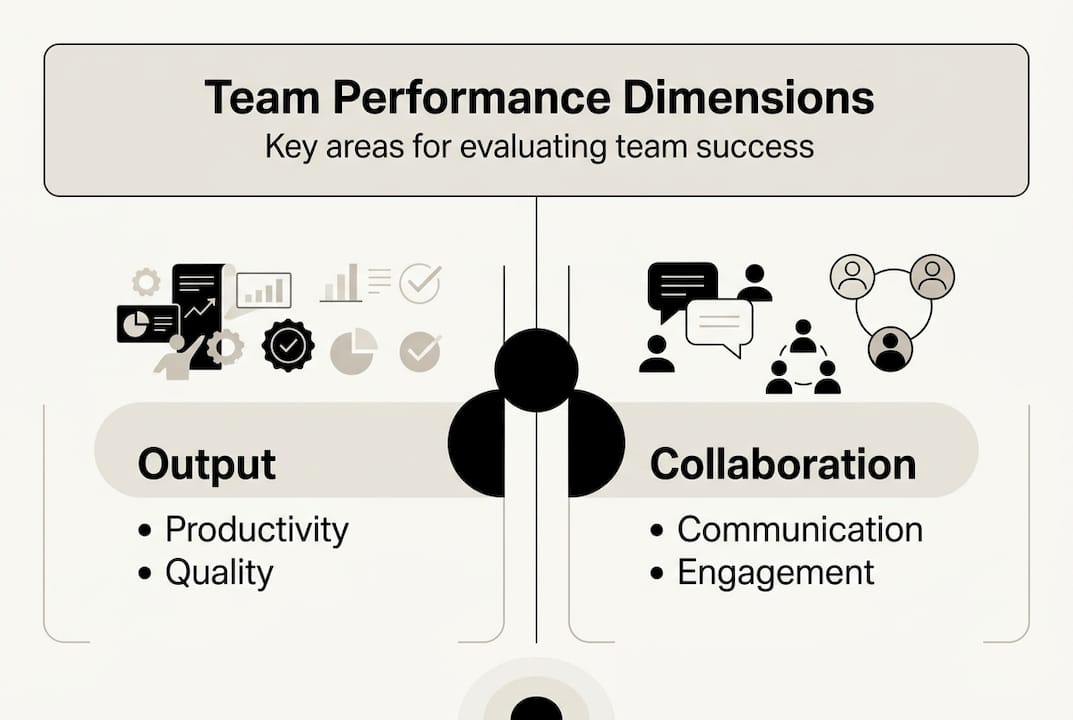
Team performance is defined as quantifiable indicators assessing how effectively a team works toward goals, focusing on output, efficiency, quality, collaboration, and engagement rather than individual metrics. This multi-dimensional construct goes far beyond tracking how many tasks each person completes. True team performance captures the collective capability to deliver results, solve problems together, and maintain momentum through challenges.
The core dimensions you need to measure include productivity, which tracks output volume and efficiency. Collaboration measures how well team members share information, support each other, and coordinate efforts. Engagement reflects the emotional commitment and motivation your people bring to their work. Communication quality determines how clearly information flows and how effectively team members resolve conflicts. Finally, quality assesses the standard of deliverables and attention to detail in team outputs.
Here are the critical performance indicators across these dimensions:
- Output per team member and collective throughput rates
- Response times and completion rates for shared projects
- Engagement survey scores and participation in team activities
- Communication frequency, clarity, and conflict resolution speed
- Error rates, rework requirements, and customer satisfaction scores
| Dimension | Definition | Measurable Indicators |
|---|---|---|
| Productivity | Volume and efficiency of collective output | Tasks completed, throughput rate, time to completion |
| Collaboration | Quality of teamwork and information sharing | Cross-functional project success, knowledge sharing frequency |
| Engagement | Emotional commitment and motivation levels | Survey scores, retention rates, voluntary participation |
| Communication | Clarity and effectiveness of information flow | Response times, meeting effectiveness, conflict resolution speed |
| Quality | Standard of deliverables and attention to detail | Error rates, customer satisfaction, rework percentage |
Understanding these dimensions helps you design better employee potential evaluation processes that account for how individuals contribute to team success. When you assess employee fit effectively, you’re not just looking at skills but at how personality traits and work styles mesh with existing team dynamics.
Pro Tip: Avoid fixating on individual metrics at the expense of team context. A high performer who disrupts collaboration can reduce overall team effectiveness more than a moderate performer who strengthens group cohesion.
This comprehensive view of team performance metrics gives you the foundation to make informed decisions about team composition, development investments, and performance improvement initiatives. The key is measuring all dimensions consistently and using that data to guide your leadership approach.
Common misconceptions and nuanced factors influencing team performance
Many organizations mistakenly believe that maximizing individual productivity automatically leads to superior team results. This assumption ignores the reality that team performance metrics focus on collaboration, engagement, quality, and communication rather than only on individual output. When you optimize for individual performance without considering team dynamics, you risk creating silos, communication breakdowns, and competitive rather than collaborative environments.
Personality diversity significantly impacts how teams function. A group of highly analytical thinkers might excel at problem solving but struggle with creative innovation or client communication. Similarly, communication styles vary widely, some people prefer direct confrontation while others value diplomatic approaches. These differences can either strengthen teams through complementary skills or create friction when misunderstood. The key is recognizing these patterns and building awareness among team members.

Engagement and quality often get overlooked in favor of easily quantifiable metrics like task completion rates. Yet disengaged team members who simply go through the motions can meet productivity targets while delivering subpar work that requires extensive rework. Quality issues compound over time, creating technical debt, customer dissatisfaction, and team frustration. Measuring engagement through surveys, one-on-one conversations, and observation gives you early warning signs before performance deteriorates.
Here are common myths versus facts about team performance:
- Myth: High individual performers always create high performing teams
- Fact: Team chemistry and collaboration skills matter more than individual talent
- Myth: More meetings improve team communication
- Fact: Meeting quality and purpose matter more than frequency
- Myth: Competition between team members drives better results
- Fact: Psychological safety and cooperation produce superior outcomes
- Myth: Remote teams always underperform compared to in-person teams
- Fact: Well-managed remote teams match or exceed in-person performance
Teams with strong collaboration practices and high engagement levels consistently outperform groups of individual high achievers who lack cohesion, regardless of industry or team size.
Implementing team optimization personality strategies helps you address these misconceptions by focusing on how different personality types interact and contribute. An employee engagement checklist provides structure for monitoring the human factors that traditional productivity metrics miss.
The nuanced factors influencing team performance include trust levels, conflict resolution patterns, decision-making processes, and how teams handle failure. Teams that view mistakes as learning opportunities recover faster and innovate more than those that punish errors. Similarly, teams with clear decision-making frameworks waste less time in endless debates and move forward with confidence. Understanding these team performance dynamics requires looking beyond surface-level metrics to assess the underlying health of team relationships and processes.
Measuring and improving team performance with innovative assessments and engagement
Innovative personality assessments and employee engagement strategies significantly improve team performance and collaboration. Moving from theory to practice requires structured approaches that combine data collection, analysis, and targeted interventions. Here’s how to implement effective measurement and improvement systems:
- Establish baseline metrics across all performance dimensions before making changes
- Deploy personality assessments to understand individual traits, communication preferences, and potential friction points
- Conduct engagement surveys quarterly to track motivation, satisfaction, and commitment levels
- Implement 360-degree feedback processes that capture peer, manager, and self-assessments
- Set up collaboration metrics tracking cross-functional project success and knowledge sharing frequency
- Create dashboards that visualize performance trends and highlight areas needing attention
- Schedule regular team retrospectives to discuss what’s working and what needs adjustment
- Design targeted interventions based on assessment results, such as communication training or role adjustments
| Assessment Tool | Primary Focus | Key Benefits | Best For |
|---|---|---|---|
| Personality assessments | Individual traits and preferences | Predicts collaboration patterns, identifies complementary skills | Team composition and conflict prevention |
| Engagement surveys | Motivation and satisfaction | Early warning of retention risks, identifies improvement areas | Monitoring team health and morale |
| 360-degree feedback | Performance from multiple perspectives | Comprehensive view of contributions, reduces bias | Individual development and promotion decisions |
| Collaboration analytics | Communication patterns and information flow | Identifies silos, measures cross-functional effectiveness | Process improvement and organizational design |
| Skills assessments | Technical and soft skill levels | Guides training investments, reveals capability gaps | Development planning and hiring decisions |
The most effective approach combines multiple assessment types to create a complete picture of team dynamics. Talent assessment tips show how personality-focused evaluations reveal insights that traditional skills testing misses. When you understand that someone prefers detailed written communication over verbal discussions, you can adjust team processes to accommodate different working styles.
HR team management tools streamline the data collection and analysis process, making it feasible to track performance metrics continuously rather than just during annual reviews. These platforms integrate assessment results, engagement data, and performance metrics into unified dashboards that help you spot trends and intervene early.
Pro Tip: Integrate assessment results into ongoing team development plans rather than treating them as one-time events. Schedule quarterly reviews of personality insights and engagement data to adjust team structures, communication protocols, and development priorities as your team evolves.
The goal is creating a continuous improvement cycle where measurement informs action, action produces results, and results guide the next round of measurement. This data-driven approach to team performance improvements replaces guesswork with evidence-based decisions that consistently enhance team effectiveness.
Practical strategies for sustaining high team performance
Sustained team performance requires continuous evaluation and tailored leadership strategies driven by analytics and employee feedback. Once you’ve established strong performance baselines and implemented assessment systems, the challenge becomes maintaining momentum and preventing regression. Leadership practices play a crucial role in this sustainability effort.
Fostering open communication starts with creating psychological safety where team members feel comfortable sharing concerns, admitting mistakes, and proposing new ideas without fear of punishment. Leaders who model vulnerability by acknowledging their own errors and asking for help set the tone for honest dialogue. Regular check-ins, both one-on-one and team-wide, provide forums for surfacing issues before they escalate into major problems.
Continuous tracking using key performance indicators prevents the slow drift toward lower standards that often happens without active monitoring. Set specific targets for each dimension of team performance and review progress monthly. When metrics decline, investigate root causes immediately rather than waiting for quarterly reviews. This proactive approach catches problems early when they’re easier to address.
Here are proven strategies for sustaining high performance:
- Implement regular coaching sessions focused on both technical skills and interpersonal dynamics
- Create recognition programs that celebrate collaborative achievements, not just individual wins
- Adjust workflows based on performance data to eliminate bottlenecks and reduce friction
- Rotate team members through different roles to build versatility and prevent burnout
- Invest in continuous learning opportunities that keep skills current and engagement high
- Establish clear escalation paths for resolving conflicts quickly and fairly
- Schedule team building activities that strengthen relationships outside work contexts
- Maintain transparent communication about organizational changes that affect the team
An employee engagement checklist helps you systematically monitor the human factors that drive sustained performance. Engagement doesn’t maintain itself, it requires ongoing attention to workload balance, recognition, career development, and work-life integration. When engagement scores drop, dig deeper to understand whether the issue stems from team dynamics, organizational policies, or external factors.
The team member shifting workflow approach recognizes that optimal team composition changes as projects evolve and individual capabilities develop. Rather than treating team structures as fixed, successful organizations regularly reassess whether current configurations serve strategic goals. This might mean moving someone to a role that better matches their personality strengths or adjusting team size to improve communication efficiency.
Pro Tip: Leverage analytics for early detection of team issues by setting up automated alerts when key metrics fall below thresholds. For example, if collaboration scores drop 15% or engagement survey results decline two quarters in a row, trigger an immediate investigation rather than waiting for the problem to become obvious.
Leadership support makes the difference between teams that sustain high performance and those that burn out or plateau. Leaders must balance pushing for results with protecting team wellbeing, providing resources teams need while empowering autonomous decision-making, and maintaining standards while showing flexibility when circumstances change. This nuanced approach to sustained team performance creates environments where people thrive long term rather than experiencing short bursts of productivity followed by exhaustion.
Discover Sparkly HR solutions to maximize your team’s potential
Transforming your understanding of team performance into tangible results requires tools designed specifically for personality-focused assessment and engagement optimization. Sparkly HR offers innovative SaaS solutions that unlock the full potential of your current and future employees by focusing on what truly drives team success.
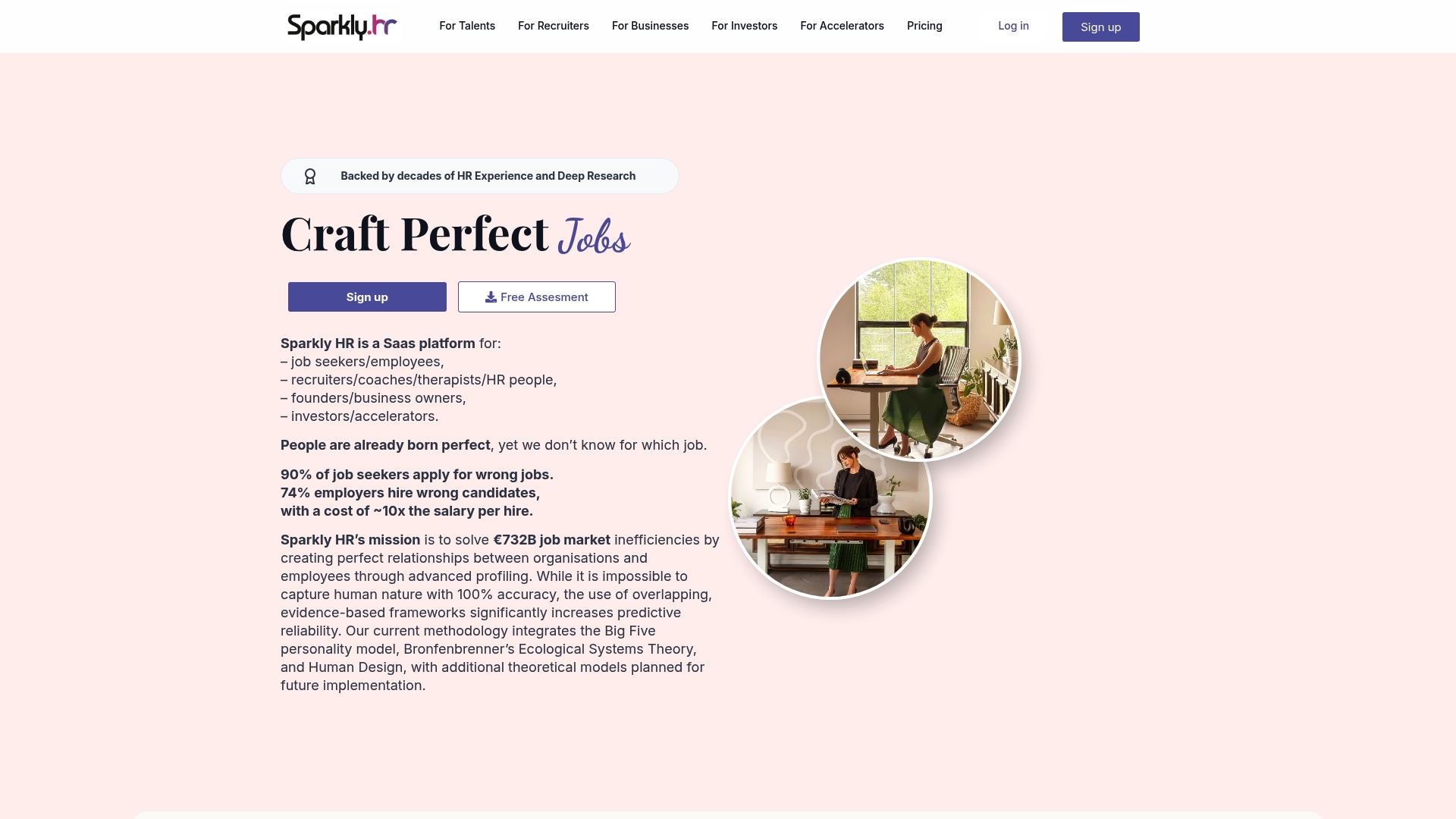
Our platform merges four data sources, human insights, AI analysis, psychometric assessments, and Human Design, to extract higher probability insights that guide your hiring and team development decisions. Unlike traditional approaches that fixate on skills, we assess personality primarily because skills can be learned while personality traits shape collaboration patterns, communication effectiveness, and team chemistry.
Key benefits of Sparkly HR solutions:
- Personality assessment integration that reveals how team members naturally interact and where conflicts might emerge
- Engagement analytics tracking motivation, satisfaction, and retention risk in real time
- Actionable insights for interviews, team composition, and role redesign based on comprehensive data analysis
- Job redesign recommendations that align roles with individual strengths and team needs
- Team member shifting workflows that optimize performance by matching people to positions where they’ll thrive
Explore how SaaS in HR employee potential transforms your approach to workforce optimization. Our personality-focused assessment strategies provide the foundation for building high-performing teams that sustain results over time. Discover practical talent assessment tips that help you make smarter hiring and development decisions.
Frequently asked questions
What are the best metrics to measure team performance?
Key metrics include productivity rate, quality of output, collaboration level, communication effectiveness, and employee engagement. These indicators offer a holistic view beyond individual performance by capturing how teams work together, share knowledge, and deliver results collectively. Track all dimensions consistently to identify improvement opportunities.
How can personality assessments improve team dynamics?
Personality data reveals communication preferences and potential conflicts before they disrupt team performance. It guides tailored interventions that strengthen team cohesion by helping members understand different working styles and adapt their approaches. This awareness reduces friction and enables more effective collaboration across diverse personality types.
What strategies boost continuous team performance improvement?
Regular performance reviews, engagement surveys, and adaptive workflows are key to maintaining momentum. Leadership support and analytics help identify issues early for timely action before problems escalate. Combine coaching, recognition programs, and role adjustments based on data insights to create sustainable improvement cycles that prevent performance plateaus.
Why is employee engagement critical to team performance?
Engaged employees are more productive and committed to team success, driving better collaboration and higher quality outputs. Engagement reduces turnover and enhances communication by creating psychological safety where people share ideas freely. Teams with high engagement consistently outperform those with disengaged members regardless of individual talent levels.