Struggling to keep teams motivated and employees engaged can be a daily challenge for HR managers in global tech companies, especially with high turnover disrupting progress. Tackling this issue means going beyond skill matching and focusing on deeper personality dynamics to drive collaboration and retention. This guide reveals strategic steps for optimizing talent allocation through modern assessment techniques, strengths-based mapping, advanced data analytics, and ongoing validation, helping transform your approach to team building.
Table of Contents
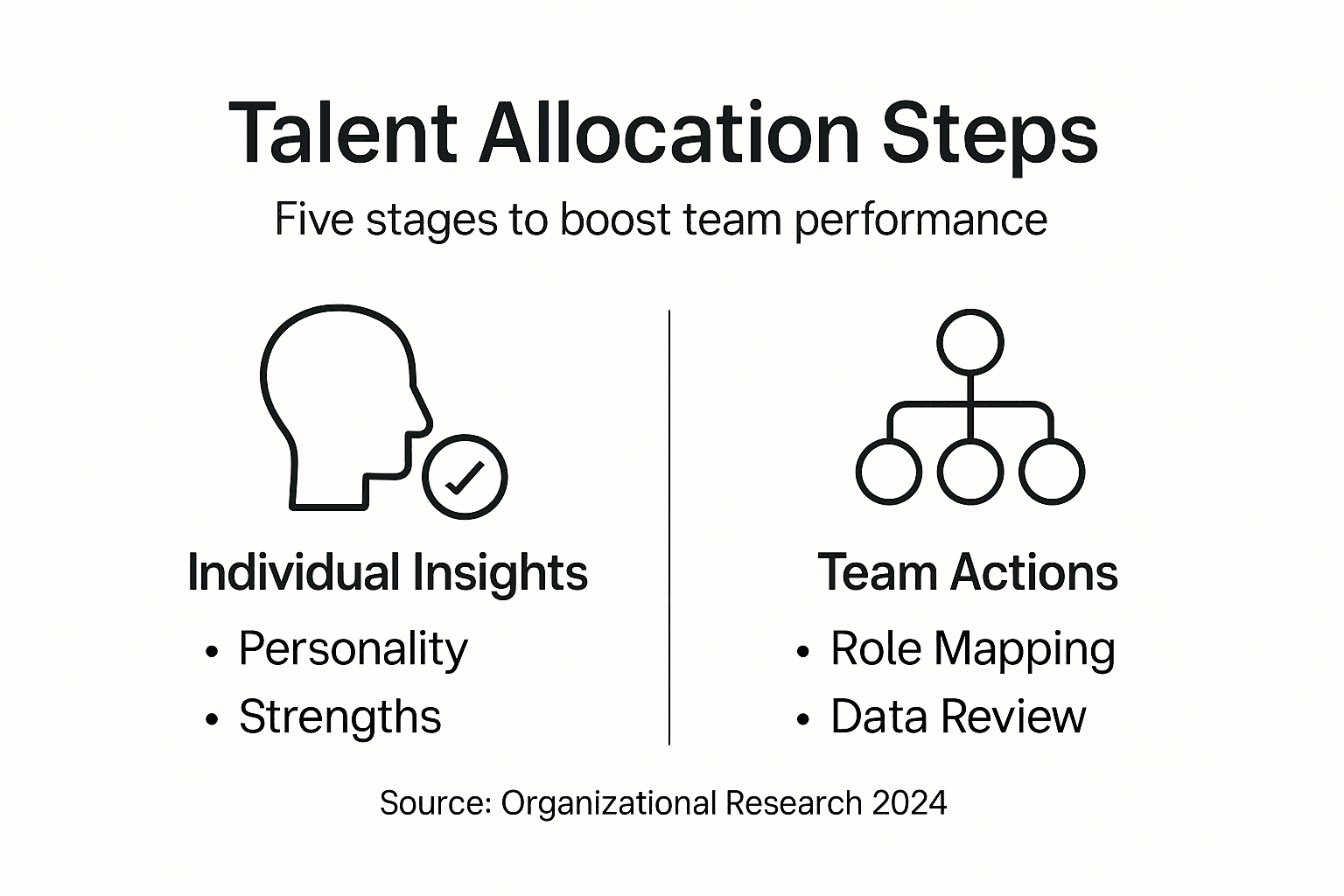
- Step 1: Assess Team Members Using Personality Insights
- Step 2: Map Roles To Employee Strengths And Growth Potential
- Step 3: Leverage Multiple Data Sources For Allocation
- Step 4: Redesign Teams For Maximum Synergy
- Step 5: Validate Results Through Feedback And Retention Rates
Quick Summary
| Key Insight | Explanation |
|---|---|
| 1. Assess Personality for Team Success | Use validated assessments and feedback to understand personality traits for better role alignment and team dynamics. |
| 2. Map Employee Strengths to Roles | Align roles with individual strengths and growth potentials to enhance engagement and performance within teams. |
| 3. Integrate Multiple Data Sources | Leverage diverse sources like performance metrics and feedback to create informed talent allocation strategies that improve outcomes. |
| 4. Redesign Teams for Collaboration | Create cross-functional teams with fluid roles to foster innovation and maximize the strengths of individual members. |
| 5. Validate Strategies with Feedback | Regularly implement feedback mechanisms and track performance metrics to continually refine talent allocation and improve retention. |
Step 1: Assess team members using personality insights
Understanding and leveraging team members’ personality traits can dramatically improve overall team performance and collaboration. The goal is to strategically match individuals with roles and tasks that align with their inherent personality characteristics.
To effectively assess team members, start by collecting comprehensive personality data using multiple reliable sources. Empirical personality research demonstrates that multifaceted assessment provides more accurate insights than single-source evaluations. Here are key methods to gather personality insights:
- Use scientifically validated personality assessments like Myers-Briggs or Big Five
- Conduct structured interviews focusing on behavioral patterns
- Request peer and manager feedback about individual work styles
- Analyze communication and collaboration patterns within team interactions
The core objective is moving beyond surface-level skills to understand deeper personality dynamics. By mapping personality traits across your team, you can strategically:
Here’s how different personality assessment methods contribute unique value:
| Method | Type of Insight | Ideal Application |
|---|---|---|
| Validated Assessments | Reveals cognitive and behavioral patterns | Initial team profiling |
| Structured Interviews | Highlights real-world reactions | Deep-dive role suitability |
| Peer/Manager Feedback | Shows team fit and work relationships | Ongoing development |
| Interaction Analysis | Identifies communication strengths | Enhancing collaboration |
- Optimize team composition
- Improve communication strategies
- Reduce interpersonal friction
- Enhance individual and collective performance
Personality insights are not about labeling, but understanding individual strengths and potential collaboration patterns.
Successful talent allocation requires continuous observation and dynamic adjustment. Personality differences transform team dynamics by enabling more nuanced communication and collaborative strategies.
Pro tip: Regularly revisit personality assessments, as individual traits and team dynamics evolve over time.
Step 2: Map roles to employee strengths and growth potential
Successful talent allocation requires a strategic approach to matching individual strengths with organizational needs. The goal is to create a dynamic alignment that maximizes both employee potential and team performance.
Strengths-based leadership research demonstrates that intentional role mapping can significantly enhance employee engagement and organizational effectiveness. To effectively map roles to employee strengths, consider these critical steps:
- Conduct comprehensive individual skills and personality assessments
- Identify unique strengths and potential growth areas for each team member
- Analyze current job roles and their specific requirements
- Create flexible role definitions that accommodate individual talents
The process involves more than simply placing employees in predefined positions. Develop a nuanced understanding of each team member’s:
- Natural talents
- Intrinsic motivations
- Learning agility
- Potential for skill development
Effective role mapping transforms job assignments from rigid structures into dynamic opportunities for personal and organizational growth.
Research indicates that innovative leadership approaches directly correlate with enhanced employee creativity and productivity. By focusing on individual strengths, you create an environment that encourages continuous learning and professional development.
Pro tip: Implement a quarterly review process to reassess and adjust role allocations based on individual growth and evolving organizational needs.
Step 3: Leverage multiple data sources for allocation
Modern talent allocation demands a sophisticated, data-driven approach that goes beyond traditional assessment methods. By integrating diverse data sources, organizations can create a comprehensive understanding of their workforce’s potential and capabilities.
HR analytics and big data have revolutionized workforce planning, enabling more strategic and predictive talent management. To effectively leverage multiple data sources, consider these comprehensive approaches:
- Combine quantitative performance metrics
- Integrate qualitative feedback from multiple stakeholders
- Utilize psychometric and personality assessment data
- Incorporate machine learning predictive analytics
- Track longitudinal performance and skill development trends
The key is to develop a holistic view of employee potential that considers:
Overview of strategic benefits from integrating multiple data sources in talent allocation:
| Data Source | Unique Benefit | Example Insight |
|---|---|---|
| Performance Metrics | Measures actual output | Project completion rates |
| Qualitative Feedback | Reveals motivation and satisfaction | Engagement trends |
| Psychometric Data | Maps personality nuances | Team compatibility |
| Predictive Analytics | Forecasts growth and risk | High-potential identification |
- Historical performance data
- Skills and competency assessments
- Behavioral and personality insights
- Career aspiration and growth indicators
- Peer and manager recommendations
Data integration transforms talent allocation from a subjective process to a precise, strategic decision-making framework.
Advanced technologies in talent management demonstrate that comprehensive data analysis can significantly improve workforce planning accuracy. By synthesizing information from multiple sources, you create a nuanced understanding of each employee’s unique capabilities and potential.
Pro tip: Invest in integrated HR analytics platforms that can seamlessly consolidate data from multiple sources to provide comprehensive workforce insights.
Step 4: Redesign teams for maximum synergy
Redesigning teams is a strategic process that transforms organizational performance by creating dynamic, collaborative units that leverage individual strengths and complement diverse skill sets. The goal is to build agile teams that can adapt quickly and innovate effectively.
Team-centric organizational transformation requires a comprehensive approach to breaking down traditional hierarchical structures. To achieve maximum synergy, focus on these key strategies:
- Break down departmental silos
- Create cross-functional team compositions
- Establish fluid role boundaries
- Encourage collaborative problem-solving
- Develop shared team objectives
The core of successful team redesign involves developing a collaborative ecosystem that includes:
- Clear communication channels
- Mutual accountability
- Complementary skill sets
- Psychological safety
- Adaptive leadership approaches
Effective team synergy emerges when individual potential is harmonized with collective goals.
Interdisciplinary collaboration methodologies demonstrate that purposeful team design can significantly enhance innovative potential. By intentionally mixing diverse talents and perspectives, you create a more resilient and creative organizational unit.

Pro tip: Conduct periodic team composition assessments to ensure ongoing alignment between individual capabilities and evolving organizational needs.
Step 5: Validate results through feedback and retention rates
Validating talent allocation strategies requires a systematic approach that goes beyond initial implementation, focusing on measuring long-term impact and organizational effectiveness. The goal is to create a continuous feedback loop that allows for data-driven refinements and strategic improvements.
Research on recruitment and retention metrics highlights the critical importance of tracking key performance indicators. To effectively validate your talent allocation methods, consider these comprehensive evaluation strategies:
- Implement regular employee satisfaction surveys
- Track team performance metrics
- Monitor individual and team retention rates
- Collect 360-degree feedback from multiple stakeholders
- Analyze productivity and engagement indicators
The core of effective validation involves developing a robust measurement framework that captures:
- Quantitative performance data
- Qualitative employee experiences
- Long-term career progression
- Team collaboration effectiveness
- Individual growth trajectories
Meaningful validation transforms talent allocation from a one-time event to a dynamic, continuous improvement process.
Persistence and retention insights demonstrate that comprehensive feedback mechanisms provide deep understanding of organizational dynamics. By systematically collecting and analyzing data, you can identify patterns, address potential issues, and refine your talent allocation strategies.
Pro tip: Create a standardized quarterly review process that combines both quantitative metrics and qualitative feedback to ensure comprehensive performance assessment.
Unlock True Team Potential with Data-Driven Talent Allocation
Struggling to match the right people to the right roles while optimizing team synergy and long-term retention is a critical challenge for many HR leaders. This article highlights the importance of assessing personality traits rather than just skills and leveraging multiple data sources to make smarter talent allocation decisions. If you want to go beyond traditional methods and eliminate guesswork in employee assessments, consider how Sparkly’s unique approach merges AI, psychometric insights, human input, and Human Design to deliver highly reliable personality-driven data.
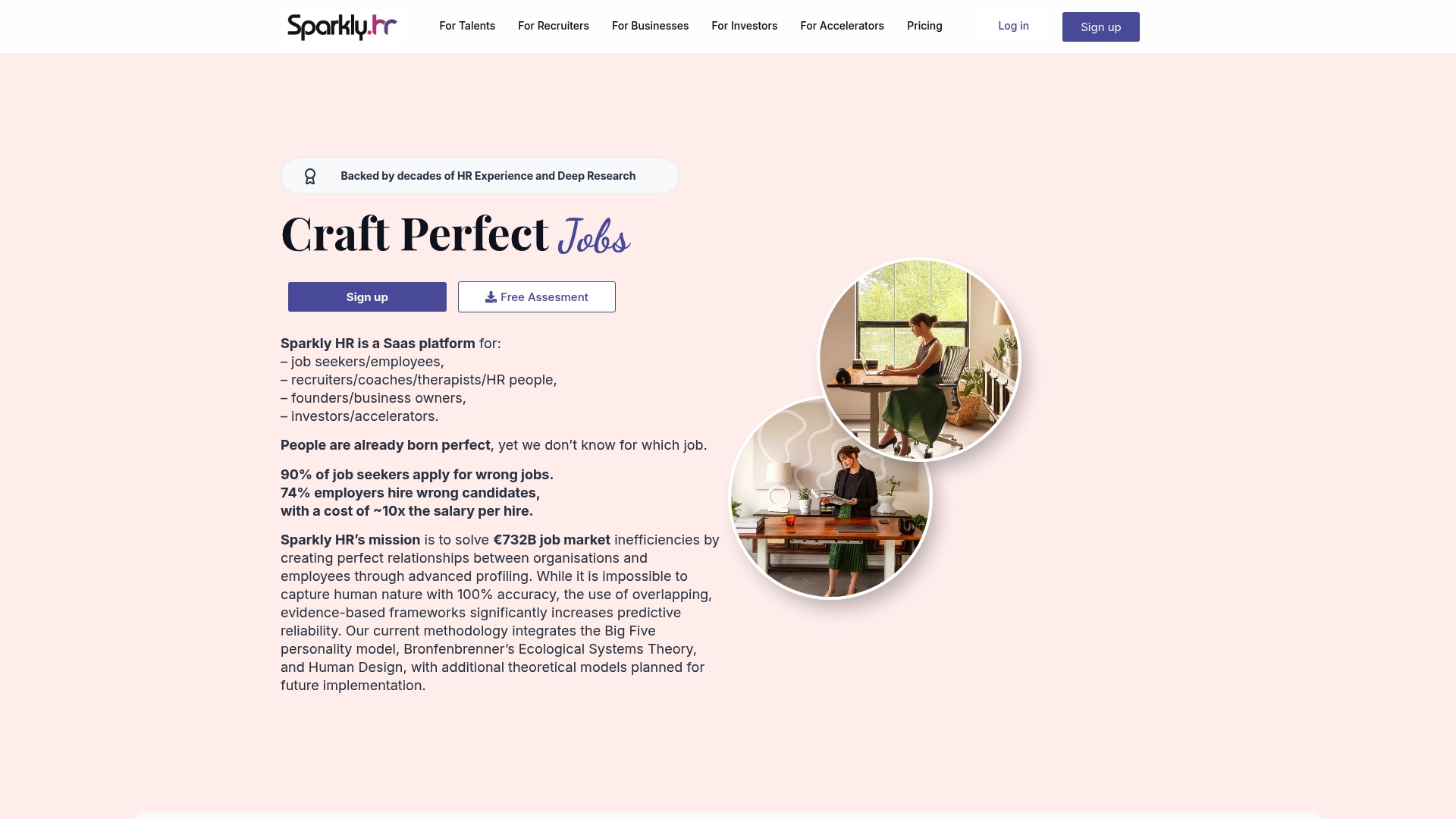
Discover how Sparkly can help you redesign jobs and shift team members dynamically by unlocking deeper personality insights that adapt as your workforce evolves. Visit Uncategorized – Sparkly HR to explore resources and take advantage of our innovative SaaS solutions designed to improve communication, reduce friction, and boost engagement across your teams. Don’t wait to optimize your talent allocation strategy and start transforming your team performance today at Sparkly.
Frequently Asked Questions
How can I assess my team’s personality traits effectively?
To assess your team’s personality traits, utilize multiple reliable methods such as validated personality assessments, structured interviews, and peer feedback. Begin by selecting a suitable assessment tool and gather insights from various sources to understand deeper dynamics.
What steps should I take to map roles based on employee strengths?
Start by conducting individual skills assessments to identify team members’ unique strengths and growth areas. Subsequently, analyze current job requirements and create flexible role definitions that align with your team’s capabilities within the next 30–60 days.
How do I integrate multiple data sources for talent allocation?
To integrate multiple data sources, combine quantitative performance metrics, qualitative feedback, and psychometric assessments. Create a comprehensive overview that captures the strengths and potential of each employee, allowing for more precise talent management decisions.
What strategies can I use to redesign my teams for better collaboration?
To redesign your teams, break down silos by forming cross-functional groups with fluid roles and shared objectives. Encourage collaborative problem-solving and establish clear communication channels, promoting an environment where synergy can thrive.
How can I validate my talent allocation strategies effectively?
Implement a measurement framework that tracks employee satisfaction, team performance, and retention rates. Regularly collect feedback through surveys and adjust your strategies based on the data to enhance long-term effectiveness and engagement.