7 Effective Talent Development Strategies for Tech Startups

Building productive teams and developing talent can feel overwhelming for tech startups. Technical skills matter, but relying only on skill tests often misses the bigger picture. As research shows, personality assessments offer deeper, more stable insights into workplace potential than traditional skill evaluations, giving you an edge in predicting future success.
You are about to discover practical approaches that go beyond routine hiring or training methods. These strategies are backed by proven evidence and help your startup adapt quickly while unlocking hidden strengths in your people. Get ready to learn specific, actionable ways to structure teams, nurture talent, and use data more effectively than ever before.
Table of Contents
- 1. Prioritize Personality Assessments Over Skill Tests
- 2. Use Data-Driven Insights For Smarter Team Structuring
- 3. Support Continuous Learning Through Upskilling Programs
- 4. Implement Personalized Growth Plans For Employees
- 5. Encourage Team Collaboration And Role Flexibility
- 6. Integrate AI And Human Feedback For Holistic Reviews
- 7. Monitor Progress And Adjust Strategies Regularly
Quick Summary
| Takeaway | Explanation |
|---|---|
| 1. Prioritize Personality Assessments | Focus on personality traits to predict job performance and fit within teams more effectively than skill tests alone. |
| 2. Utilize Data-Driven Team Structuring | Analyze employee capabilities and collaboration patterns using data for optimal team configurations that adapt to changes. |
| 3. Support Continuous Learning with Upskilling | Invest in tailored upskilling programs to bridge skill gaps and boost engagement for a future-ready workforce. |
| 4. Implement Personalized Growth Plans | Create tailored development plans that align individual aspirations and organizational needs for better career progression. |
| 5. Encourage Role Flexibility and Collaboration | Foster a collaborative environment with flexible roles that promote knowledge sharing and quick adaptation to new projects. |
1. Prioritize Personality Assessments Over Skill Tests
Traditional hiring practices often focus exclusively on technical skills, but tech startups need a more nuanced approach to talent acquisition. By prioritizing personality assessments, organizations can uncover deeper insights into candidate potential and workplace compatibility.
Personality evaluations reveal behavioral tendencies that skill tests cannot measure. Research demonstrates that personality traits remain stable over time and predict workplace outcomes more reliably than traditional skill measurements. Unlike rigid technical assessments, personality tests capture an individual’s intrinsic motivations, communication styles, and collaborative capabilities.
Tech startups benefit significantly from understanding candidate personality profiles. These assessments help predict job performance, satisfaction levels, and potential team dynamics. By examining traits like adaptability, problem solving approach, and interpersonal communication, companies can build more cohesive and resilient teams.
Implementing personality assessments requires a strategic approach. Start by selecting validated assessment tools that measure key dimensions like emotional intelligence, work preferences, and communication styles. Integrate these evaluations early in the recruitment process, using them alongside technical interviews to create a comprehensive candidate profile.
Key Assessment Dimensions to Explore:
- Emotional intelligence
- Collaboration potential
- Stress management capabilities
- Problem solving approach
- Communication styles
- Adaptability and learning agility
Pro tip: Combine multiple assessment methods including psychometric tests, behavioral interviews, and work simulations to create a holistic understanding of candidate potential.
2. Use Data-Driven Insights for Smarter Team Structuring
Tech startups increasingly recognize that strategic team structuring requires more than intuition. Data-driven talent management transforms traditional workforce approaches by leveraging advanced analytics and machine learning technologies.
Modern organizations can optimize team performance by systematically analyzing employee capabilities, personality traits, and collaboration patterns. This approach goes beyond simple skill matching to create dynamic teams that adapt quickly to changing business landscapes. By integrating data from multiple sources like performance metrics, personality assessments, and skill inventories, startups can build more resilient and high-performing teams.
Key Data Points for Team Structuring:
- Individual performance history
- Skill complementarity
- Communication effectiveness
- Problem solving patterns
- Learning agility
- Team chemistry indicators
Implementing data-driven team structuring requires a strategic approach. Start by collecting comprehensive employee data through advanced assessment tools. Analyze interaction patterns, project outcomes, and individual strengths to identify optimal team configurations. Machine learning algorithms can help predict potential collaboration dynamics and highlight potential skill gaps.
Successful implementation means moving beyond traditional hierarchical structures. Create cross functional teams that leverage diverse skills and perspectives. Regularly refresh team compositions based on emerging data insights and changing project requirements.
Pro tip: Invest in robust data collection and analytics platforms that integrate seamlessly with your existing HR systems to ensure continuous insights into team performance and potential.
3. Support Continuous Learning Through Upskilling Programs
Tech startups must embrace digital skill building strategies to remain competitive in a rapidly evolving technological landscape. Continuous learning is not just a perk but a critical survival strategy for modern organizations.
Upskilling programs represent a powerful approach to talent development that addresses multiple organizational challenges simultaneously. By investing in targeted learning initiatives, companies can close critical skill gaps, enhance employee engagement, and create a more adaptable workforce prepared for emerging technological challenges.
Key Elements of Effective Upskilling Programs:
- Personalized learning pathways
- Flexible training schedules
- Hands on practical experiences
- Clear skill progression tracking
- Technology enabled learning platforms
- Direct alignment with strategic business needs
Successful upskilling requires a multifaceted approach. Start by conducting comprehensive skills assessments to identify individual and organizational learning needs. Develop modular training programs that allow employees to acquire new competencies without disrupting their current work responsibilities. Leverage online learning platforms, workshops, and peer mentoring to create diverse learning opportunities.
Companies should prioritize upskilling in emerging technology domains such as artificial intelligence, cybersecurity, cloud computing, and data analytics. Create incentive structures that reward employees who actively pursue skill development and demonstrate their ability to apply new knowledge in practical work scenarios.
Pro tip: Establish a quarterly skills review process that tracks individual learning progress and aligns personal development goals with broader organizational technology strategies.
4. Implement Personalized Growth Plans for Employees
Personalized development plans transform employee potential by creating targeted, individual focused growth strategies. Generative AI enhances development planning by dynamically mapping unique career trajectories and skill advancement opportunities.
Successful growth plans require a holistic approach that considers an employee’s current capabilities, career aspirations, and organizational needs. These customized roadmaps go beyond generic training programs by providing specific milestones, learning resources, and measurable objectives tailored to each individual’s professional journey.
Essential Components of Personalized Growth Plans:
- Comprehensive skills assessment
- Individual career aspiration mapping
- Targeted learning interventions
- Regular performance feedback
- Adaptive skill development pathways
- Clear progression metrics
Implementing effective personalized growth plans involves multiple strategic steps. Begin by conducting thorough individual assessments that evaluate technical skills, soft skills, and long term career goals. Create collaborative frameworks where employees actively participate in designing their development trajectories, ensuring genuine engagement and motivation.
Utilize technology platforms that enable real time tracking and adjustment of individual growth plans. Integrate machine learning algorithms that can predict skill requirements, recommend targeted learning resources, and provide personalized coaching insights. This data driven approach ensures that development efforts remain aligned with both individual potential and organizational strategic objectives.
Pro tip: Schedule quarterly development conversations where employees can transparently discuss their progress, recalibrate goals, and receive constructive feedback on their personalized growth journey.
5. Encourage Team Collaboration and Role Flexibility
Tech startups thrive when they embrace dynamic talent allocation strategies that break traditional organizational boundaries. Role flexibility transforms workplace dynamics by enabling employees to contribute across multiple domains and adapt quickly to emerging challenges.
Modern organizations recognize that rigid job descriptions limit innovation and employee potential. By creating flexible team structures, companies can leverage individual strengths more effectively, encourage cross functional learning, and respond more rapidly to shifting business requirements.
Key Principles of Role Flexibility:
- Fluid team compositions
- Skills based role assignments
- Transparent capability mapping
- Continuous learning opportunities
- Collaborative project structures
- Performance based mobility
Implementing role flexibility requires thoughtful change management. Start by developing comprehensive skills inventories that document each team members capabilities beyond their current job title. Create collaborative platforms that allow employees to propose and participate in projects across different departments, encouraging knowledge sharing and interdepartmental networking.
Successful role flexibility depends on building a culture of trust and psychological safety. Encourage open communication about individual career aspirations, provide clear pathways for skills development, and reward employees who demonstrate adaptability and willingness to explore different organizational roles.
Pro tip: Design quarterly skill rotation programs that allow employees to temporarily work in different teams or departments, fostering cross functional understanding and organizational agility.
6. Integrate AI and Human Feedback for Holistic Reviews
Performance reviews are transforming through innovative approaches that balance technological precision with human insight. Generative AI supports performance evaluations by providing objective data insights while preserving critical human perspectives.
Traditional performance review methods often suffer from inherent biases and subjective interpretations. By integrating artificial intelligence with human feedback, tech startups can create more comprehensive and nuanced evaluation processes that capture both quantitative performance metrics and qualitative professional development insights.
Core Components of Integrated Performance Reviews:
- Objective data analysis
- Contextual human interpretation
- Bias reduction techniques
- Personalized developmental feedback
- Transparent evaluation criteria
- Continuous improvement tracking
Successful implementation requires carefully designed systems that leverage AI capabilities without diminishing human judgment. Use machine learning algorithms to aggregate performance data from multiple sources such as project outcomes, peer feedback, and skill progression metrics. Combine these insights with structured conversations led by human managers who can provide empathetic guidance and interpret complex professional contexts.
Technology enables more frequent and meaningful performance discussions. Create platforms that allow real time feedback collection, skill tracking, and developmental recommendations. Ensure that AI generated insights serve as discussion catalysts rather than definitive judgments, maintaining a collaborative and supportive performance management approach.
Pro tip: Train managers to view AI generated performance data as a supportive tool for dialogue rather than a replacement for human understanding and developmental coaching.
7. Monitor Progress and Adjust Strategies Regularly
Talent development is not a static process but a dynamic journey requiring continuous evaluation and strategic refinement. HR leaders must implement adaptive tracking systems that enable responsive workforce management and skill development.
Successful organizations recognize that talent strategies must evolve alongside technological advancements and shifting business landscapes. Continuous monitoring allows companies to identify emerging skill gaps, track individual and team performance, and make data informed adjustments to development approaches.
Key Elements of Effective Progress Tracking:
- Regular performance assessments
- Skill progression metrics
- Individual development trajectory analysis
- Engagement level monitoring
- Learning agility evaluation
- Strategic alignment checkpoints
Implementing a robust monitoring framework involves creating multidimensional feedback mechanisms. Utilize advanced analytics platforms that integrate performance data, learning outcomes, and employee sentiment. Design quarterly review processes that go beyond traditional evaluation methods, focusing on growth potential and adaptive capabilities.
Effective progress monitoring requires a balanced approach combining quantitative metrics and qualitative insights. Develop dashboards that visualize individual and team development trajectories, enabling leadership to make informed decisions about talent investment and strategic realignment.
Pro tip: Create a cross functional feedback committee that meets biannually to review talent development strategies and recommend systemic improvements based on comprehensive performance data.
Below is a comprehensive table summarizing the key strategies and concepts discussed in the article about optimizing talent acquisition and management in tech startups.
| Strategy | Implementation | Advantages |
|---|---|---|
| Prioritize Personality Assessments | Use validated tools to examine emotional intelligence, collaborative capabilities, stress management, and adaptability. Incorporate these early in recruitment processes alongside skill evaluations. | Enhances team compatibility, predicts job performance, and fosters resilient team dynamics. |
| Data-Driven Team Structuring | Analyze employee data including performance history, skill complementarity, and collaboration patterns using modern analytics and machine learning techniques. | Optimizes team performance and adapts to changing business needs effectively. |
| Continuous Upskilling Programs | Conduct skills assessments and create personalized learning pathways utilizing online platforms, hands-on training, and incentivization mechanisms. | Addresses skill gaps, boosts employee engagement, and prepares teams for technological advancements. |
| Personalized Employee Growth Plans | Develop individualized development trajectories integrating skills assessments, career aspiration mapping, and adaptive learning resources supported by technology platforms. | Promotes employee satisfaction and aligns organizational goals with personal development. |
| Dynamic Role Flexibility | Establish skills-based role assignments, transparent capability mapping, and fluid team compositions to support adaptability. | Encourages innovation, cross-functional learning, and organizational responsiveness. |
| Combined AI and Human Feedback in Reviews | Apply machine learning for data aggregation and support development-focused human-led performance conversations. | Reduces biases, improves evaluation accuracy, and fosters constructive professional growth. |
| Regular Progress Monitoring | Utilize adaptive tracking systems integrating analytics platforms and multidimensional feedback mechanisms. Schedule regular reviews to assess strategy alignment. | Enables proactive adjustments to talent development strategies and supports continuous improvement. |
Unlock High-Impact Talent Development with Personality-First Insights
Tech startups face the critical challenge of building resilient, adaptable teams that thrive amid constant change. This article highlights the power of personality assessments to predict workplace success beyond traditional skill tests. If your goal is to create dynamic growth plans, foster collaboration, and leverage data-driven strategies that truly understand what drives your people Sparkly HR offers a revolutionary solution.
Our platform combines four powerful data sources including humans AI psychometric assessments and Human Design to deliver high-probability insights that transform hiring and team structuring. Unlike skill-focused tools Sparkly prioritizes the personality traits that predict long term success enabling you to redesign jobs and shift team members effectively. Learn more about how personality-based assessments are reshaping talent development in our Uncategorized - Sparkly HR category.
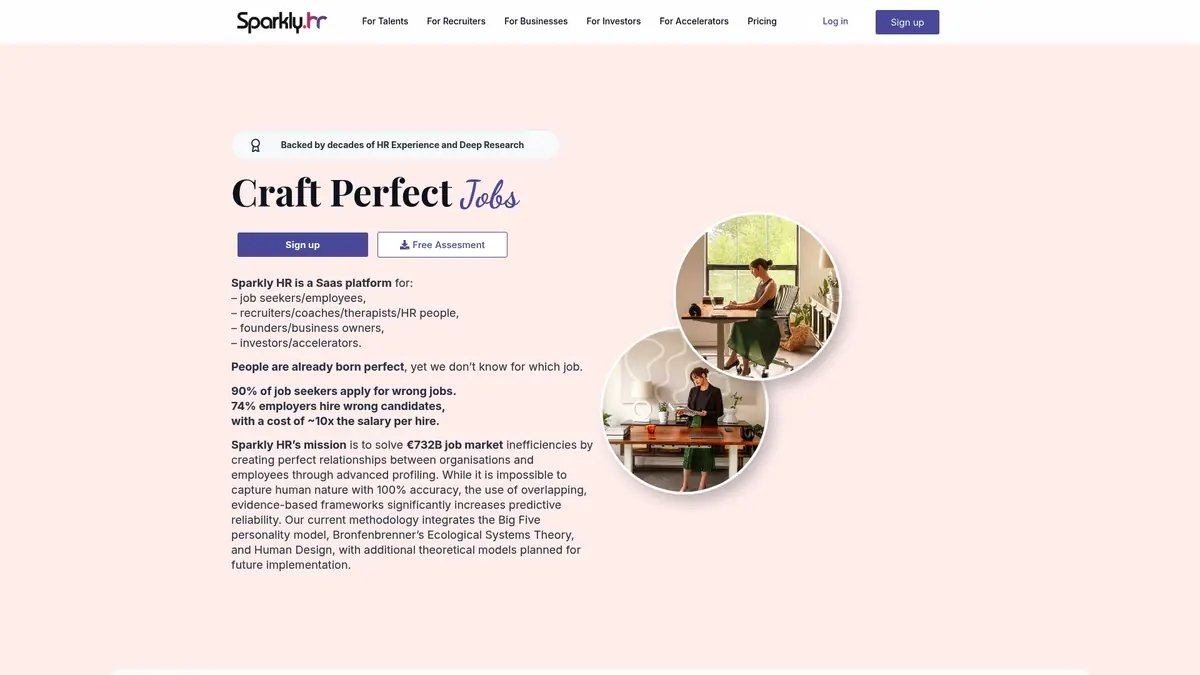
Experience how Sparkly’s unique approach empowers your startup to build cohesive teams adapt rapidly and unlock employee potential today. Visit Sparkly HR for a demo and start transforming your talent development strategy now. Take control of your future workforce with insights that go beyond surface skills and create lasting impact.
Frequently Asked Questions
What are the best personality assessments to use in tech startups?
Prioritize using validated personality assessments that evaluate emotional intelligence, collaboration potential, and adaptability. Start by selecting tools that align with your company culture to ensure meaningful insights into candidate compatibility.
How can data-driven insights improve team structuring in a tech startup?
Utilize data-driven insights by analyzing employee capabilities and communication patterns to create dynamic teams. Collect and evaluate performance metrics and personality data to identify optimal team configurations within 30 days.
What key elements should be included in an upskilling program for employees?
An effective upskilling program should feature personalized learning pathways, flexible training schedules, and technology-enabled learning platforms. Start with a skills assessment to identify gaps and design modular training initiatives that align with organizational goals.
How can personalized growth plans enhance employee development?
Personalized growth plans create targeted strategies that focus on individual skills and career aspirations. Begin by conducting a comprehensive skills assessment to tailor learning resources and set measurable objectives for each employee.
What strategies can encourage role flexibility within teams?
To encourage role flexibility, establish fluid team compositions and skills-based role assignments that foster collaboration across departments. Map team members’ capabilities and allow them to propose projects outside their current job titles to maximize innovation.
How do I effectively monitor progress in talent development strategies?
Implement a robust tracking framework by regularly assessing performance and skill progression metrics. Establish quarterly review processes that combine quantitative data with qualitative feedback to adapt strategies and improve talent investment over time.