Talent Optimization Explained: Reducing Turnover Faster
Talent optimization explained for HR managers: discover personality-first assessment, four-phase frameworks, Sparkly's innovative approach, and key risks.
Talent Optimization Explained: Reducing Turnover Faster

Nearly half of American companies cite high employee turnover as their biggest operational challenge, especially in mid-sized organizations. When every new hire impacts team performance and costs thousands, finding an assessment strategy that actually leads to better retention matters more than ever. This article cuts through outdated approaches and reveals how personality-based talent optimization principles empower HR managers to build thriving teams, reduce churn, and improve long-term engagement.
Table of Contents
- Defining Talent Optimization and Its Principles
- Four Core Phases of Talent Optimization
- Why Personality-First Assessment Matters
- Comparing Traditional vs. Innovative Assessment Models
- Risks, Pitfalls, and Maximizing Value
Key Takeaways
| Point | Details |
|---|---|
| Talent Optimization Focuses on Personality | Prioritizing personality traits over skills allows organizations to create environments where employees thrive and contribute effectively. |
| Four Phases of Talent Optimization | The process includes Analyze, Design, Hire, and Optimize phases, each vital for aligning talent with organizational needs. |
| Personality-First Assessment | This approach improves team dynamics and reduces turnover by aligning roles with individuals’ intrinsic motivations and strengths. |
| Risks in Talent Management | Organizations must avoid static assessment methods and ensure continuous feedback to remain adaptable and aligned with evolving business goals. |
Defining Talent Optimization and Its Principles
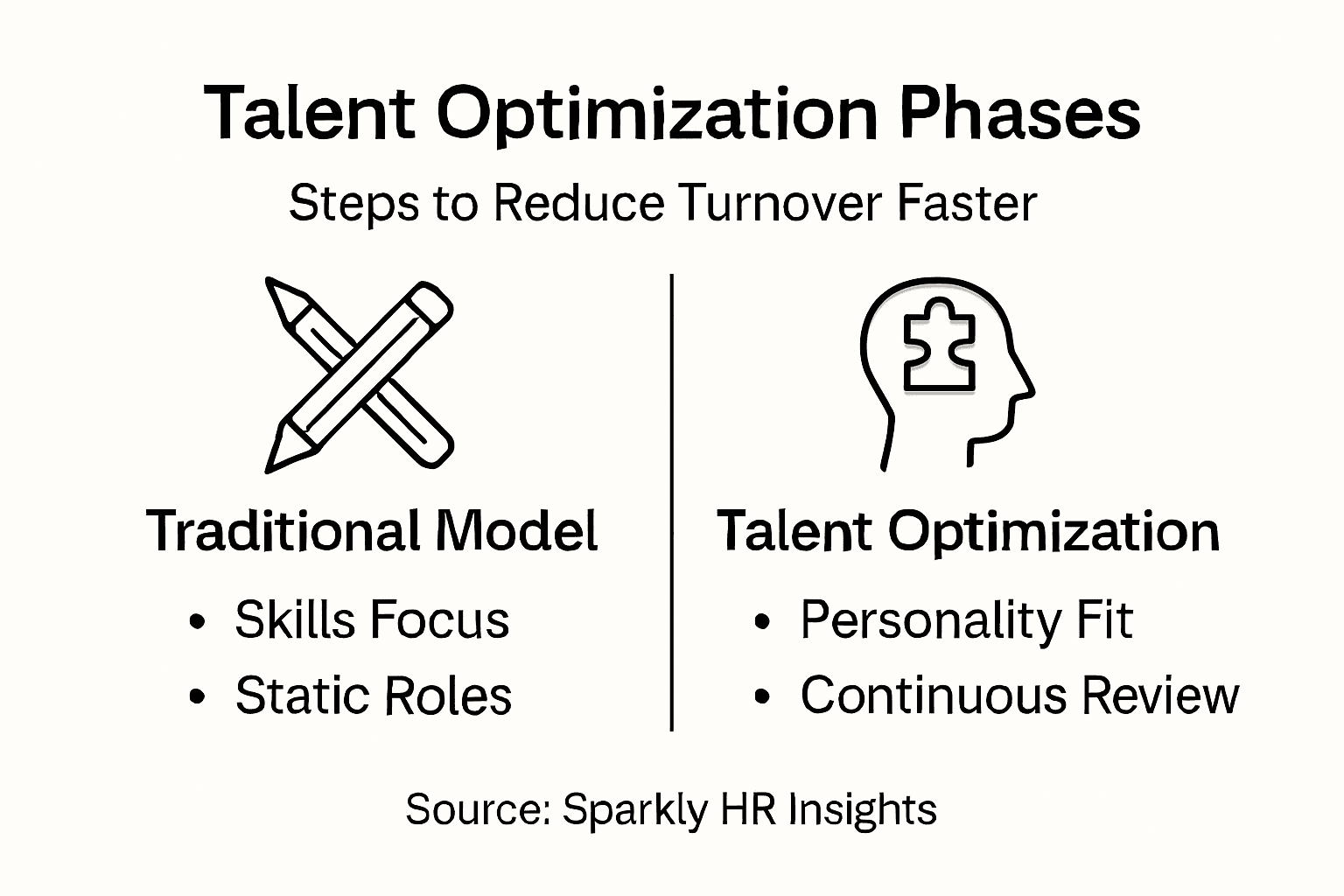
Talent optimization represents a strategic approach transforming how organizations attract, develop, and retain exceptional workforce talent. Unlike traditional human resources practices, talent optimization focuses on aligning individual personality traits with organizational needs, creating a dynamic ecosystem where employees can thrive and contribute meaningfully.
At its core, talent optimization involves strategic human resource management that goes beyond conventional recruitment methods. This approach integrates sophisticated techniques to understand individual strengths, workplace preferences, and potential growth trajectories. By recognizing that skills can be learned but personality remains consistent, organizations can design roles that naturally complement an employee’s inherent characteristics.
The key principles of talent optimization include:
- Prioritizing personality matching over pure skill assessment
- Creating flexible job designs that adapt to individual strengths
- Implementing continuous feedback and development mechanisms
- Matching team dynamics through complementary personality traits
- Proactively identifying and nurturing hidden employee potential
Successful talent optimization requires a holistic view of human capital, understanding that employee satisfaction stems from alignment between personal attributes and professional responsibilities. Organizations embracing this approach can significantly reduce turnover, enhance team productivity, and create a more engaged workforce.
Pro tip: Conduct periodic personality assessments to understand your team’s natural strengths and redesign roles to maximize individual potential.
Four Core Phases of Talent Optimization
Talent optimization is a comprehensive strategic process that transforms how organizations identify, develop, and retain top talent. Unlike traditional human resource approaches, this methodology breaks down workforce management into four critical, interconnected phases designed to maximize human potential and organizational performance.
The first phase, Analyze, focuses on understanding the existing organizational landscape. During this stage, companies conduct in-depth personality assessments, skills evaluations, and team dynamic analyses. Employers map individual strengths, communication styles, and potential growth trajectories, creating a nuanced understanding of their current workforce composition. By exploring talent insights on our blog, organizations can develop more targeted development strategies.
The second phase, Design, involves strategically restructuring roles and teams to align with the insights gained during the analysis stage. This means creating job descriptions that complement individual personality traits, redesigning team structures to maximize collaborative potential, and developing personalized career development pathways. Key activities include:
- Matching employees to roles based on intrinsic motivations
- Creating flexible job descriptions
- Developing personalized learning and growth plans
- Identifying potential skill development opportunities
The third phase, Hire, transforms recruitment from a transactional process to a strategic alignment mechanism. Instead of focusing solely on technical skills, this phase emphasizes personality matching, cultural fit, and long-term potential. Recruiters look beyond traditional resume screening, utilizing advanced assessment tools to predict candidate success and team integration.
The final phase, Optimize, represents an ongoing cycle of continuous improvement. Organizations regularly reassess team dynamics, individual performance, and organizational goals. This phase involves periodic talent reviews, feedback mechanisms, and adaptive development strategies that ensure the workforce remains agile and aligned with emerging business needs.
Pro tip: Implement quarterly talent optimization reviews to proactively identify and address potential misalignments before they impact team performance.
Here’s a summary of the four phases of talent optimization and their business impact:
| Phase | Main Activities | Business Impact | Typical Tools Used |
|---|---|---|---|
| Analyze | Personality and skill assessments | Clear workforce insights | Psychometric tests |
| Design | Role structuring, team redesign | Strength-based collaboration | Career path mapping |
| Hire | Strategic recruitment, fit assessment | Improved retention and engagement | Advanced screening tools |
| Optimize | Continuous feedback, strategy reviews | Adaptable and high-performing teams | Talent review platforms |
Why Personality-First Assessment Matters
Traditional hiring practices have long relied on technical skills and professional experience as the primary criteria for employee selection. However, modern organizations are increasingly recognizing that personality traits fundamentally shape workplace dynamics, making personality-first assessment a game-changing approach to talent management.

Personality assessments go far beyond simple categorization. They provide deep insights into an individual’s intrinsic motivations, communication styles, problem-solving approaches, and potential cultural fit within an organization. By understanding these nuanced behavioral characteristics, companies can create more targeted role assignments, improve team dynamics, and significantly reduce the likelihood of costly mismatches that lead to premature employee turnover.
The benefits of a personality-first approach are multifaceted:
- Enhanced team compatibility and collaboration
- More accurate role matching based on natural strengths
- Improved employee engagement and satisfaction
- Reduced recruitment and training costs
- Better prediction of long-term performance potential
Understanding an employee’s personality allows organizations to design work environments and roles that naturally align with individual preferences and strengths. This approach transforms traditional job design from a one-size-fits-all model to a personalized, adaptive strategy that recognizes each employee’s unique potential. By creating environments where individuals can leverage their inherent traits, companies can unlock unprecedented levels of productivity, creativity, and job satisfaction.
Pro tip: Integrate personality assessments into your regular performance review process to continuously align individual strengths with evolving organizational needs.
Comparing Traditional vs. Innovative Assessment Models
The landscape of talent assessment has undergone a profound transformation, moving from rigid, one-dimensional evaluation methods to more nuanced, holistic approaches. Traditional assessment models predominantly focused on surface-level qualifications, creating significant blind spots in understanding an employee’s true potential and organizational fit.
Traditional assessment techniques typically relied on a narrow set of criteria: academic credentials, years of experience, and standardized cognitive ability tests. These methods produced a snapshot of a candidate’s past performance but failed to capture critical elements like adaptability, emotional intelligence, and team dynamics. In contrast, innovative assessment models integrate sophisticated behavioral science techniques, psychometric testing, and data analytics to provide a multidimensional view of talent.
Key differences between traditional and innovative assessment approaches include:
- Evaluation Scope:
- Traditional: Skills and past experience
- Innovative: Personality, potential, and adaptability
- Assessment Tools:
- Traditional: Interviews and standardized tests
- Innovative: Simulation exercises, continuous feedback mechanisms
- Performance Prediction:
- Traditional: Limited insight
- Innovative: Comprehensive behavioral and cultural fit analysis
Innovative assessment models represent a paradigm shift in talent management. By leveraging advanced psychological profiling and data-driven insights, organizations can move beyond superficial screening processes. These approaches enable more strategic talent decisions, fostering environments where individuals can truly thrive based on their inherent strengths and potential rather than being confined by historical performance metrics.
Pro tip: Develop a hybrid assessment approach that combines traditional metrics with innovative personality-first evaluation techniques to create a more comprehensive talent selection strategy.
Below is a comparison of traditional vs. innovative assessment models highlighting added value for organizations:
| Attribute | Traditional Model | Innovative Model |
|---|---|---|
| Candidate Evaluation | Credentials-focused | Holistic behavioral assessment |
| Performance Prediction | Historical data only | Dynamic, future-oriented analysis |
| Adaptability | Static, single-point in time | Ongoing, continuous improvement |
| Organizational Outcome | Limited role fit, higher turnover | Enhanced engagement, lower turnover |
Risks, Pitfalls, and Maximizing Value
Talent optimization is a powerful strategy, but organizations must navigate potential risks with careful precision. Misalignment between talent management goals and organizational strategy represents one of the most significant challenges companies face when implementing advanced talent assessment approaches.
Primary risks in talent optimization emerge from several critical areas. Overreliance on static assessment tools can create artificial barriers, preventing organizations from recognizing dynamic human potential. Companies often fall into the trap of treating talent optimization as a one-time event rather than an ongoing, adaptive process. This approach fails to account for individual growth, changing organizational needs, and the complex, evolving nature of workplace dynamics.
Key risks and potential pitfalls include:
- Inadequate definition of ‘talent’
- Static, inflexible assessment methodologies
- Neglecting diversity and inclusive practices
- Overemphasis on quantitative metrics
- Insufficient continuous feedback mechanisms
- Lack of leadership commitment to talent development
To maximize value, organizations must adopt a holistic, integrated approach that combines data-driven insights with human-centered practices. This means moving beyond traditional performance metrics and creating adaptive frameworks that recognize individual potential, promote continuous learning, and align talent strategies with broader organizational objectives. Successful implementation requires consistent communication, leadership support, and a willingness to evolve talent management practices based on ongoing feedback and emerging workplace trends.
Pro tip: Implement a quarterly talent strategy review that critically evaluates your assessment methods, ensuring they remain flexible, inclusive, and aligned with organizational goals.
Unlock Workforce Potential with Personality-First Talent Optimization
Struggling to reduce turnover and boost employee engagement? This article highlights the crucial role of personality-first assessment in talent optimization. The challenge lies in moving beyond traditional skill-based hiring to align roles with employees’ intrinsic traits for lasting satisfaction and productivity. If you want to transform how you design jobs and configure teams based on real behavioral insights, Sparkly HR offers the solution you need.
Discover how Sparkly HR’s employee assessment SaaS uniquely merges human intuition, AI, psychometric assessments, and Human Design to generate high-probability insights. This advanced approach lets HR professionals make smarter hiring and team reshuffling decisions, reducing turnover faster while unlocking hidden potential. Visit our Uncategorized - Sparkly HR to explore how personality-focused talent optimization drives growth. Don’t wait for turnover to cost you more—take the next step and start optimizing your teams today at sparky.hr.
Frequently Asked Questions
What is talent optimization?
Talent optimization is a strategic approach that transforms how organizations attract, develop, and retain workforce talent, aligning individual personality traits with organizational needs for enhanced engagement and productivity.
Why is personality-first assessment important in talent optimization?
Personality-first assessment is crucial because it offers deep insights into individual motivations and fit, helping organizations create targeted role assignments and improve overall team dynamics, reducing turnover.
What are the four core phases of talent optimization?
The four core phases are Analyze (assessing workforce dynamics), Design (structuring roles based on insights), Hire (focusing on personality fit), and Optimize (ensuring continuous improvement and alignment with business goals).
How can organizations reduce turnover through talent optimization?
Organizations can reduce turnover by implementing personality assessments, matching roles to individual strengths, providing continuous feedback and development, and creating a supportive work environment that promotes employee satisfaction.