Traditional skill assessments predict only 40% of employee turnover risks, leaving HR professionals with a massive blind spot. Meanwhile, personality-based assessments improve retention prediction by 30%, offering a smarter path to building future-ready teams. The gap between what you’re measuring and what actually matters for long-term success is costing you top talent.
Table of Contents
- Understanding Future Skills In Business
- Limitations Of Traditional Skill-Based Assessments
- Why Personality-Based Assessment Matters More Than Skills Alone
- Innovative Assessment Methods: Integrating Multiple Data Sources
- Common Misconceptions About Future Skills In Business
- Frameworks For Future Skill Development
- Case Studies Of Successful Personality-Focused Assessments
- Implementing Future Skills Assessment Tools
- Discover Sparkly’s Innovative Employee Assessment Solutions
- Frequently Asked Questions About Future Skills In Business
Key takeaways
| Point | Details |
|---|---|
| Future skills prioritize adaptability and emotional intelligence over technical knowledge | These traits drive sustained competitive advantage in rapidly changing markets |
| Traditional skill tests predict only 40% of turnover risks | This limitation leads to poor hiring decisions and increased replacement costs |
| Personality assessments boost retention prediction by 30% | They capture learning agility and interpersonal strengths that skills tests miss |
| Hybrid assessment methods increase accuracy by 25% | Combining multiple data sources creates more reliable talent profiles |
| Implementing personality frameworks reduces turnover measurably | Medium-sized businesses see 15% lower turnover and 18% productivity gains |
Understanding future skills in business
Future skills represent the capabilities employees need to thrive as markets shift and technology advances. Unlike static technical abilities, these competencies focus on how people learn, adapt, and collaborate.
The most critical future skills include:
- Adaptability: Ability to pivot strategies and embrace new methods without resistance
- Emotional intelligence: Reading social cues, managing relationships, and navigating workplace dynamics effectively
- Complex problem-solving: Breaking down ambiguous challenges and creating innovative solutions
- Learning agility: Quickly acquiring new knowledge and applying it across different contexts
- Collaborative mindset: Working across teams and departments to achieve shared goals
These skills drive sustained business growth because they enable organizations to respond to market disruptions faster than competitors. A workforce rich in future skills can redesign processes and shift roles to match emerging opportunities.
Technical abilities remain important, but they represent what someone can do today. Future skills reveal what someone will achieve tomorrow. Skills become outdated as industries evolve, but personality traits that support continuous learning and adaptation remain valuable across career transitions.
Limitations of traditional skill-based assessments
Traditional skill tests measure current competencies through technical evaluations, coding challenges, or knowledge-based questions. They tell you what a candidate knows right now, not how they’ll perform in six months or adapt when job requirements change.
These assessments have three fundamental problems:
- Limited predictive validity: Skills tests predict only 40% of turnover, leaving more than half of retention factors unmeasured
- Narrow scope: They focus exclusively on technical abilities while ignoring behavioral traits that determine long-term success
- Obsolescence risk: Skills become outdated quickly, making today’s high scorer tomorrow’s underperformer
The gap between what skill tests measure and what actually predicts employee success creates expensive hiring mistakes. You might recruit someone who aces every technical question but lacks the resilience to handle setbacks or the curiosity to learn emerging technologies.
“We hired top scorers on our skills assessments and watched 30% leave within a year. The tests told us nothing about whether candidates would fit our culture or grow with the company.”
This disconnect explains why so many organizations struggle with retention despite rigorous technical screening. The assessment methods you’re using weren’t designed to capture learning agility, emotional intelligence, or adaptability, the exact traits that separate thriving employees from those who plateau.
Why personality-based assessment matters more than skills alone
Personality traits like resilience, curiosity, and emotional intelligence predict job success more reliably than technical skills alone. These characteristics shape how someone responds to challenges, collaborates with teammates, and pursues continuous improvement.
Research shows personality-based assessments improve key outcomes:
- Retention prediction: 30% more accurate than skills-only approaches at forecasting which employees will stay long-term
- Team collaboration: Better identification of candidates who enhance group dynamics and communication
- Adaptability measurement: Reliable gauges of how individuals handle change and ambiguity
- Learning potential: Clear indicators of who will acquire new skills quickly and apply them effectively
These assessments work because personality traits remain stable over time while skills fluctuate. Someone with high curiosity and low defensiveness will continuously upgrade their capabilities, while rigid thinkers with impressive current skills may resist necessary changes.
Pro Tip: Combine personality assessments with structured interviews that probe real scenarios requiring adaptability. Ask candidates to describe times they pivoted strategies or learned unfamiliar systems under pressure, then validate responses against personality profiles.
The hiring confidence boost from personality evaluation extends beyond individual selection. You gain insights into team composition, identifying which personality combinations create productive dynamics versus conflict. This knowledge supports strategic talent management that optimizes entire departments, not just individual roles.
Innovative assessment methods: integrating multiple data sources
Hybrid assessment models combine personality data, AI analytics, psychometrics, and human judgment to create more complete talent profiles. This multi-source approach increases accuracy by 25% compared to single-method tests because it compensates for each method’s individual weaknesses.
Four complementary data sources create the strongest profiles:
- Psychometric assessments: Standardized personality and cognitive tests validated across large populations
- AI pattern recognition: Machine learning algorithms that identify success patterns in historical employee data
- Human Design insights: Energy type and decision-making style frameworks that reveal natural working preferences
- Human interviewer observations: Experienced HR professionals capturing nuances automated systems miss
Each source has limitations when used alone. Psychometric tests can be gamed by savvy candidates. AI models reflect biases in training data. Human Design lacks empirical validation in some areas. Interviewers bring subjective biases. Together, these methods triangulate more reliable insights.
| Assessment Type | Strength | Limitation |
|---|---|---|
| Psychometric tests | Standardized, comparable across candidates | Can be coached or faked |
| AI analytics | Identifies hidden patterns at scale | Reflects historical biases in data |
| Human Design | Reveals authentic working styles | Limited empirical research base |
| Interviewer judgment | Captures interpersonal nuances | Subject to personal biases |
Implementing hybrid methods requires integrating data from multiple platforms and training HR teams to synthesize findings. The payoff appears in improved job fit prediction and reduced turnover, as you’re no longer betting on any single assessment’s accuracy.
Pro Tip: Start with personality assessments and interviewer observations, then layer in AI analytics as you build historical data. This phased approach prevents overwhelming your team while immediately improving hiring decisions.
Common misconceptions about future skills in business
HR professionals often misunderstand the relationship between skills, personality, and long-term employee success. Clearing up these myths helps you make better assessment choices.
Myth: Technical skills alone predict future job success
Reality: Personality traits like adaptability and emotional intelligence match or exceed technical abilities in predicting performance. Skills predict only 40% of retention, while personality factors capture additional variance that skills miss.
Myth: Skills assessments accurately forecast retention and engagement
Reality: Traditional tests focus on current competencies, not behavioral traits that drive commitment and growth. Adding personality evaluation boosts retention prediction by 30%, revealing which candidates will stick around when challenges arise.
Myth: Learning agility is a trainable skill
Reality: Learning agility stems from personality traits like curiosity, openness, and low defensiveness. While you can teach specific learning techniques, the underlying drive to seek new knowledge and adapt quickly reflects stable personality characteristics.
Myth: Personality assessments add unnecessary complexity
Reality: They simplify hiring by revealing which candidates possess traits that support continuous skill development. Rather than guessing who will adapt as roles evolve, you identify people whose natural tendencies align with organizational needs.
Myth: All assessment methods carry equal predictive power
Reality: Different tools measure different constructs with varying reliability. Hybrid approaches that combine personality, psychometrics, and human insight outperform any single method by compensating for individual weaknesses.
These misconceptions persist because skills feel concrete and measurable while personality seems subjective. Modern personality assessments use validated psychometric instruments with reliability comparable to technical tests, giving you objective data about behavioral tendencies.
Frameworks for future skill development
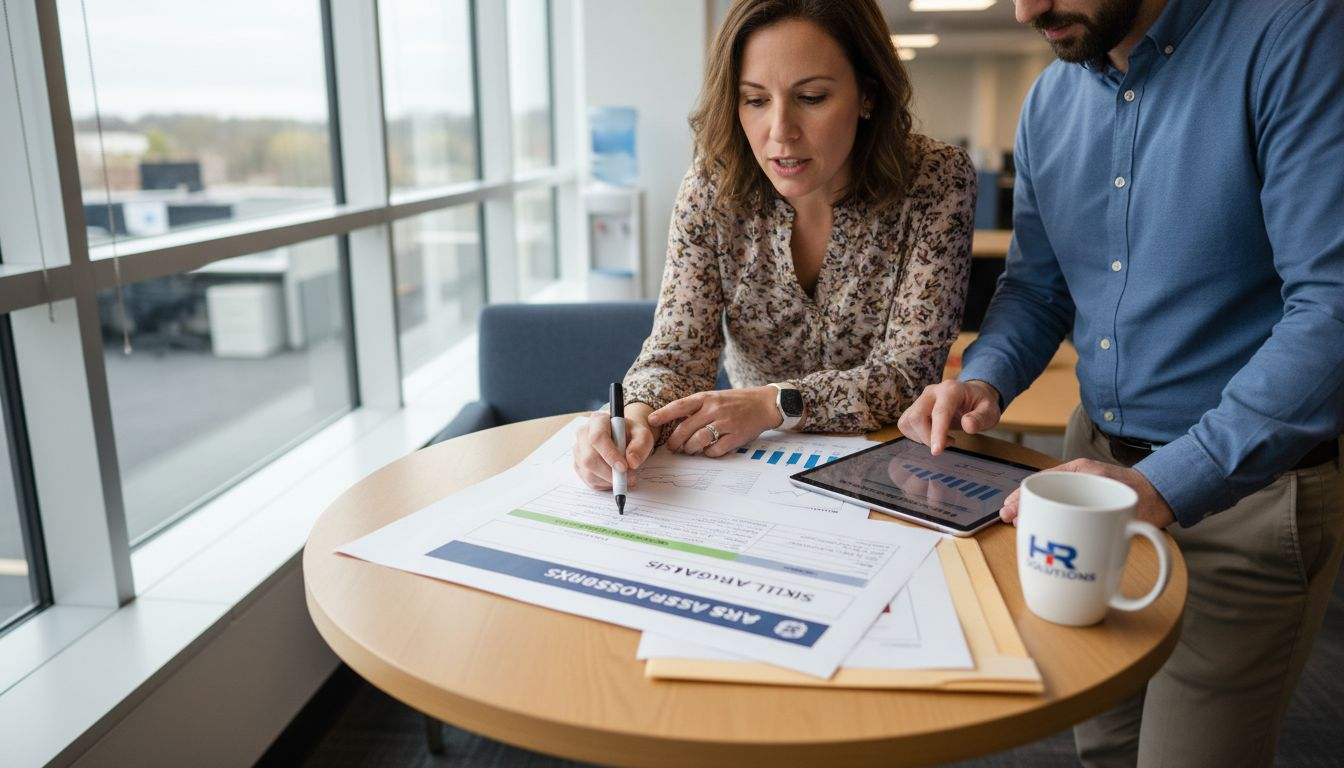
A validated framework for assessing future skills rests on three interconnected pillars: adaptability, emotional and social intelligence, and continuous learning ability. Organizations implementing this structure across 150 companies demonstrated improved employee success prediction and retention.
Pillar One: Adaptability
This pillar measures comfort with ambiguity, willingness to pivot strategies, and resilience during setbacks. Assessment questions probe real situations requiring strategic shifts and evaluate emotional responses to unexpected changes.
Pillar Two: Emotional and Social Intelligence
Capturing self-awareness, empathy, and relationship management skills reveals who will navigate workplace dynamics effectively. These traits directly impact team collaboration, conflict resolution, and leadership potential.
Pillar Three: Learning Ability
Beyond raw intelligence, this pillar assesses curiosity, openness to feedback, and speed of skill acquisition. It predicts which employees will grow capabilities as job requirements evolve.
| Framework Component | Assessment Method | Business Impact |
|---|---|---|
| Adaptability | Scenario-based questions + personality tests | 20% faster response to market changes |
| Emotional intelligence | Behavioral interviews + psychometric tools | 25% improvement in team collaboration |
| Learning ability | Case studies + past behavior analysis | 30% faster skill development cycles |
Implementing this framework requires:
- Mapping current roles to identify which pillar matters most for each position
- Selecting validated assessment tools that measure all three dimensions
- Training interviewers to probe pillar-related behaviors during candidate conversations
- Establishing baseline metrics to track improvements in retention and performance
- Regularly reviewing assessment results against actual employee outcomes to refine predictive accuracy
The framework works because it addresses the complete profile of future-ready employees rather than isolated traits. Someone strong in all three pillars adapts quickly, collaborates effectively, and continuously upgrades their capabilities.
Case studies of successful personality-focused assessments
Medium-sized U.S. businesses implementing personality-based assessment strategies demonstrate measurable improvements in turnover, productivity, and team dynamics.
Case One: Manufacturing Company Reduces Turnover 15%
A 250-employee manufacturer struggling with 28% annual turnover added personality assessments to their hiring process. By prioritizing candidates with high adaptability and emotional intelligence scores, they reduced turnover to 13% within 18 months while maintaining technical skill standards.
Case Two: Technology Firm Boosts Productivity 18%
A software company used personality data to redesign job responsibilities, matching tasks to natural working styles. Employees whose roles aligned with personality strengths completed projects 18% faster with higher quality ratings. The approach worked because people naturally excel when tasks fit their behavioral preferences.
Case Three: Healthcare Organization Improves Collaboration
A medical services provider with chronic interdepartmental conflict implemented team composition analysis based on personality profiles. Strategic role shifts and targeted team building reduced conflict incidents by 40% and improved cross-functional project completion rates by 22%.
These outcomes share common elements:
- Integration of personality assessment into existing HR processes without replacing technical evaluation
- Use of hybrid data sources combining psychometrics, interviews, and behavioral observations
- Regular review of assessment predictions against actual performance to refine accuracy
- Leadership commitment to using insights for job redesign and team optimization, not just hiring
The results validate that personality-focused approaches deliver tangible business value beyond theoretical improvements. Organizations gain competitive advantages through reduced replacement costs, faster project delivery, and stronger workplace cultures.
Implementing future skills assessment tools
Moving from understanding to action requires systematic integration of personality-based and hybrid assessment tools into your recruitment and development processes.
- Audit current assessment methods: Document what you’re measuring now and identify gaps in personality, adaptability, and learning agility evaluation
- Select validated tools: Choose personality assessments with proven reliability and validity in predicting job performance and retention
- Train your HR team: Ensure interviewers understand how to interpret personality data and probe relevant behaviors during conversations
- Integrate multiple data sources: Combine personality tests with AI analytics, psychometric assessments, and structured interviews for comprehensive profiles
- Map roles to critical traits: Identify which personality characteristics matter most for each position based on job requirements and team dynamics
- Pilot with key positions: Test the new approach on roles with high turnover or business impact before rolling out organization-wide
- Track and refine: Monitor how well personality predictions align with actual employee performance, adjusting weights and methods accordingly
Pro Tip: Start implementation with new hires where you have clean baseline data, then expand to internal mobility and development programs once you’ve validated the approach.
Beyond hiring, use personality insights to redesign jobs and optimize team composition. Match tasks to natural strengths, shift responsibilities between team members, and create development plans that build on existing behavioral tendencies rather than fighting them.
Successful implementation requires cultural buy-in. Leaders must value personality fit alongside technical skills and resist defaulting to traditional hiring habits when assessments reveal counterintuitive insights. The role of HR technology extends beyond data collection to changing how your organization thinks about talent.
Discover Sparkly’s innovative employee assessment solutions
Transforming your workforce starts with better assessment tools. Sparkly provides hybrid assessment technology that merges personality evaluation, AI analytics, psychometrics, and Human Design insights into actionable talent intelligence.
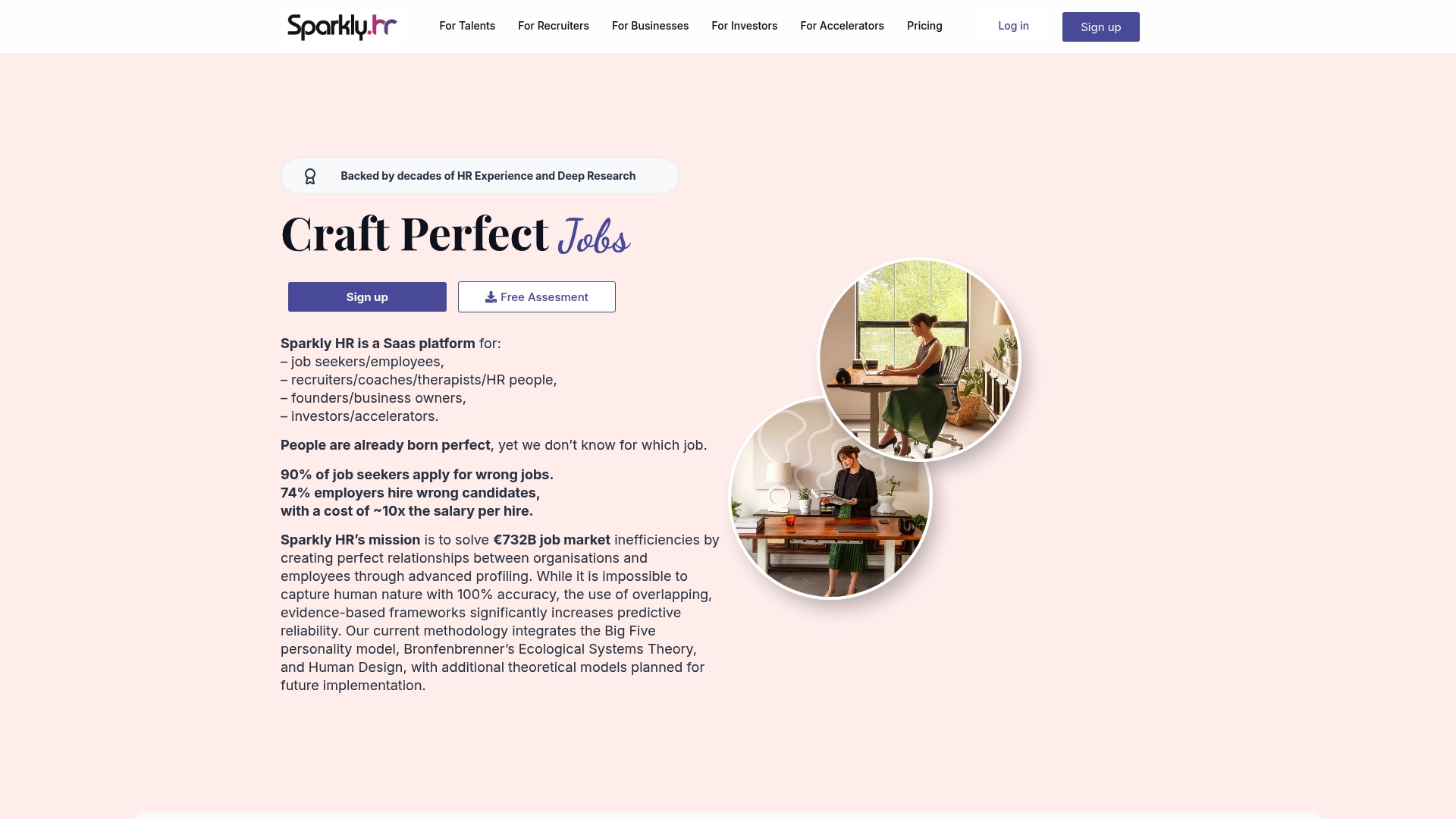
Our platform identifies future-ready skills in current employees and candidates by focusing on personality traits that drive adaptation and growth. Unlike traditional tools that measure only technical abilities, Sparkly reveals learning agility, emotional intelligence, and collaborative capacity.
HR teams using Sparkly’s solutions gain concrete advantages: reduced turnover through better hiring decisions, improved employee development aligned with natural strengths, and data-driven job redesign that optimizes team performance. The four-source assessment approach compensates for individual method limitations, delivering reliability that single-source tools cannot match.
Explore how talent optimization through personality-focused assessment transforms medium-sized businesses into agile, future-ready organizations.
Frequently asked questions about future skills in business
What are the most important future skills for employees in 2026?
Adaptability, emotional intelligence, complex problem-solving, and learning agility top the list. These traits enable employees to navigate rapid market changes and acquire new technical skills as roles evolve.
How do personality assessments improve hiring accuracy?
Personality tests predict retention and job success 30% more accurately than skills-only approaches by capturing behavioral traits that skills tests miss. They reveal who will adapt, collaborate, and grow with your organization.
Can personality-based assessments replace technical skill evaluations?
No, the most effective approach combines both. Technical skills verify current capabilities while personality assessments predict future potential and cultural fit. Hybrid methods using both dimensions outperform either alone.
How long does it take to see results from personality-focused hiring?
Most organizations notice improved retention within 12 to 18 months as new hires selected for personality fit demonstrate higher engagement. Productivity gains from job redesign based on personality insights often appear within six months.
What makes hybrid assessment methods more reliable than single tools?
Combining personality tests, AI analytics, psychometrics, and human judgment compensates for each method’s weaknesses. This triangulation increases predictive accuracy by 25% compared to any single assessment type.
How do I convince leadership to adopt personality-based assessments?
Present data showing that skills tests predict only 40% of turnover while personality factors capture additional variance. Share case studies demonstrating 15% turnover reductions and 18% productivity gains from organizations using these methods.