Role of SaaS in HR: Transforming Employee Potential

Choosing from the many SaaS options for HR can feel overwhelming, especially when each promises something different. For HR professionals in mid-sized companies, understanding the distinct types of SaaS solutions for HR management is the foundation of building teams that actually stay engaged. This article breaks down the main categories, focusing on how personality assessment platforms help you make smarter decisions around retention and job design.
Table of Contents
- Types Of SaaS Solutions For HR Management
- How Personality Assessment SaaS Drives Job Fit
- Real-World HR Applications: Retention And Talent Mobility
- Risks, Limitations, And Comparison With Traditional HR Tools
Key Takeaways
| Point | Details |
|---|---|
| Diverse SaaS Solutions | HR teams can utilize various SaaS platforms across recruitment, talent management, and payroll to tailor their tech stack to specific needs. |
| Personality Assessments | Integrating personality assessment SaaS can enhance job fit, boost engagement, and reduce turnover when aligning candidates with organizational culture. |
| Data-Driven Decisions | Leveraging employee analytics allows organizations to make informed decisions regarding staffing, compensation, and internal mobility, enhancing talent retention. |
| Caution with SaaS | While SaaS platforms provide valuable insights, they should complement human judgment in HR processes rather than replace it, considering data security and system integration challenges. |
…
Types of SaaS Solutions for HR Management
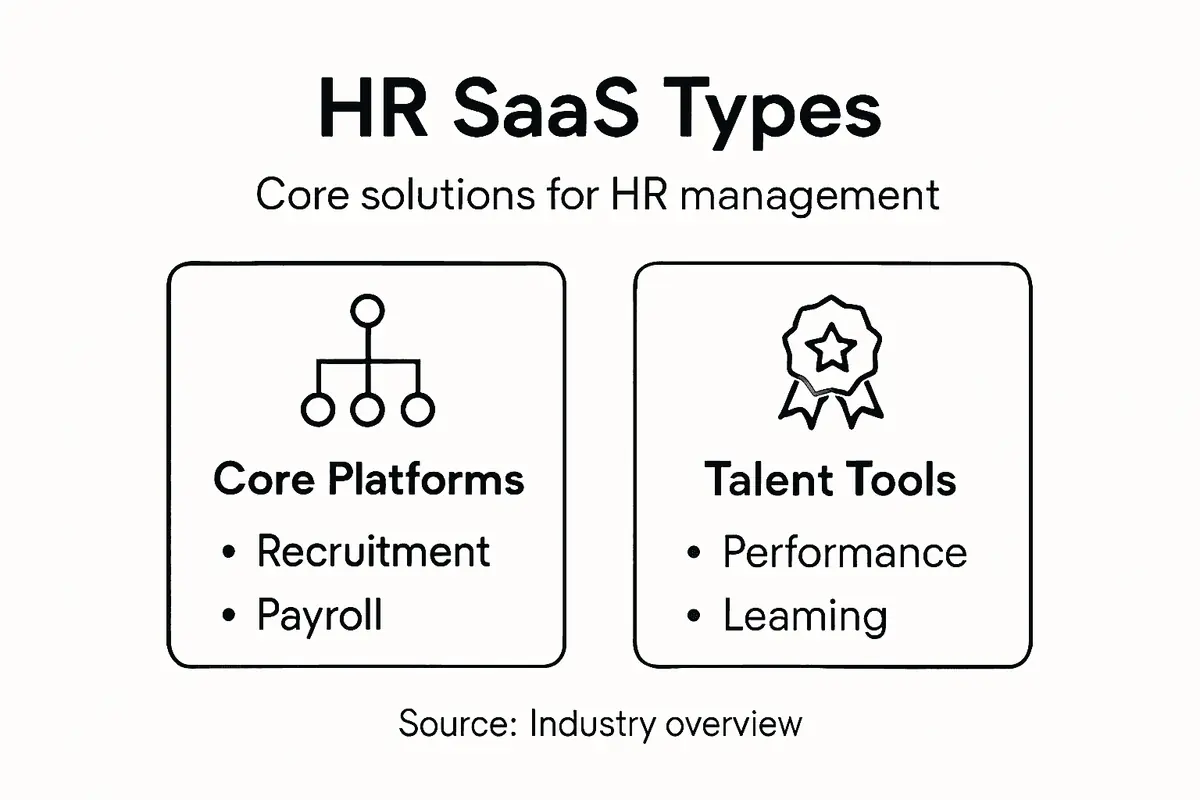
HR teams today have access to a diverse range of SaaS solutions, each designed to handle specific functions within the employee lifecycle. Rather than choosing a one-size-fits-all platform, many organizations mix and match tools based on their unique needs. Understanding the different categories helps you build a tech stack that actually works for your business.
Recruitment and Talent Acquisition SaaS platforms streamline the hiring process from job posting to offer acceptance. These tools typically include applicant tracking systems, candidate sourcing, and interview scheduling capabilities. Recruitment technology trends 2026 highlight how smart hiring platforms now integrate with personality assessment to ensure better team fit from day one.
Talent Management and Performance systems track employee development, set goals, and manage performance reviews throughout the year. These platforms store performance data, track skill growth, and identify training needs. Cloud-based talent management solutions provide visibility into your workforce capabilities and help predict future talent needs.
Payroll and Benefits Administration SaaS handles complex calculations, tax compliance, and benefit enrollment. These systems reduce errors and ensure employees receive accurate paychecks while maintaining regulatory compliance across different jurisdictions. This is where most HR teams started their cloud journey.
Learning Management Systems deliver training content, track completion, and measure skill development. They support onboarding, compliance training, and continuous learning initiatives. Modern LMS platforms include mobile access, making training available whenever employees need it.
Employee Analytics and Workforce Planning tools turn raw HR data into actionable insights. Human resource analytics capabilities reveal patterns in turnover, engagement, and productivity. These platforms help you make data-driven decisions about staffing, compensation, and organizational design.
Employee Engagement and Experience platforms foster communication, recognition, and community building. Pulse surveys, feedback tools, and recognition programs keep employees connected and heard. The goal here is creating a better employee experience that directly impacts retention.
Pro tip: Start by mapping your current pain points and processes, then select SaaS solutions that address your biggest bottlenecks first rather than trying to implement everything simultaneously.
Here is a summary of key SaaS HR categories and their main business impacts:
| SaaS Category | Key Function | Main Business Impact |
|---|---|---|
| Recruitment & Talent Acquisition | Streamlines hiring workflow | Reduces time to hire |
| Talent Management & Performance | Tracks goals and reviews | Improves workforce productivity |
| Payroll & Benefits Admin | Automates pay and compliance | Lowers payroll errors |
| Learning Management Systems | Delivers and monitors training | Increases skill development |
| Employee Analytics & Workforce Planning | Analyzes HR data trends | Enables informed staffing |
| Engagement & Experience | Fosters feedback and recognition | Boosts employee retention |
How Personality Assessment SaaS Drives Job Fit
Job fit goes far beyond matching skills to job descriptions. When someone’s personality aligns with their role and team culture, engagement skyrockets and turnover plummets. This is where personality assessment SaaS platforms change the game for HR professionals seeking to build stronger, more cohesive teams.
Traditional hiring focuses on what candidates can do. Personality assessment SaaS flips the script by evaluating who they are and whether they’ll thrive in your specific environment. AI-driven personality assessments integrate psychometric data with job requirement analysis to predict compatibility before hiring decisions are made. This reduces costly mismatches that lead to early departures.
Consider a software developer with outstanding technical credentials who joins a collaborative, fast-paced startup. If their personality traits favor solitary, methodical work, they’ll eventually clash with team expectations. A personality assessment SaaS identifies this mismatch early, allowing you to either adjust the role, modify team dynamics, or redirect the candidate elsewhere. The goal is matching personalities to job demands, not forcing fit.

Your existing employees hold hidden potential waiting to be unlocked. HR analytics practices reveal personality patterns that suggest career moves nobody considered. Someone struggling in their current position might excel elsewhere in your organization. Rather than losing them, personality assessment SaaS helps you redesign their role or shift tasks to others who love doing them.
Smaller organizations benefit most from this approach. With limited staff, finding complementary personalities becomes critical for team dynamics. Bigger organizations have larger pools to draw from, but personality assessment still prevents the costly mistake of promoting someone excellent at their current job into a role misaligned with their temperament.
The data layer personality assessment SaaS creates connects insights across recruitment, performance, and development. This transforms hiring from guesswork into a data-informed process where personality alignment drives both immediate fit and long-term potential.
Pro tip: Use personality assessment SaaS during recruitment and again before promotions or role changes to catch misalignments early and preserve talent that might otherwise walk.
Real-World HR Applications: Retention and Talent Mobility
HR teams face a constant challenge: keeping top talent engaged while creating clear paths for growth. SaaS platforms transform this challenge into an advantage by revealing where your best people thrive and where they’re at risk of leaving. When you know which employees feel stuck and which roles align with their strengths, retention becomes proactive rather than reactive.
Consider a mid-sized manufacturing company that implemented personality assessment SaaS across their 200-person workforce. Within months, they identified that their star customer service representative, struggling in management, would excel in operations. By redesigning her role to match her personality and strengths, they retained someone they nearly lost. HR analytics implementation shows exactly this pattern: data-driven insights reveal untapped potential before employees start looking elsewhere.
Talent mobility becomes easier when you have personality data backing your decisions. Instead of assuming someone can handle a promotion because they excel in their current role, SaaS platforms reveal personality fit with new demands. A brilliant analyst might have the technical skills for a leadership role but lack the personality traits for managing people. Recognizing this early prevents costly mismatches and frustration.
The real power emerges when you shift tasks based on personality fit. One team member dislikes detailed reporting but excels at strategy. Another loves analytical work but struggles with presentations. Rather than forcing everyone into identical roles, you swap tasks so people do work they actually enjoy. This isn’t just retention strategy, it’s unlocking hidden potential within your existing team.
Employee engagement monitoring through SaaS platforms catches disengagement early. You see warning signs before someone hands in a resignation letter. Maybe someone’s personality indicates they’re ready for advancement that nobody noticed. Maybe team dynamics shifted and a personality mismatch emerged. Real-time data lets you respond before it’s too late.
Internal mobility powered by personality data creates winning scenarios. Your organization retains institutional knowledge. Employees find roles matching their true strengths. Teams improve because people actually want to do their work.
Pro tip: Monitor personality fit data quarterly during performance reviews to catch potential misalignments early and proactively explore internal mobility opportunities before talented people decide to leave.
Risks, Limitations, and Comparison With Traditional HR Tools
SaaS platforms deliver real benefits, but they’re not perfect. Understanding the genuine risks and limitations helps you implement them wisely rather than treating them as a silver bullet. The goal is complementing your existing HR practices, not replacing human judgment entirely.
Data Security and Privacy Concerns
Moving employee data to the cloud introduces real security risks. Your personality assessments, performance histories, and salary information live on someone else’s servers. Cloud-based HRM security considerations highlight vendor dependency as a critical vulnerability. If your SaaS provider experiences a breach, your data is compromised. If they shut down operations, you lose access to historical records. You’re trusting a third party with your most sensitive information.
System Complexity and Integration Challenges
Not all SaaS platforms play well with your existing tools. Legacy HR systems, payroll software, and recruitment platforms might resist integration. Implementation takes longer than expected. Training your team on new platforms requires time and resources. Smaller organizations often lack IT support to troubleshoot compatibility issues.
The Human Judgment Problem
Here’s the critical limitation nobody talks about enough: SaaS platforms analyze data, but they cannot replace experienced HR professionals making final decisions. AI and ethical implications in HR emphasize that algorithms can recommend, but humans must verify. A personality assessment might suggest someone isn’t fit for management, but context matters. Maybe they’ve grown. Maybe that role was recently redesigned. Maybe external factors temporarily affected their performance.
Comparison With Traditional Tools
Traditional HR methods feel slower but offer something valuable: human intuition built from years of experience. Your long-time HR director might sense something’s wrong without data backing it up. They notice subtle team dynamics SaaS platforms miss.
SaaS excels at scale and speed. Traditional methods excel at nuance and relationship building. The answer isn’t choosing one over the other. It’s using SaaS data to inform human decisions, not replace them.
Cost Considerations
SaaS platforms charge per user, per month. Small organizations sometimes find this expensive. Traditional on-premise systems have higher upfront costs but lower ongoing expenses. Your cost structure matters when choosing.
Compare SaaS and traditional HR approaches at a glance:
| Aspect | SaaS Platforms | Traditional HR Methods |
|---|---|---|
| Deployment | Cloud-based, remote access | On-premises, local access |
| Data Insights | Real-time analytics | Manual analysis, slower |
| Personalization | Automated recommendations | Relies on human intuition |
| Upfront vs. Ongoing Cost | Lower upfront, monthly subscriptions | Higher upfront, less recurring |
| Scalability | Easily scales with user growth | Requires new infrastructure |
Pro tip: Treat SaaS recommendations as starting points for conversation, not final decisions; combine platform insights with your team’s knowledge to make better judgment calls.
Unlock True Employee Potential by Transforming HR with Personality Assessment SaaS
The article highlights a common challenge in HR today: identifying the right job fit and unlocking hidden talent by understanding personality rather than relying solely on skills. Many organizations struggle with preventing turnover and promoting internal mobility because traditional methods and generic SaaS platforms miss the deeper insights that only a comprehensive personality assessment can reveal. If you are searching for a solution that goes beyond skills and taps into what truly drives employee engagement and success, this is where Sparkly stands apart.
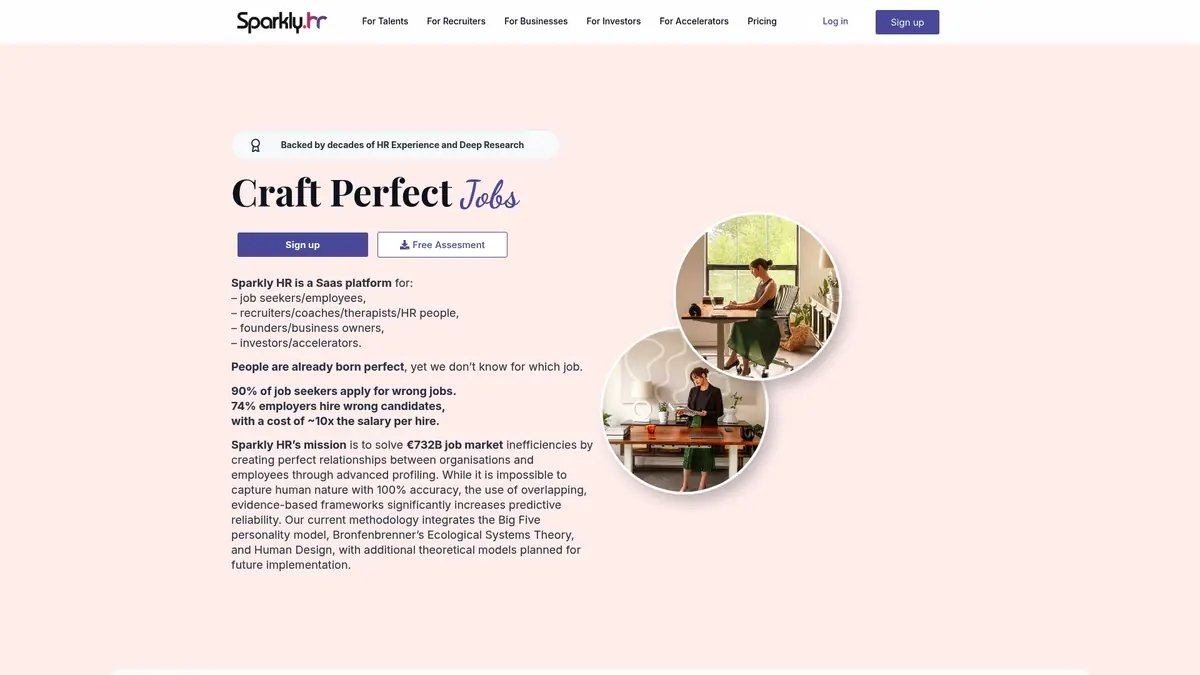
Discover how Sparkly redefines employee assessment SaaS by merging human insights, AI, psychometric tools, and Human Design to deliver higher-probability data you can trust. Our focus on personality as the core metric means you can confidently redesign roles or shift team members to boost retention and performance. Don’t let costly mismatches dictate your talent strategy. Take the next step now to transform your HR approach by exploring Sparkly’s unique methods at Sparkly HR. For a broader view of innovative HR solutions, visit our Uncategorized - Sparkly HR page and see how we elevate traditional practices with actionable data.
Frequently Asked Questions
What are the main categories of SaaS solutions for HR management?
SaaS solutions for HR management can be categorized into several key areas, including Recruitment and Talent Acquisition, Talent Management and Performance, Payroll and Benefits Administration, Learning Management Systems, Employee Analytics and Workforce Planning, and Employee Engagement and Experience.
How does personality assessment SaaS improve job fit for employees?
Personality assessment SaaS improves job fit by evaluating candidates based on their personality traits, ensuring alignment with team culture and job demands. This helps prevent costly mismatches and reduces turnover by placing individuals in roles where they will thrive.
What are the risks of using SaaS platforms in HR?
The primary risks include data security and privacy concerns, potential system complexity and integration challenges, the reliance on human judgment despite algorithmic recommendations, and varying cost implications related to subscription models versus traditional HR systems.
How can SaaS platforms enhance employee retention?
SaaS platforms enhance employee retention by providing insights into employee engagement and identifying potential misalignments in roles. By analyzing personality data, HR teams can proactively redesign roles and offer opportunities for internal mobility, keeping employees motivated and satisfied.