Master the Job Fit Analysis Process for Tech Teams
Discover the job fit analysis process with a clear, step-by-step guide. Learn to align personality-based assessments for better team performance and retention.
Master the Job Fit Analysis Process for Tech Teams

High turnover in fast-moving tech teams can leave valuable projects stalled and morale constantly in flux. For many HR managers, matching the right personalities to the right job roles is key to lasting engagement and performance. By focusing on defining specific job roles and requirements, you create a clear foundation for effective, personality-driven hiring that elevates team alignment and retention far beyond what generic job descriptions can offer.
Table of Contents
- Step 1: Define Specific Job Roles And Requirements
- Step 2: Gather And Merge Personality Assessment Data
- Step 3: Interpret Insights For Team Alignment
- Step 4: Validate Recommendations With Structured Interviews
- Step 5: Monitor And Adjust Job Fit Continuously
Quick Summary
| Key Insight | Explanation |
|---|---|
| 1. Define Clear Job Roles | Clarify roles and responsibilities to prevent hiring mismatches and enhance team dynamics. |
| 2. Use Multiple Assessment Sources | Combine multiple personality assessments to gain a holistic view of candidates’ traits. |
| 3. Map Personalities to Team Structure | Align personality profiles with existing team dynamics to ensure compatibility and productivity. |
| 4. Implement Structured Interviews | Use consistent questions to evaluate candidates, ensuring bias is minimized and insights are validated. |
| 5. Monitor Job Fit Continuously | Regularly check-in with employees to adjust roles based on evolving personality needs and avoid discontent. |
Step 1: Define specific job roles and requirements
You’re about to do the work that prevents mismatched hires and silent resignations. Defining specific job roles and requirements means moving beyond vague job titles and generic descriptions. You need clarity on what success looks like, who thrives in the role, and what actual daily work involves. This foundation determines everything that follows in your hiring process.
Start by breaking down the real work. Open your calendar and shadow people in similar roles for a day or two. Watch what they actually do versus what the job description says they do. Are engineers spending 40% of their time in meetings? Do frontend developers spend afternoons mentoring junior team members? These hidden realities matter because personality fit depends on whether someone loves the work they’ll actually perform. Most job descriptions capture 70% of the real job, ignoring the rest. You need that other 30%.
Next, identify the personality dimensions your role requires. Consider whether this position needs someone who thrives on structure or creates their own direction. Does the role require someone who works solo in deep focus, or someone energized by constant collaboration? A backend engineer working independently has vastly different personality needs than someone building developer tools and training teams. When you examine the specific responsibilities researchers conduct, you notice clear personality patterns emerge. Researchers need curiosity, persistence with setbacks, and comfort with ambiguity. That’s very different from a customer support engineer who needs patience, communication clarity, and problem-solving urgency. Don’t assume personality requirements transfer across roles. A brilliant project manager might struggle as an architect precisely because the personality profiles diverge.
Document the daily interactions and team dynamics baked into the role. Who does this person report to? Who do they collaborate with daily? What conflicts or tensions exist in the team already? A developer joining a high-conflict team needs very different personality traits than someone joining a harmonious group. Someone comfortable with tension and direct feedback will thrive where someone conflict-averse will quietly burn out. Document team composition, communication styles, and how decisions get made. This prevents personality clashes that feel personal but actually stem from role misalignment.
Finally, separate personality requirements from skill requirements. You need both, but conflating them causes hiring disasters. A strong communicator with weak coding skills can learn to code. A brilliant coder without collaboration instincts usually can’t rewire their personality. Define which technical skills are non-negotiable entry points, then separate personality traits that determine long-term success and satisfaction. Write these down separately. List personality traits the role genuinely needs. List skills that can be developed versus skills that must exist on day one.
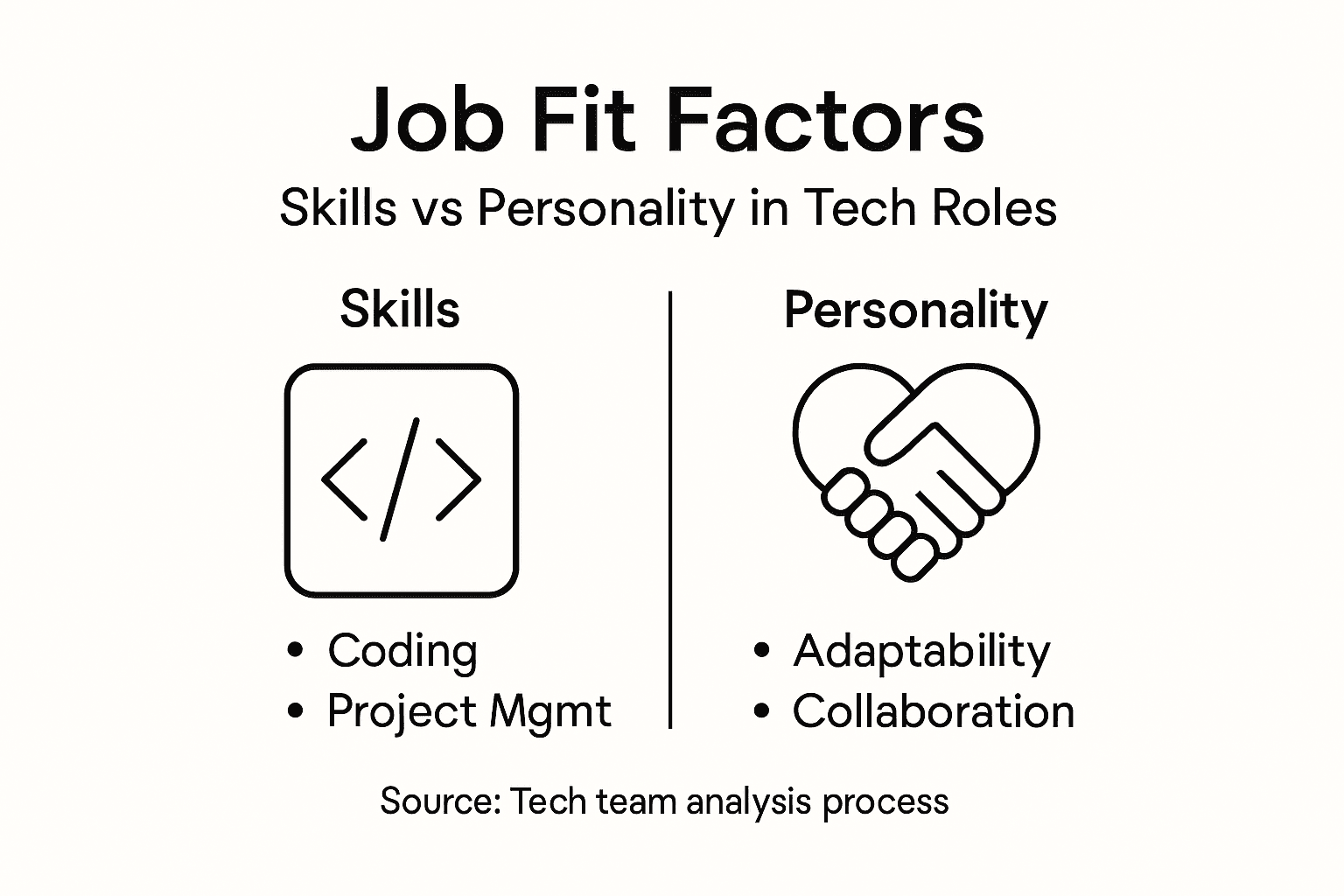
Here’s a summary of key differences between skill requirements and personality requirements crucial for role fit:
| Aspect | Skill Requirements | Personality Requirements |
|---|---|---|
| Definition | Technical abilities and knowledge | Traits and behavioral tendencies |
| Change Over Time | Can be learned or improved | Largely stable, slow to change |
| Assessment Method | Tests, certifications, portfolios | Assessments, interviews, observations |
| Impact on Retention | Supports short-term performance | Drives long-term engagement and fit |
| Example Requirement | Fluency in Python | Comfort with ambiguity |
Pro tip Document three to five daily situations someone will face in this role, then ask candidates how they’d handle them, observing their natural responses rather than rehearsed answers to traditional interview questions.
Step 2: Gather and merge personality assessment data
You’re about to collect the rich personality intelligence that predicts who will actually succeed in the role you just defined. Gathering and merging personality assessment data means pulling from multiple sources to build a complete picture of what personality traits matter. One single assessment source leaves blind spots. Combining four different data streams eliminates guesswork and surfaces patterns individuals reveal differently depending on context.
Start by identifying your four data sources. First, use machine learning driven personality assessments that process patterns from large candidate datasets and identify complex personality signals efficiently. Second, gather behavioral data from your actual team members. Have them complete the same personality assessment you’ll use for candidates. This establishes your baseline for what successful personalities look like in your specific environment, not in some generic company. Third, incorporate AI analysis of candidate communication. Email tone, resume language, and interview responses reveal personality patterns that pure questionnaires miss. Someone might score as detail-oriented on a test but speak in broad concepts naturally, signaling they adapt their communication style. Fourth, include Human Design insights or similar personality framework systems that reveal deeper motivational patterns and how someone makes decisions.
This table compares four common sources for personality assessment data and the unique value each provides in the hiring process:
| Data Source | Insights Provided | Potential Limitations |
|---|---|---|
| Machine Learning Assessments | Identifies hidden personality signals | May miss individual context |
| Team Member Behavioral Data | Reveals successful team fit patterns | Biased by current team culture |
| AI Analysis of Communication | Highlights natural language and tone | Influenced by communication medium |
| Human Design Frameworks | Uncovers decision-making motivations | May require specialized knowledge |
Now merge these sources into a single data view. This isn’t averaging scores together. Instead, look for convergence and contradiction. When all four sources align on a candidate as collaborative and energized by teamwork, you have high confidence. When sources conflict, dig deeper. Maybe psychometric data says someone is introverted while AI analysis shows they communicate frequently and warmly in emails. That tells you something real: they’re selective about social interaction and need control over when they engage. That’s different from someone avoiding connection entirely. Create a simple spreadsheet with four columns, one for each data source, where you record the personality signals each reveals. Look for themes that emerge across multiple sources. When three sources point to impatience and one doesn’t, impatience likely drives their personality.
Apply these merged insights back to your role requirements from Step 1. Does the candidate’s merged personality profile match the role’s genuine needs? A role requiring deep focus and minimal interruptions needs someone whose data shows comfort with solitude and structure. A candidate who scores high on collaboration and spontaneity in all four sources will struggle in that environment, no matter how technically strong. The mismatch will surface in the first month, not the first day. This merged data approach catches misalignment before you make the hire.
One practical note: different team members and candidates might not reveal their personality equally across assessment types. Introverted people sometimes suppress their true preferences in live interviews but reveal them completely in written psychometric tests. Extroverted people shine in interviews but produce more scattered written responses. By gathering four sources, you’re not relying on someone’s performance in a single assessment context. You’re capturing how they actually behave across different environments.
Pro tip Create a personality profile template that shows the four data sources side-by-side for every candidate, making it easy to spot convergence and flag contradictions that warrant deeper conversation during interviews.
Step 3: Interpret insights for team alignment
You’re about to translate personality data into actual team decisions. Interpreting insights for team alignment means looking at the personality patterns you gathered and asking what they reveal about who fits where and how your team composition actually works. This is where data becomes strategy instead of staying abstract numbers on a spreadsheet.
Start by mapping personality profiles against your actual team structure. Pull up your organization chart and write each person’s top three personality traits next to their name. Look for natural clusters. Do you have four detail-oriented analytical personalities on the backend team and three spontaneous collaborative personalities on frontend? That’s intentional clustering that probably works well because similar personalities reinforce each other’s strengths. Or do you have one highly conscientious person surrounded by spontaneous risk-takers? That person likely feels exhausted from constant firefighting while the team sees them as a bottleneck. Understanding these patterns prevents you from blaming the individual when the real problem is misalignment in the group. When interpreting insights, remember that personality fit in small tech teams is different from larger organizations. In a five-person startup, one personality type can destabilize everything because there’s no buffer. In a fifty-person engineering organization, you have flexibility to build micro-teams with complementary personalities.

Now examine the specific gaps between your current team personality composition and what your role requirements actually need. You defined in Step 1 that your new backend architect role requires someone comfortable with ambiguity, systems thinking, and minimal collaboration. Look at your current backend team personality data. If everyone is collaborative and relationship-focused, your new architect will feel isolated. They’ll push for more meetings and collaboration than the role actually needs, creating friction. Or worse, they’ll quietly suffer and leave within eighteen months because their personality needs aren’t met. The mismatch wasn’t about skills or compensation. Understanding how talent optimization reduces turnover reveals that personality misalignment is one of the highest-impact turnover drivers. Before you hire, adjust either the role design to include more collaboration, or prepare yourself to hire someone whose personality naturally suits deep independent work.
Identify complementary personality pairs within your team. Maybe you have one person who’s brilliant at strategic vision but terrible at execution detail. Another team member is detail-obsessed but uninspired by big pictures. Put them on projects together and they multiply each other’s output. These pairings don’t happen by accident. You have to see them in the data and create the opportunities for them to work together. Similarly, spot personality conflicts brewing in your data before they explode into team drama. If your product manager is spontaneous and experimental while your engineering lead is structured and process-driven, conflicts aren’t a personal problem. It’s a personality clash waiting for the right project to trigger it. Knowing this in advance lets you establish clear decision-making boundaries before tension escalates.
Apply your insights to actual hiring decisions. When comparing two candidates for your open role, don’t just look at whether their personality profile matches the job. Look at how their profile interacts with your current team. A deeply detail-oriented candidate might be perfect for the role requirements but terrible for your team if everyone already works that way and you need someone to push for broader thinking. The data should inform conversations, not replace judgment. Use personality insights as one lens among several when evaluating fit.
Pro tip Create a simple team personality map showing how each member’s traits distribute across your group, then use it during hiring discussions to ask one question: does this candidate fill a gap or reinforce an existing cluster?
Step 4: Validate recommendations with structured interviews
You’re about to test whether your personality insights actually predict real-world performance. Validating recommendations with structured interviews means using a consistent, standardized process to confirm that candidates whose personality profiles match your role requirements will actually thrive in practice. Unstructured conversations let bias slip in. Structured interviews eliminate that problem and give you confidence in your hiring decisions.
Build your interview framework around the personality traits your role genuinely requires. If your role needs someone comfortable with ambiguity and self-directed work, don’t ask generic questions about strengths and weaknesses. Instead, design questions that reveal how candidates actually respond to ambiguity. Ask them to describe a project where requirements changed mid-stream and they had to adapt. Listen for whether they became frustrated or energized. Ask them to tell you about a time they worked without much oversight. Did they flounder or flourish? Structured interview approaches reduce bias and improve prediction because the same questions reveal personality patterns consistently across every candidate. When you ask every person the same specific scenario-based questions, you see real personality differences emerge. One candidate will light up describing ambiguity while another grows visibly uncomfortable. That’s genuine personality data you can trust.
Create a simple scoring rubric before you interview anyone. Write down what you’re actually looking for in candidate responses. For your architect role requiring independent thinking, you might score responses on whether candidates mention enjoying solo problem-solving, whether they describe taking initiative without being told what to do, or whether they talk about setting their own priorities. Assign point values to specific answer patterns. This removes the temptation to rate your first candidate highly because they impressed you, then penalize your fourth candidate for the same behavior. Everyone gets scored on the same criteria. The rubric also prevents interviewers from making snap judgments. They have to listen for specific evidence. One interviewer might be charmed by personality polish while missing that a candidate actually prefers constant team collaboration, making them wrong for your independent role. With a rubric, you’re all measuring the same thing.
Conduct your interviews with multiple people from your team. If possible, have your current backend architect interview your candidate even though they won’t work directly together. They understand the personality demands of independent systems work better than anyone. Have your frontend lead interview too, since they represent the collaborative side of the organization. Their different perspectives on the same candidate reveal whether that person can adapt communication style across different team environments or whether they’re stuck in one personality mode. When all reviewers independently score the candidate similarly on your rubric, you have high confidence. When scores diverge wildly, that’s a signal to dig deeper. Maybe the candidate appeared independent in one conversation and collaborative in another, suggesting they adapt well to context. That’s valuable information about their actual personality flexibility.
Compare interview results directly against your personality data from Steps 1 through 3. Does how the candidate answered scenario-based questions align with what their psychometric assessments revealed? If their machine learning assessment showed discomfort with collaboration but they talked animatedly about team projects during interviews, something doesn’t match. That contradiction isn’t failure. It means you need to probe deeper. Maybe they adapt their public persona in interviews but their natural preference is solo work. Or maybe the assessment missed something real about them. Either way, you now have information worth discussing before you decide.
Pro tip Record the interview responses and share clips with your team afterward so everyone can independently verify that a candidate’s spoken personality matches what your personality data suggested before the interview happened.
Step 5: Monitor and adjust job fit continuously
You’re about to implement the system that prevents silent resignations and catches misalignment before it becomes a crisis. Monitoring and adjusting job fit continuously means treating personality fit as a living thing that changes over time, not a decision you make once at hire and never revisit. People evolve. Jobs evolve. Teams evolve. Your fit analysis has to keep pace.
Schedule quarterly personality check-ins with your team members. This isn’t a performance review. It’s a structured conversation where you ask whether their current role still energizes them or whether their preferences have shifted. Someone hired as an individual contributor might discover they crave mentoring. Someone brought in for deep technical work might feel starved for collaboration. The first year after hire is the most critical window. By month six, most personality misalignments have surfaced but people haven’t yet decided to leave. That’s your intervention point. Ask direct questions. Does the role still feel like it matches who they are? Are they doing work that feels authentic or are they constantly forcing themselves into an uncomfortable mode? Are there parts of the job they’ve discovered they actually love that weren’t in the original description? Jobs shift. Someone might have been hired to build features individually but gradually been pulled into architecture discussions and mentoring. If that matches their evolving personality needs, great. If not, you’re watching someone slowly disengage. Understanding that job fit remains dynamic rather than static helps you catch these shifts early. You’re not looking for problems. You’re looking for whether the match that existed at hire still holds true today.
Build adjustment mechanisms into your hiring and team structure from the start. Maybe your new engineer starts at 70% individual contribution and 30% mentoring. Quarterly check-ins might reveal they’re energized by mentoring and want to shift to 50/50. Make that adjustment. Or they might discover they hate mentoring and want to go 90/10 focused work. Honor that too. The cost of switching task allocation is near zero. The cost of someone quietly resenting their role and eventually leaving is enormous. When you spot personality misalignment, you have several levers to pull before resignation is necessary. You can redesign the role to match the person’s personality better. You can move them to a different role where their personality naturally fits. You can adjust their team composition so they work with people whose personalities complement theirs. You can clarify role boundaries so they’re not expected to operate outside their personality comfort zone. All of these are cheaper than replacing someone.
Track personality fit patterns across your whole organization. After a year, look at your data. Did people with certain personality profiles thrive in your architect role while others struggled? Document that. Did collaborative personalities burn out in customer support engineering while independent people flourished? Track it. Over time, your personality data becomes a predictor. You’re building organizational knowledge about which personality types actually succeed in which roles within your specific culture and team composition. That knowledge is gold. New hiring becomes faster because you already know what works. Retention improves because you’re making matches based on actual data, not intuition. You catch potential problems months before they become resignations.
Involve employees in redesigning their own roles based on personality insights. If data suggests someone’s personality has shifted or the role has drifted, invite them to help solve the problem. A developer might say, “I thought I wanted deep technical work, but I’ve realized I need more visibility and collaboration.” Instead of forcing them into a collaborative role that might still feel wrong, work together to design something that splits the difference. Maybe they lead technical discussions, mentor one person, and spend the rest of their time coding. That’s collaborative in a structured way that matches their emerging personality needs. People are remarkably capable of solving their own fit problems when given agency and data.
Pro tip Schedule personality pulse checks every three months using the same assessment tools you used at hire, then compare results to spot personality drift or environmental shifts that indicate adjustment is needed.
Unlock True Job Fit with Advanced Personality Insights
Are you struggling to accurately match tech talent to roles where they will thrive long term You know from the article that balancing skill requirements with deep personality analysis is key to preventing costly mismatches and silent resignations. The challenge lies in merging multiple assessment sources to reveal reliable personality insights beyond surface-level impressions. With Sparkly you can redesign jobs and realign your team by leveraging a SaaS platform that prioritizes personality over skills because skills can be learned but personality fit drives engagement and retention.
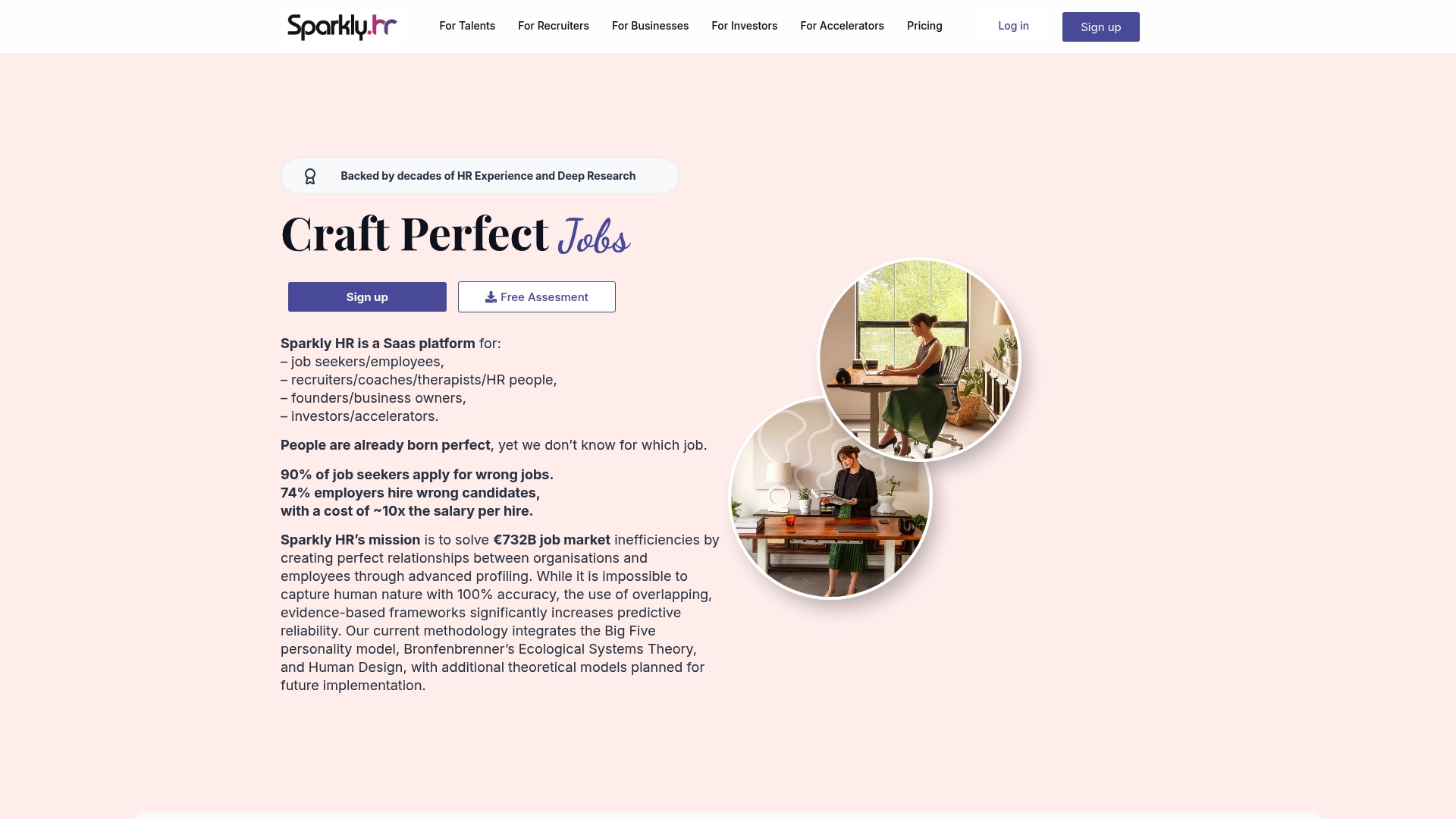
Experience how Sparkly merges human input AI analysis psychometric tests and Human Design to deliver high probability data for actionable hiring decisions Explore how our approach aligns perfectly with the needs highlighted in the uncategorized - Sparkly HR section and start transforming your team dynamics today. Don’t wait for misalignment to cost you talent and productivity Visit Sparkly HR now and empower your hiring process with insights that really matter.
Frequently Asked Questions
How do I define specific job roles and requirements for tech teams?
To define specific job roles and requirements, observe team members in similar positions to understand their actual daily tasks. Spend a day or two shadowing them to identify the hidden realities of their work and document the necessary personality traits alongside technical skills.
What personality assessment data should I gather for effective job fit analysis?
Gather data from four sources: machine learning-driven personality assessments, behavioral data from current team members, AI analysis of candidate communication, and insights from a personality framework like Human Design. This approach helps create a well-rounded view of personality traits essential for the role.
How can I interpret personality insights to improve team alignment?
Interpret personality insights by mapping individual profiles against your team structure, identifying clusters and gaps in personality traits. Look for complementary personalities within your team and adjust hiring strategies to avoid misalignment that could lead to conflict or low engagement.
What should I include in structured interviews to validate personality insights?
In structured interviews, focus on scenario-based questions that reveal how candidates handle ambiguity and other role-specific traits. Create a scoring rubric to evaluate responses consistently, ensuring that all interviewers assess candidates against the same criteria to maintain fairness and objectivity.
How can I monitor and adjust job fit continuously after hiring?
Implement quarterly check-ins with team members to discuss their role satisfaction and any shifts in their personality preferences. Use this information to adjust roles as necessary, ensuring continuous alignment between individuals and their positions, thus preventing silent resignations.
What action should I take if I notice personality misalignment in my team?
If personality misalignment becomes apparent, initiate a conversation with the affected team member to explore their preferences and job satisfaction. Consider adjusting their role, team composition, or tasks to better match their personality needs, facilitating a more harmonious work environment.