
Most American technology companies now treat workforce data as a strategic asset, yet a surprising number of European firms still hesitate to fully adopt talent analytics. For HR managers struggling with retention, this hesitation often leads to missed opportunities. Understanding the real value behind talent analytics—and separating facts from common myths—can help you gain the innovative insights needed to strengthen employee assessment, improve team alignment, and make smarter organizational decisions.
Table of Contents
- Defining Talent Analytics And Common Myths
- Different Types And Data Sources Explained
- How Talent Analytics Improves Retention
- Integrating Personality-First Approaches For Teams
- Risks, Ethical Concerns, And Mistakes To Avoid
Key Takeaways
| Point | Details |
|---|---|
| Embrace Talent Analytics | Talent analytics transforms workforce data into actionable insights, enhancing HR decisions and strategies. |
| Address Common Myths | Overcome misconceptions about talent analytics being overly technical or invasive to foster its adoption in HR practices. |
| Utilize Diverse Data Sources | Leverage multiple data types like performance and engagement data for a comprehensive understanding of employee potential. |
| Prioritize Ethical Practices | Implement ethical data collection and transparency to maintain employee trust and protect personal information. |
Defining Talent Analytics and Common Myths
Talent analytics represents a strategic approach for HR leaders to transform workforce data into actionable insights. Unlike traditional HR methods, talent analytics leverages statistical techniques to understand and predict human capital performance with precision.
At its core, talent analytics involves collecting, analyzing, and interpreting comprehensive employee data to drive organizational decision making. This approach goes beyond basic demographic tracking, integrating complex data points like performance metrics, skill assessments, engagement levels, and potential predictive indicators. HR professionals can use these insights to make evidence-based choices about recruitment, development, retention, and workforce planning.
Several persistent myths surround talent analytics that can discourage HR leaders from fully embracing this powerful tool. Common misconceptions include believing analytics is too technical, requires advanced IT skills, or feels invasive to employees. In reality, ethical people analytics prioritizes transparency and employee wellbeing while providing nuanced understanding of workforce dynamics.
Pro Tip: Start small by identifying 2-3 specific workforce questions you want to answer, then gradually build your talent analytics capabilities using accessible tools and incremental data gathering approaches.
Compare common myths about talent analytics with the actual realities HR leaders should know:
| Myth | Reality | Why It Matters |
|---|---|---|
| Too technical for HR | Modern tools are user-friendly | Empowers wider HR adoption |
| Requires advanced IT skills | Basic analysis skills often suffice | Encourages learning & growth |
| Feels invasive to employees | Ethical analytics ensures privacy and transparency | Builds trust and engagement |
Different Types and Data Sources Explained
Talent analytics draws from multiple data sources, creating a comprehensive view of workforce potential and performance. Advanced technological approaches have dramatically expanded the range of data HR professionals can leverage, transforming traditional talent assessment methods.
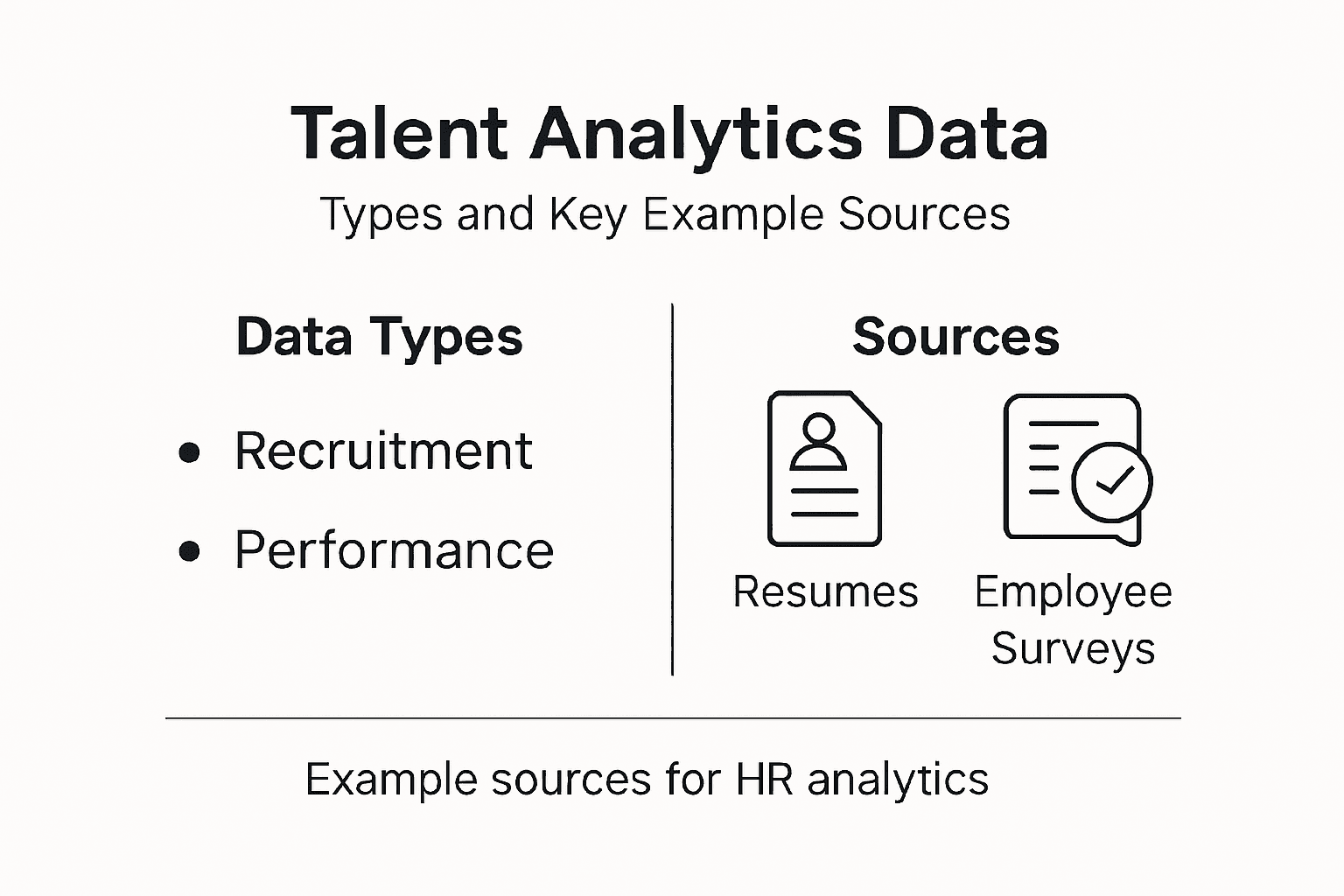
The primary types of talent analytics data can be categorized into several key dimensions:
- Recruitment Data: Application materials, screening results, interview assessments, skills tests
- Performance Data: Annual reviews, project outcomes, productivity metrics, peer evaluations
- Engagement Data: Employee surveys, sentiment analysis, retention indicators, internal communication patterns
- Skills and Potential Data: Training completion rates, career progression tracking, potential assessment scores
Emerging data sources now include sophisticated techniques like natural language processing of resumes, artificial intelligence analysis of professional social media profiles, video interview evaluations, and comprehensive pre-employment psychological assessments. These innovative approaches provide deeper, more nuanced insights into candidate and employee capabilities beyond traditional demographic and performance metrics.
Pro Tip: Develop a standardized data collection framework that integrates multiple sources while maintaining strict data privacy and ethical guidelines to ensure comprehensive yet responsible talent analytics.
Here’s a summary of how different types of talent analytics data drive HR decision-making:
| Data Type | Example Sources | Impact on HR Decisions |
|---|---|---|
| Recruitment Data | Applications, interview scores | Refines candidate selection process |
| Performance Data | Reviews, project outcomes | Identifies top performers, skill gaps |
| Engagement Data | Surveys, retention signals | Shapes engagement and retention plans |
| Skills & Potential Data | Training records, career tracking | Supports succession and growth plans |
How Talent Analytics Improves Retention
Talent analytics has emerged as a powerful strategy for addressing one of HR’s most critical challenges: employee retention. Predictive analytics techniques enable organizations to identify and mitigate potential turnover risks before they become serious problems, transforming reactive HR approaches into proactive workforce management.
The most significant retention benefits of talent analytics include:
- Early Warning Systems: Identifying employees at risk of leaving before they start job searching
- Personalized Engagement Strategies: Developing targeted interventions based on individual employee needs and motivations
- Cultural Fit Assessment: Matching employees with roles and teams that align with their professional goals and personality
- Bias Reduction: Eliminating subjective decision-making in retention planning
Data-driven decision-making allows HR leaders to move beyond traditional retention methods, using sophisticated machine learning algorithms to predict potential turnover with unprecedented accuracy. By analyzing complex data points like performance metrics, engagement levels, career progression opportunities, and personal development indicators, organizations can create more nuanced and effective retention strategies.

Pro Tip: Implement a quarterly predictive retention analysis that combines multiple data sources, focusing on identifying both flight risks and high-potential employees who need additional career development support.
Integrating Personality-First Approaches for Teams
Modern organizations are moving beyond traditional skill-based team building toward a more nuanced, personality-driven approach to team composition. Team personality dynamics reveal that individual traits can significantly impact collective performance, communication, and overall team effectiveness.
Key considerations for personality-first team integration include:
- Trait Complementarity: Deliberately mixing personality types to create balanced team interactions
- Communication Styles: Understanding how different personality types process and share information
- Conflict Resolution: Predicting and mitigating potential interpersonal friction points
- Performance Optimization: Aligning tasks with team members’ inherent personality strengths
Personality trait research demonstrates that team success isn’t about maximizing a single trait, but creating a balanced ecosystem where different personality characteristics interact synergistically. Some traits like extraversion and conscientiousness show non-linear relationships with team performance, meaning moderate levels often produce the best outcomes compared to extreme expressions.
Pro Tip: Conduct periodic personality assessments and create dynamic team maps that visualize personality distributions, allowing for strategic rebalancing and targeted skill development.
Risks, Ethical Concerns, and Mistakes to Avoid
Talent analytics offers powerful insights, but HR leaders must navigate a complex landscape of ethical considerations and potential pitfalls. Ethical data practices require careful navigation to protect employee privacy and maintain organizational trust.
Key ethical risks and common mistakes in talent analytics include:
- Privacy Violations: Collecting or using personal data without clear consent
- Algorithmic Bias: Implementing analytics tools that perpetuate discriminatory practices
- Transparency Failures: Lack of clear communication about data collection and use
- Overreach: Collecting more personal information than necessary for legitimate business purposes
- Consent Violations: Using data without explicit employee agreement
Organizational ethics frameworks emphasize the critical importance of balancing data-driven insights with fundamental employee rights. This means developing robust governance mechanisms that prioritize individual privacy, ensure data security, and maintain a clear line of accountability throughout the analytics process.
Pro Tip: Develop a comprehensive data ethics charter that includes employee input, clear consent protocols, and regular independent audits to ensure your talent analytics approach remains both powerful and principled.
Unlock True Workforce Potential with Personality-First Talent Analytics
The article explains why talent analytics is crucial for HR leaders facing retention challenges and the need for data-driven decisions based on deep workforce insights. You want to move beyond just skills or performance metrics and embrace a holistic, personality-focused approach that enhances team dynamics, reduces bias, and supports strategic workforce planning. The challenge is finding reliable, comprehensive data that combines human judgment with advanced analytics without compromising employee trust.
At Sparkly, we understand these pain points and provide an innovative Employee Assessment SaaS designed to unlock the full potential of your current and future employees. Unlike traditional skill-based assessments, we prioritize personality, because skills can be learned but true fit and motivation come from how people naturally engage. We merge four distinct data sources — humans, AI, psychometric assessments, and Human Design — to deliver higher probability insights you can confidently use in interviews and retention strategies. This approach aligns perfectly with the article’s emphasis on ethical, predictive, and comprehensive talent analytics.
Explore how Sparkly can transform your talent decisions and build stronger teams with personality-first data by visiting our Uncategorized – Sparkly HR category.
Don’t settle for incomplete workforce analytics. Experience how Sparkly’s unique fusion of data sources empowers HR leaders to predict retention risks, enhance engagement, and design jobs that suit real human potential. Visit https://sparkly.hr now and start reshaping your talent strategy today.
Frequently Asked Questions
What is talent analytics and why is it important for HR leaders?
Talent analytics is a strategic approach that transforms workforce data into actionable insights using statistical techniques. It’s important for HR leaders as it helps in making evidence-based decisions about recruitment, development, and retention of employees.
How can talent analytics improve employee retention?
Talent analytics helps identify employees at risk of leaving by using predictive analytics. This allows HR to develop personalized engagement strategies and assess cultural fit, ultimately leading to more effective retention plans.
What types of data are used in talent analytics?
Talent analytics utilizes various data sources including recruitment data (applications, interview scores), performance data (annual reviews, productivity metrics), engagement data (surveys, retention indicators), and skills/potential data (training records, career tracking).
What are the ethical considerations in using talent analytics?
Key ethical considerations include ensuring employee privacy, avoiding algorithmic bias, maintaining transparency about data collection, and obtaining clear consent from employees for the use of their data.