Assess employees with personality-focused strategies
Most mid-sized companies rely on skill-focused reviews that miss critical insights about team fit and employee potential. Traditional assessments overlook personality factors that drive engagement, collaboration, and retention. This guide introduces modern, personality-driven evaluation methods that help HR professionals improve team dynamics, reduce turnover, and unlock the full potential of their workforce through data-backed strategies.
Table of Contents
- Understanding Modern Employee Assessment
- Prerequisites For Implementing Advanced Assessments
- Core Steps For Effective Employee Assessment
- Common Mistakes In Employee Assessment And How To Fix Them
- Alternative Assessment Approaches And Their Tradeoffs
- Expected Results And Success Metrics For Advanced Employee Assessments
- How Sparkly.hr Can Help You Assess Employees Effectively
- Frequently Asked Questions
Key takeaways
| Point | Details |
|---|---|
| Multi-dimensional assessments increase accuracy | Integrating personality data with skills evaluations improves job fit prediction by up to 40% and strengthens team alignment. |
| Prerequisites enable successful implementation | Manager training, clear role definitions, and integrated technology platforms create the foundation for effective assessments. |
| Continuous feedback replaces annual reviews | Ongoing evaluation cycles boost engagement and reduce performance anxiety compared to outdated yearly check-ins. |
| Avoid common pitfalls | Eliminate forced ranking, reduce managerial bias through training, and always include employee perspectives in evaluations. |
| Measure success within 3 to 6 months | Track engagement scores, turnover rates, and team performance improvements to verify assessment strategy effectiveness. |
Understanding modern employee assessment
Traditional employee assessments focus narrowly on technical skills and job-specific competencies. They measure what employees can do today but ignore personality traits, communication styles, and team dynamics that determine long-term success. This limited view creates mismatches between people and roles, contributing to disengagement and costly turnover.
Modern assessment strategies take a holistic approach by integrating personality data alongside skill evaluations. Research shows that personality assessments improve job fit prediction by up to 40% compared to skill-only tests. Understanding how someone thinks, collaborates, and responds to stress provides insights that technical certifications cannot capture.
Continuous feedback models replace static annual reviews with ongoing conversations between managers and team members. This shift creates real-time opportunities for course correction and development. Multi-source data from managers, peers, self-assessments, and objective tools reduces the errors inherent in any single evaluation method.
Employing diverse data sources recognizes a fundamental truth: skills can be learned, but personality patterns remain relatively stable. When you prioritize personality fit and team dynamics, you can invest in training employees for new skills knowing they already have the behavioral foundation for success. The employee potential checklist 2026 offers practical frameworks for identifying these core traits.
Key benefits of modern assessment approaches include:
- Enhanced prediction of job performance and retention likelihood
- Better alignment between individual strengths and team needs
- Reduced time and cost associated with poor hiring and placement decisions
- Increased employee satisfaction through improved role fit
- Data-driven insights for strategic workforce planning
Prerequisites for implementing advanced assessments
Successful implementation of personality-focused assessments requires careful preparation. Rushing into new evaluation methods without proper foundations creates confusion, resistance, and unreliable results. Start by establishing clear role definitions and understanding where job redesign opportunities exist within your organization.
Manager training represents the most critical prerequisite. Supervisors need skills to interpret personality data, deliver constructive feedback, and recognize their own biases. Research demonstrates that using multiple assessment sources reduces reliability errors by approximately 20%, but only when evaluators understand how to synthesize diverse inputs effectively.
Technology infrastructure must support data integration from various sources. Modern platforms combine AI analysis, psychometric testing results, and human judgment into unified profiles. The assessment tools boost retention approach demonstrates how integrated systems create actionable insights from complex data streams.
Organizational alignment ensures leadership supports the cultural shift toward personality-focused evaluation. When executives understand and champion these methods, adoption accelerates across all levels. Consider these essential preparation steps:
- Define competencies and personality traits relevant to each role
- Train managers on bias reduction and constructive feedback delivery
- Select and integrate technology platforms for data collection and analysis
- Communicate the purpose and benefits of new assessment methods to all employees
- Establish clear timelines and success metrics for implementation
Pro Tip: Create a pilot program with one department before rolling out organization-wide. This allows you to refine processes, address unexpected challenges, and build internal champions who can support broader adoption.
| Preparation Element | Timeline | Key Resources Needed |
|---|---|---|
| Role clarity workshops | 2-4 weeks | Job analysis templates, department leaders |
| Manager training program | 4-6 weeks | Assessment interpretation guides, bias awareness materials |
| Technology platform selection | 3-5 weeks | IT support, vendor demos, budget approval |
| Employee communication campaign | 2-3 weeks | Internal communications team, FAQ documents |
| Pilot program execution | 8-12 weeks | Volunteer department, feedback collection tools |
The top assessment tools 2026 guide helps you evaluate technology options that match your organization’s size and complexity. Understanding types of HR assessments clarifies which evaluation methods align with your strategic goals.
Core steps for effective employee assessment
Implementing advanced employee assessments requires a systematic approach that balances multiple data sources with practical application. Follow these steps to create reliable, actionable insights that improve team dynamics and retention.
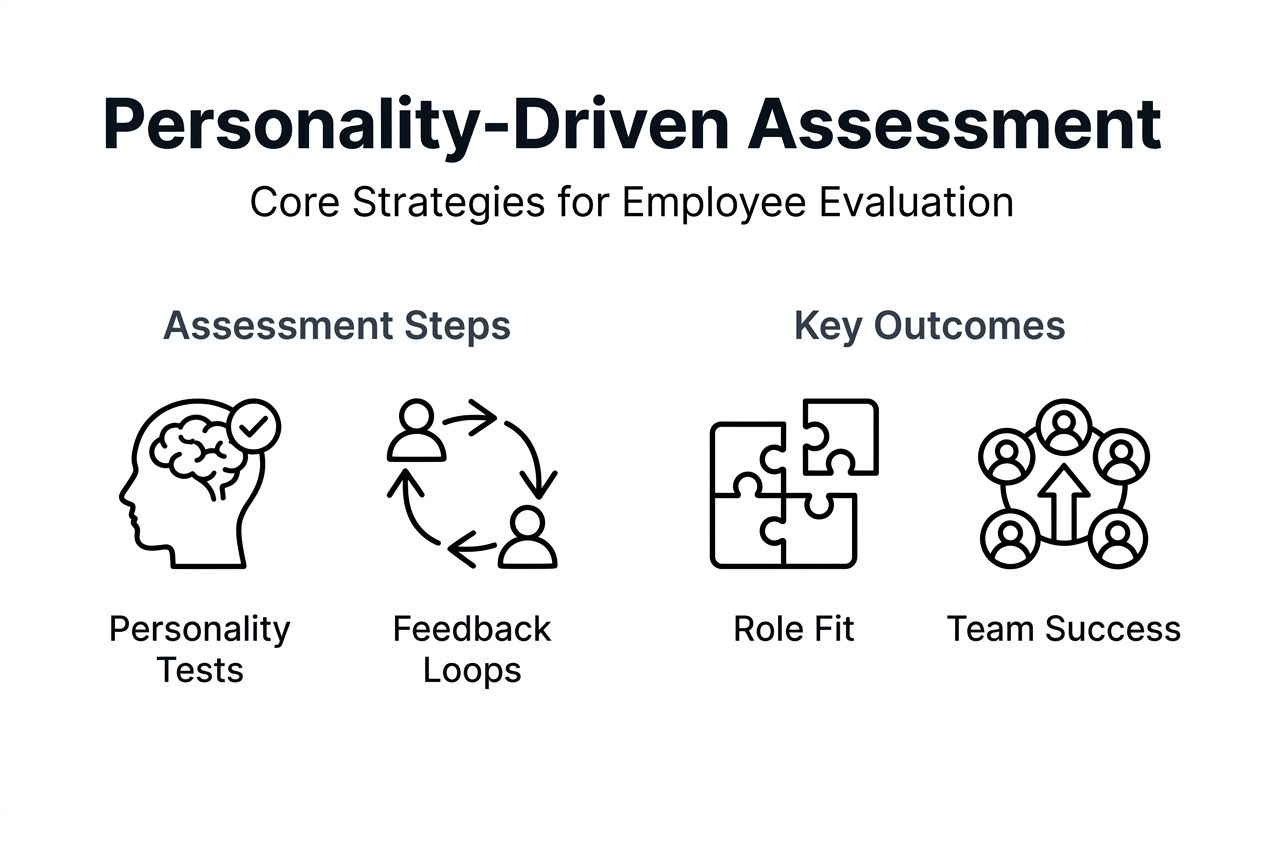
Step 1: Conduct multi-dimensional personality assessments using validated instruments. Deploy psychometric tests that measure traits like conscientiousness, openness, and emotional stability. Supplement these with Human Design readings, AI-powered behavioral analysis, and structured interviews. Each data source provides a different lens on employee potential.

Step 2: Synthesize inputs from human judgment, AI systems, psychometric results, and alternative frameworks. No single source provides perfect information, but patterns across multiple inputs reveal higher-probability insights. Train your HR team to identify convergence and divergence in data, investigating discrepancies rather than ignoring them.
Step 3: Establish continuous feedback loops between employees and managers. Continuous feedback replaces annual reviews in 65% of companies shifting to agile evaluation models. Schedule brief check-ins every two to four weeks rather than comprehensive reviews once yearly. This cadence normalizes conversations about performance and development.
Step 4: Use assessment results to adjust roles and realign teams for optimization. When personality data reveals someone excels at strategic thinking but struggles with detail-oriented tasks, redesign their responsibilities accordingly. The employee potential evaluation guide provides frameworks for matching individuals to optimal roles.
Continuous feedback models increase engagement because employees receive timely recognition and support. They reduce performance anxiety by eliminating the high-stakes nature of annual reviews where one conversation determines raises and promotions. AI insights boost development need identification accuracy by up to 30%, helping managers target coaching more effectively.
Practical implementation tips include:
- Start with self-assessments to encourage employee reflection and buy-in
- Use standardized questions across all evaluations to enable comparison
- Document behavioral examples rather than vague impressions
- Share assessment results transparently with employees
- Create development plans tied directly to personality insights and role requirements
Pro Tip: When synthesizing data from multiple sources, weight each input based on its reliability for the specific trait being measured. AI excels at identifying patterns in large datasets, while human judgment better captures context and nuance.
“The future of employee assessment lies not in choosing between human insight and technology, but in orchestrating both to extract higher-probability data that drives better decisions.”
The AI in recruitment landscape shows how automated systems complement rather than replace human expertise. Apply similar principles to ongoing employee evaluation by leveraging hiring process best practices that emphasize team alignment from day one.
Understanding personality data in recruiting helps you extend these methods beyond hiring into continuous talent management. The talent assessment tips guide offers additional strategies for translating assessment results into actionable team improvements. Consider how HR technology impact shapes your ability to scale these practices across growing organizations.
Common mistakes in employee assessment and how to fix them
Even well-intentioned assessment programs fail when organizations repeat predictable errors. Recognizing these pitfalls helps you design more effective evaluation systems from the start.
Over-reliance on annual reviews creates long gaps between feedback opportunities. Employees drift off course, develop bad habits, or miss development chances because no one provides timely guidance. Replace yearly reviews with monthly or bi-weekly conversations that keep performance aligned with expectations.
Managerial bias distorts evaluations when supervisors lack training in objective assessment. Recency bias emphasizes recent events over sustained patterns. Similarity bias favors employees who remind managers of themselves. Horn effect bias allows one negative trait to overshadow positive qualities. Combat these tendencies through structured evaluation frameworks and bias awareness training.
Ignoring employee perspectives creates one-sided assessments that miss important context. Self-evaluations reveal how individuals perceive their contributions and challenges. When these differ significantly from manager assessments, productive conversations can reconcile the gap and improve mutual understanding.
Forced ranking systems usage dropped from 40% in 2010 to under 10% in 2026 due to negative consequences. These methods create unhealthy competition, demoralize employees ranked at the bottom regardless of absolute performance, and expose organizations to legal risks. Eliminate forced distributions in favor of criterion-based evaluations.
Common mistakes to avoid include:
- Treating assessment as a compliance exercise rather than a development tool
- Using generic feedback instead of specific behavioral examples
- Failing to connect assessment results to concrete development plans
- Neglecting to train employees on how to receive and act on feedback
- Implementing new systems without explaining the rationale to affected staff
Pro Tip: Audit your assessment processes quarterly by analyzing evaluations for patterns that suggest bias. If one demographic group consistently receives lower ratings despite similar performance metrics, investigate potential discrimination and retrain evaluators.
The employee potential checklist 2026 helps you identify whether your current assessment methods capture the right dimensions of employee performance and potential.
Alternative assessment approaches and their tradeoffs
Different assessment methodologies offer distinct advantages depending on your organizational culture, resources, and goals. Understanding these tradeoffs helps you select approaches that match your needs.
360-degree feedback gathers input from supervisors, peers, direct reports, and sometimes external stakeholders. This comprehensive view captures how someone performs across different relationships and contexts. Research shows 360-degree feedback increases evaluation comprehensiveness by 25%, though implementation complexity rises by 15%. The method requires significant time investment and careful management to prevent feedback overload.
Management by objectives aligns individual goals with organizational priorities through measurable targets. This approach clarifies expectations and tracks progress objectively. However, it may miss personality factors that affect how someone achieves results or collaborates with others. A high performer who meets all objectives but damages team morale creates problems that objective-focused assessments overlook.
Continuous feedback systems replace discrete evaluation events with ongoing conversations. They improve engagement by providing real-time guidance and recognition. The informal nature can feel less threatening than formal reviews, encouraging honest dialogue. The tradeoff involves higher time demands on managers who must conduct frequent check-ins and document discussions consistently.
| Assessment Method | Comprehensiveness | Implementation Complexity | Best For |
|---|---|---|---|
| 360-degree feedback | Very High | High | Leadership development, relationship-intensive roles |
| Management by objectives | Moderate | Low to Moderate | Goal-oriented positions, sales, project management |
| Continuous feedback | High | Moderate | Fast-paced environments, development-focused cultures |
| Personality-focused hybrid | Very High | High | Team optimization, retention improvement, role design |
The types of HR assessments overview explains how different evaluation approaches serve specific organizational needs. Consider combining methods to balance comprehensiveness with practical constraints.
Key considerations when selecting assessment approaches:
- Match assessment complexity to the role’s impact on organizational success
- Consider whether your culture values collaborative or individual achievement
- Evaluate whether you have technology infrastructure to support data-intensive methods
- Assess manager capability and willingness to invest time in evaluation processes
- Determine whether employees have the maturity to handle multi-source feedback constructively
Expected results and success metrics for advanced employee assessments
Implementing personality-focused assessment strategies produces measurable improvements across multiple dimensions. Setting realistic expectations helps you stay committed through the initial adjustment period and recognize success when it arrives.
Successful implementation improves feedback frequency and quality within the first quarter. Managers conduct regular check-ins, and conversations shift from evaluating past performance to supporting future development. Employees report feeling more supported and better understanding of expectations.
Employee engagement scores typically rise by 20% to 30% within six months as people experience better role fit and more supportive management. Surveys reveal increased satisfaction with growth opportunities and clearer understanding of how individual contributions connect to organizational goals.
Turnover rates often reduce by 10% to 15% within one year as better initial placement and ongoing role optimization improve retention. Exit interview data shows fewer departures due to poor job fit or lack of development opportunities. The cost savings from reduced turnover typically exceed the investment in enhanced assessment systems.
Enhanced team performance manifests through improved collaboration, faster project completion, and higher-quality outputs. When team members occupy roles aligned with their natural strengths and communication styles, conflicts decrease and productivity increases. These improvements often boost overall profitability as teams accomplish more with existing resources.
Implementation timelines range from 90 to 180 days for comprehensive employee assessment integration. The variation depends on organization size, existing systems, and change management effectiveness. Expect initial resistance that gradually shifts to acceptance as people experience benefits firsthand.
Key success metrics to track include:
- Frequency of manager-employee feedback conversations
- Employee engagement survey scores, particularly items related to development and role fit
- Voluntary turnover rates, analyzed by department and tenure
- Time to productivity for employees in new or redesigned roles
- Internal promotion rates as personality insights identify high-potential talent
- Manager confidence in making talent decisions based on assessment data
Organizations implementing personality-focused assessments see engagement increase by 25% on average within the first six months, with turnover reduction following within 12 months.
The talent optimization explained framework helps you connect assessment insights to strategic workforce decisions that drive measurable business outcomes.
How Sparkly.hr can help you assess employees effectively
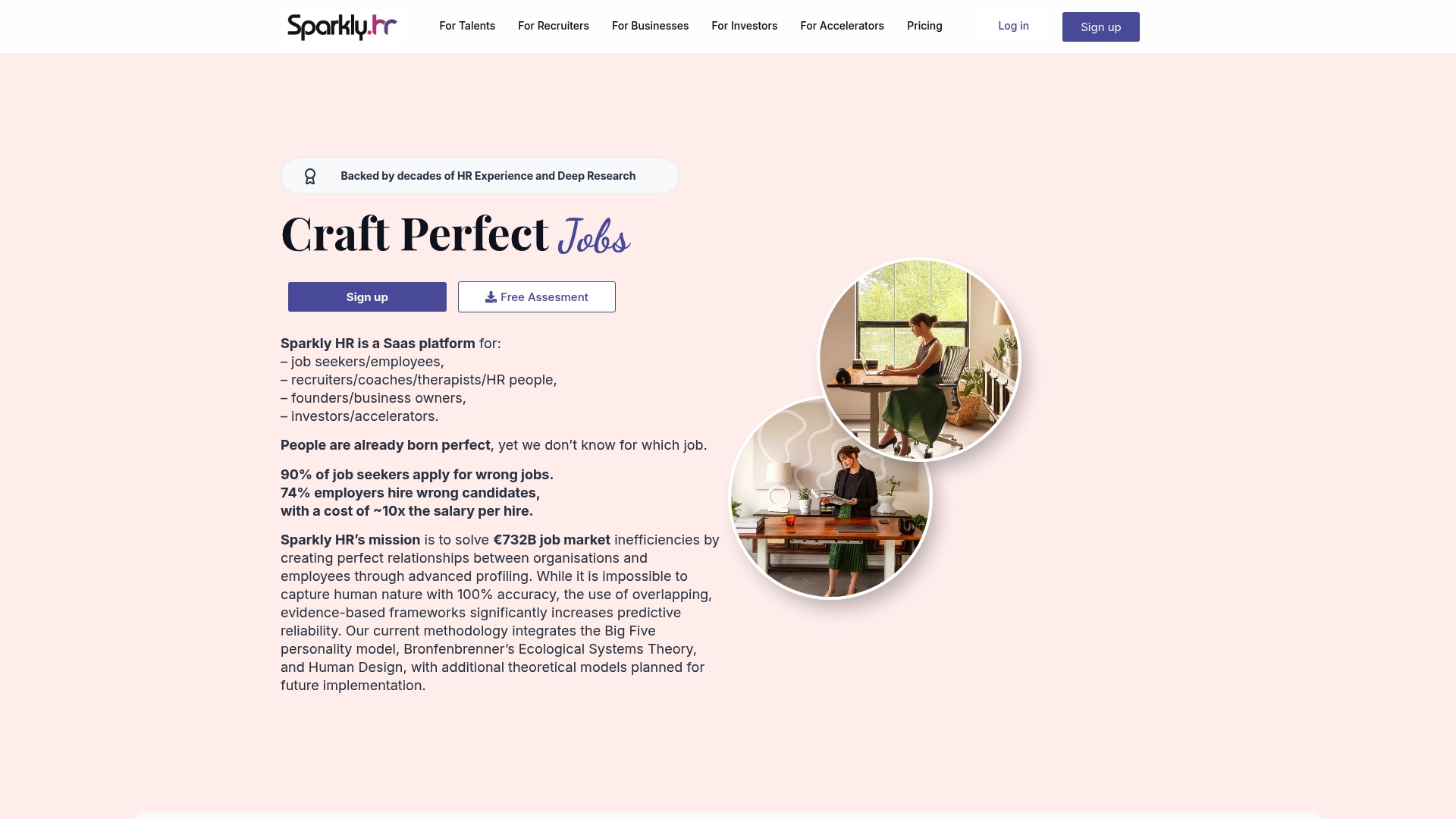
Transforming your employee assessment approach requires tools designed specifically for personality-focused evaluation. Sparkly.hr offers a comprehensive platform that merges human judgment, AI analysis, psychometric testing, and Human Design insights to extract higher-probability data about employee potential and team fit.
Our approach recognizes that skills can be learned, but personality patterns drive long-term success. By prioritizing personality assessment alongside technical capabilities, you identify individuals who will thrive in specific roles and contribute positively to team dynamics. The platform synthesizes four traditionally unreliable sources into actionable insights that reduce hiring mistakes and improve retention.
Explore our SaaS in HR employee potential solutions to see how integrated assessment technology supports better talent decisions. Access the employee potential checklist 2026 for practical frameworks you can implement immediately. Learn more about talent optimization explained to understand how personality data drives strategic workforce planning.
Frequently asked questions
What role does personality data play in assessing employees?
Personality data provides insights into job fit and team dynamics that technical skills alone cannot reveal. It predicts how someone will handle stress, collaborate with colleagues, communicate with stakeholders, and respond to feedback. Research shows personality assessments improve prediction accuracy for performance and retention by up to 40% compared to skill-focused evaluations.
How long does it typically take to see results from new assessment strategies?
Most organizations observe initial improvements in feedback quality and frequency within 90 days of implementation. Measurable gains in engagement scores typically appear within three to six months. Turnover reduction and team performance improvements often take six to twelve months as better placement and development strategies compound over time.
What are the most common mistakes to avoid in employee assessments?
The biggest mistakes include relying exclusively on annual reviews instead of continuous feedback, allowing managerial bias to distort evaluations, and implementing forced ranking systems that create unhealthy competition. Train managers to recognize their biases, provide specific behavioral examples rather than vague impressions, and always include employee perspectives in the evaluation process.
Can AI improve employee assessment accuracy?
Yes, AI insights boost development need identification accuracy by up to 30% by analyzing patterns across large datasets that humans might miss. AI excels at identifying skill gaps, predicting performance risks, and suggesting development opportunities based on historical data. However, AI works best when combined with human judgment that provides context, nuance, and ethical oversight.
What tools are essential before starting employee assessments?
Clear role definitions and competency frameworks provide the foundation for meaningful assessment. Trained managers who understand how to deliver constructive feedback and recognize bias are critical. Technology platforms that integrate psychometric testing, AI analysis, and continuous feedback systems enable efficient data collection and synthesis for actionable insights.