Master Team Member Shifting Workflow for Optimal Teams

Every fast-growing tech startup knows the frustration of losing high-potential team members just when momentum is building. Keeping talent engaged and aligned takes more than perks or pay raises. Optimized team workflows rooted in personality assessments are emerging as a practical way to strengthen collaboration while cutting costly turnover. This guide shows how understanding team dynamics through the latest assessment technologies can help HR leaders build adaptable, resilient teams that drive business results.
Table of Contents
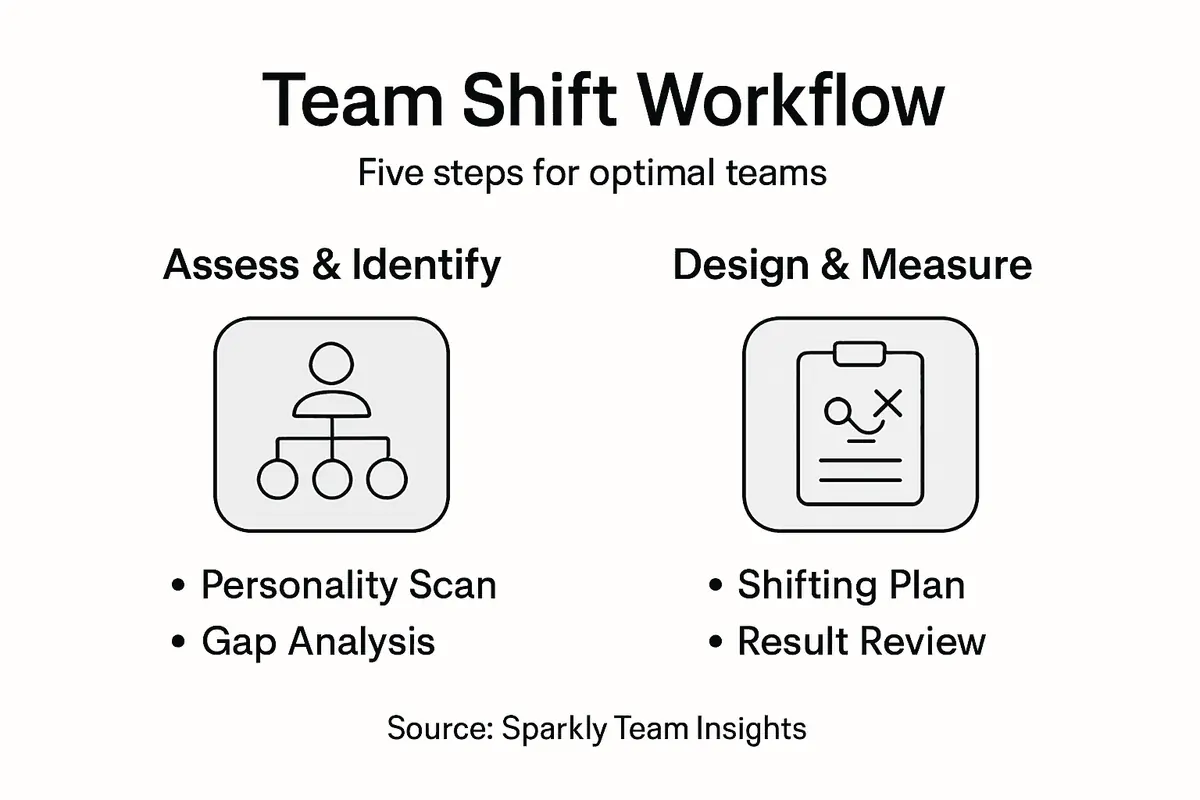
- Step 1: Assess Team Personalities With Integrated Tools
- Step 2: Identify Alignment Gaps Within Current Teams
- Step 3: Design Targeted Team Member Shifting Strategies
- Step 4: Implement Workflow Changes For Seamless Transitions
- Step 5: Verify Team Dynamics And Measure Improvements
Quick Summary
| Key Point | Explanation |
|---|---|
| 1. Use advanced personality assessments | Employ scientifically validated tools to analyze team dynamics rather than just individual traits for better collaboration insights. |
| 2. Identify alignment gaps systematically | Regularly evaluate team goals and working styles against organizational objectives to mitigate performance issues. |
| 3. Implement strategic team shifting methods | Reposition team members based on individual strengths and organizational needs to maximize team effectiveness and growth. |
| 4. Establish flexible workflows for transitions | Create adaptive systems with clear communication and role expectations to support team members during changes. |
| 5. Measure team dynamics comprehensively | Use a multi-dimensional approach to evaluate both qualitative and quantitative metrics for ongoing team improvement. |
Step 1: Assess team personalities with integrated tools
Designing optimal team dynamics starts with understanding the unique personality landscape within your organization. Effective team assessment goes beyond traditional skill inventories by focusing on the human elements that drive collaboration and performance.
The key to successful personality assessment lies in utilizing comprehensive, scientifically validated team personality assessment tools. These sophisticated platforms analyze collective team behaviors rather than isolating individual traits:
- Evaluate communication patterns
- Map decision-making dynamics
- Identify potential collaboration friction points
- Generate actionable insights for team optimization
Advanced assessment strategies now incorporate multiple data streams, including innovative technologies that provide nuanced team interaction insights. Wearable sensor technologies can now capture real-time interpersonal dynamics, offering unprecedented understanding of team coordination and operational effectiveness.
Here’s a quick reference comparing traditional and advanced team personality assessment methods:
| Assessment Method | Data Sources | Insights Generated | Business Impact |
|---|---|---|---|
| Traditional Surveys | Self-reported questionnaires | Basic personality types | Limited team fit analysis |
| Integrated Digital Tools | Behavioral analytics, team interactions | Team communication dynamics | Improved collaboration strategies |
| Wearable Technologies | Real-time sensor data | Interpersonal coordination | Enhanced workflow effectiveness |
Pro tip: Select assessment tools that provide interactive reports and tactical recommendations, not just personality labels.
Step 2: Identify alignment gaps within current teams
Understanding and addressing misalignment is crucial for building high-performing teams that can effectively execute organizational objectives. The process involves systematically evaluating how team members’ goals, expectations, and working styles interact with broader organizational strategies.
Organizational transformation research reveals that alignment gaps can significantly impede team performance and change initiatives. To effectively identify these gaps, consider the following comprehensive assessment approach:
- Conduct transparent communication audits
- Map individual team member goals against organizational objectives
- Analyze communication patterns and decision-making processes
- Evaluate leadership and team member perception alignments
- Identify potential friction points in collaborative workflows
Advanced techniques like concept mapping can help visualize complex interdisciplinary team dynamics. These tools make implicit assumptions explicit, revealing nuanced misalignments that traditional assessment methods might overlook.
Alignment is not about enforcing uniformity, but about creating a shared understanding of collective goals and individual contributions.
Pro tip: Schedule regular alignment check-ins that go beyond surface-level discussions, using structured tools to uncover deeper team dynamics and potential disconnects.
Step 3: Design targeted team member shifting strategies
Creating an effective team member shifting strategy requires a nuanced approach that balances individual capabilities with organizational needs. The goal is to optimize team performance by strategically repositioning talent to maximize collective potential and individual growth.
Data-driven team composition models provide sophisticated frameworks for predicting optimal team configurations. These approaches emphasize strategic allocation based on comprehensive understanding of individual and group dynamics:
- Analyze individual skill sets and personality traits
- Identify complementary team member characteristics
- Assess potential collaboration synergies
- Map individual strengths to project requirements
- Create flexible role transition pathways
Organizational transformation research highlights the importance of developing cross-functional skills and creating adaptive team structures. This approach enables organizations to respond rapidly to changing operational demands while supporting continuous employee development.
Effective team shifting is not about moving people around, but about creating an ecosystem where talent can naturally flow and flourish.
Pro tip: Develop a dynamic talent mapping system that tracks individual capabilities, potential, and aspirational career paths to enable seamless and strategic team member transitions.

Step 4: Implement workflow changes for seamless transitions
Successful team transitions require strategic planning and a comprehensive approach to managing organizational change. The key is creating an adaptive workflow that supports team members through complex shifting processes while maintaining operational continuity and individual engagement.
Digital transformation research emphasizes the critical importance of developing dynamic capabilities that facilitate smooth workflow adaptations. Organizations must focus on building flexible systems that support team members during transition:
- Establish clear communication protocols
- Define transparent role transition expectations
- Create skill development pathways
- Design flexible onboarding processes
- Implement continuous feedback mechanisms
- Develop adaptive learning environments
Organizational change management strategies highlight the necessity of structured approaches to minimize disruption. This involves proactive leadership, stakeholder engagement, and systematic implementation of transition plans that address potential resistance and support individual growth.
Workflow changes are not about replacing people, but about empowering them to evolve and contribute more effectively.
Pro tip: Develop a comprehensive transition playbook that includes individualized support plans, clear communication guidelines, and adaptive learning resources to guide team members through workflow shifts.
Step 5: Verify team dynamics and measure improvements
Evaluating team performance goes beyond traditional metrics by delving into the nuanced interactions that drive collective success. The goal is to create a comprehensive assessment framework that captures both quantitative outcomes and qualitative team dynamics.
Collaborative team dynamics research reveals that team interactions directly correlate with overall performance and output. To effectively measure team improvements, implement a multi-dimensional evaluation approach:
- Conduct regular team satisfaction surveys
- Track collaborative interaction quality
- Measure individual and collective productivity
- Assess communication effectiveness
- Monitor cross-functional collaboration rates
- Evaluate skill development and knowledge transfer
Interdisciplinary team evaluation methods emphasize the importance of systematic assessment frameworks that capture nuanced team performance indicators. This approach requires ongoing monitoring, feedback collection, and adaptive strategy refinement.
Below is a summary of key team performance measures and their benefits:
| Evaluation Area | Measurement Focus | Value to Team Success |
|---|---|---|
| Team Satisfaction | Engagement and morale | Higher retention and motivation |
| Collaboration Quality | Interaction effectiveness | Smoother problem-solving |
| Productivity | Output per individual/group | Accelerated achievement of goals |
| Skill Development | Growth in competencies | Enhanced innovation and agility |
True team improvement is not about perfect performance, but about continuous learning and adaptive growth.
Pro tip: Develop a dynamic scoring system that weights both quantitative performance metrics and qualitative team interaction indicators to provide a holistic view of team effectiveness.
Unlock the Power of Team Member Shifting with Sparkly
The challenge of mastering team member shifting lies in truly understanding the underlying personality dynamics that drive collaboration, alignment, and workflow transitions. This article highlights the importance of analyzing team communication patterns, identifying alignment gaps, and designing data-driven shifting strategies that embrace individual strengths and team goals. Many teams struggle with superficial assessments that focus only on skills rather than deeper personality traits and real-time interactions, leaving untapped potential and hidden friction unaddressed.
Sparkly changes the game by providing an employee assessment SaaS focused primarily on personality—not just skills, which can be learned. Our platform merges insights from humans, Artificial Intelligence, psychometric assessments, and Human Design to create more reliable and comprehensive data. This empowers HR professionals to make confident decisions while redesigning jobs and shifting team members to optimize performance and engagement. If you want to transform your team workflows and ensure seamless transitions based on genuine interpersonal insights, explore how Sparkly’s full solution supports your goals and elevates team dynamics.
Take the next step now. Visit Sparkly to unlock deep personality insights that enhance your team member shifting workflow and drive sustained organizational success. Don’t settle for partial views when you can have a holistic, data-driven approach to building optimal teams.
Frequently Asked Questions
What is team member shifting, and why is it important?
Team member shifting involves strategically repositioning team members to optimize performance and align with organizational needs. Implement this approach to enhance collaboration and improve team effectiveness by ensuring that each member’s strengths match project requirements.
How can I assess my team’s current compatibility before making shifts?
Assess team compatibility by analyzing individual goals, communication styles, and decision-making processes. Conduct surveys and mapping sessions to identify alignment gaps and potential friction points among team members within the next month.
What tools can I use to facilitate team member transitions effectively?
Utilize a dynamic talent mapping system to track individual capabilities and career paths. Implement clear communication protocols and structured onboarding processes to support transitions seamlessly while maintaining operational continuity.
How should I communicate changes to my team to minimize resistance?
Communicate changes clearly by outlining the reasons behind team member shifts and the benefits for individuals and the organization. Schedule regular check-ins to address concerns and gather feedback throughout the transition process, ideally every couple of weeks.
What metrics should I use to measure the success of team member shifts?
Measure success by tracking team satisfaction, collaboration quality, and productivity levels. Regularly evaluate these metrics using a scoring system that combines both qualitative insights and quantitative outcomes to gauge improvements and guide future adjustments.
How often should I reassess team dynamics after implementing shifts?
Reassess team dynamics regularly, ideally every quarter, to monitor ongoing interactions and performance changes. This frequency will help you adapt strategies, address new challenges, and ensure continuous improvement within your teams.