
Hiring for long-term success feels especially challenging when turnover rates stay high, no matter the industry or region. For HR managers in mid-sized companies, the search for stability often highlights gaps in how organizations evaluate job roles and hire new talent. Adopting a systematic evaluation approach—one that goes beyond skills and accounts for individual personality traits—offers a proven path to fair compensation, internal equity, and better matches between candidates and job demands.
Table of Contents
- Defining Job Role Evaluation And Misconceptions
- Distinct Methods For Assessing Job Roles
- Personality-Based Evaluation Versus Skills Focus
- Impact Of Job Role Evaluation On Turnover
- Critical Risks Of Neglecting Evaluations
- Best Practices For Reliable Role Assessment
Key Takeaways
| Point | Details |
|---|---|
| Importance of Job Role Evaluation | A systematic approach is crucial for understanding the value and complexity of positions within an organization. It helps in establishing internal equity and prevents biased compensation practices. |
| Assessment Methods | Utilizing a combination of job ranking, classification, and point-factor analysis provides a comprehensive understanding of role significance and enhances compensation strategies. |
| Personality and Skills | Integrating personality traits with skill assessments creates a more holistic employee profile, facilitating better job performance predictions. |
| Risks of Neglecting Evaluations | Failure to systematically evaluate job roles can lead to structural ambiguity, pay inequities, and increased employee turnover, undermining organizational stability. |
Defining Job Role Evaluation And Misconceptions
Job role evaluation represents a systematic approach organizations use to understand the intrinsic value and complexity of different positions within their workforce. Far from being a simple categorization exercise, this process provides critical insights into how roles contribute to organizational success. Job evaluation helps establish internal equity by creating a structured method to assess jobs based on multiple comprehensive factors.
Traditionally, job role evaluation involves analyzing specific job characteristics such as skill requirements, responsibility levels, physical and mental effort, and working conditions. Unlike common misconceptions, this process is not about judging individual employee performance, but rather objectively understanding the fundamental attributes of each job role. Systematic evaluation ensures that compensation structures reflect the genuine complexity and organizational importance of different positions.
Organizations frequently misunderstand job role evaluation as a subjective process, when in reality, it follows rigorous, data-driven methodologies. The evaluation focuses on the job itself, not the current employee, which allows for a more consistent and fair assessment. This approach helps prevent biased compensation practices and supports transparent workforce management strategies.
Pro tip: Implement a standardized job evaluation framework that includes multiple assessment criteria to ensure comprehensive and objective role analysis.
Distinct Methods For Assessing Job Roles
Organizations employ multiple sophisticated approaches to assess job roles, each offering unique insights into workforce structure and compensation strategies. Multiple job assessment methods range from qualitative techniques like job ranking to more quantitative point-factor scoring systems. These methods enable companies to systematically understand the intrinsic value and complexity of different positions within their organizational hierarchy.
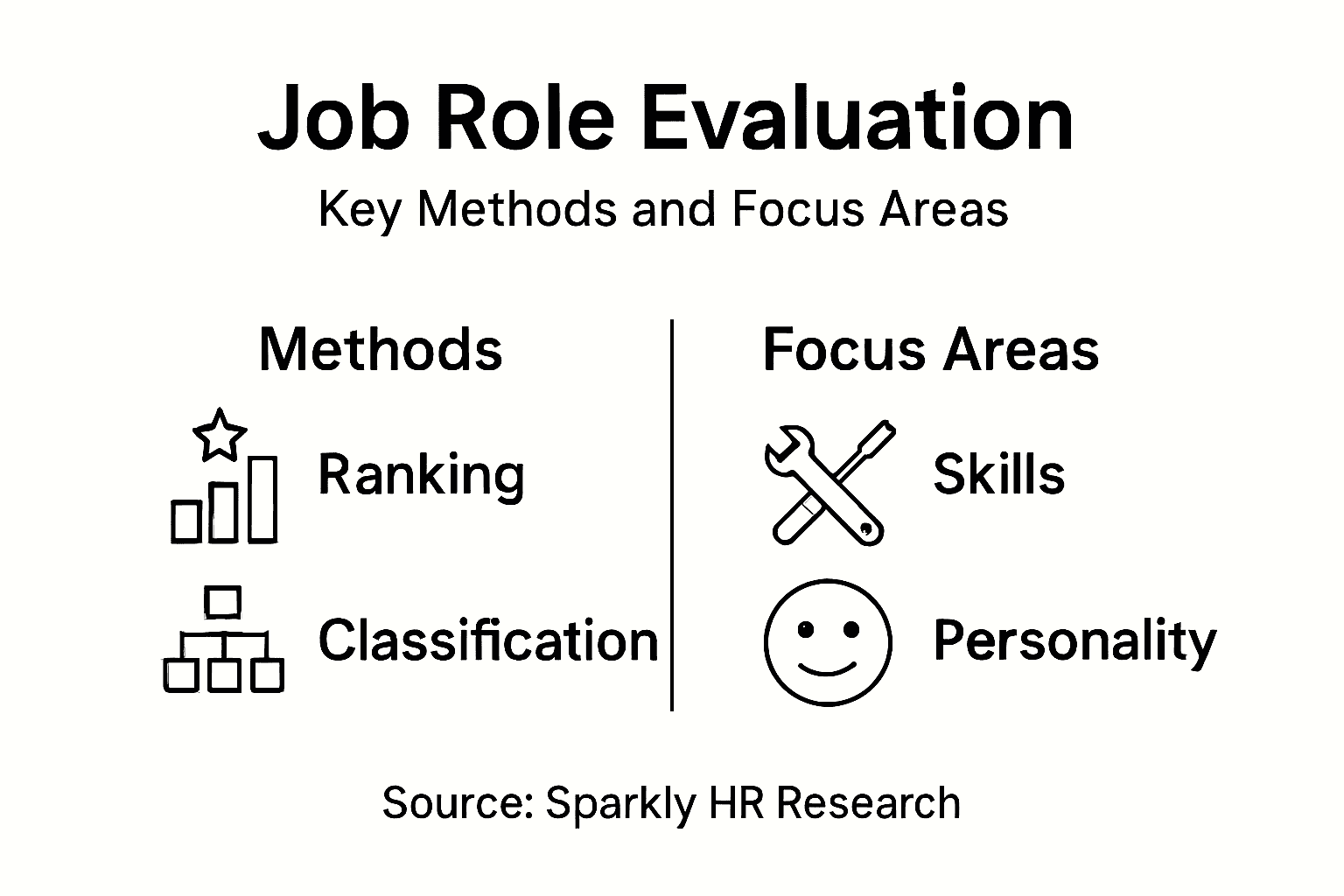
Traditionally, job role assessment includes three primary methodological approaches. Job ranking involves comparing positions against each other to determine relative importance, creating a hierarchical order of roles. Classification methods group similar jobs into predefined categories or grades based on shared characteristics. The most sophisticated approach, point-factor analysis, quantifies job value by systematically scoring compensable factors such as skill complexity, responsibility levels, and working conditions.
Analytical methods like point-factor scoring provide the most precise mechanism for evaluating job roles. These approaches break down positions into measurable components, assigning numerical values to each attribute. This technique offers organizations a data-driven strategy for understanding job worth, ensuring more objective compensation structures and reducing potential bias in workforce management.
Pro tip: Combine multiple job assessment methods to create a comprehensive evaluation framework that captures the nuanced complexity of different organizational roles.
Here is a comparison of common job evaluation methods and their organizational impact:
| Method | Key Approach | Strengths | Business Impact |
|---|---|---|---|
| Job Ranking | Direct role comparisons | Simple to apply | Establishes basic pay hierarchy |
| Classification | Grouping roles into grades | Clarifies job family structures | Supports career pathway planning |
| Point-Factor Analysis | Scoring compensable factors | Highly objective, detailed | Enables precise internal equity |
Personality-Based Evaluation Versus Skills Focus
Modern workforce assessment represents a critical intersection between understanding inherent personality traits and measurable professional skills. Personality dimensions significantly influence job performance beyond traditional skill-based evaluations, revealing how individual characteristics shape workplace behavior and potential. Organizations are increasingly recognizing that technical competencies alone cannot predict an employee’s true effectiveness and adaptability.

Personality traits like conscientiousness, emotional stability, and openness to experience provide deeper insights into how employees approach challenges, interact with teams, and navigate complex work environments. While skills represent tangible abilities an individual has acquired, personality determines how those skills are applied, interpreted, and leveraged. Some employees might possess identical technical skills but demonstrate dramatically different performance levels based on their intrinsic behavioral tendencies.
Research highlights the complementary roles of personality and skills in workforce evaluation. Modern talent management strategies integrate both perspectives, creating nuanced assessment frameworks that move beyond traditional binary evaluations. This holistic approach enables organizations to understand not just what an employee can do, but how they are likely to perform, grow, and contribute to organizational culture.
Pro tip: Design assessment processes that balance quantitative skill measurements with qualitative personality insights to create more comprehensive employee profiles.
Impact Of Job Role Evaluation On Turnover
Performance evaluations decisively influence employee retention by providing critical insights into workforce dynamics and individual career trajectories. When employees understand their standing within an organization, they become more engaged and less likely to seek opportunities elsewhere. Transparent job role evaluations create a clear pathway for professional growth, directly addressing one of the primary reasons workers contemplate leaving their current positions.
Turnover costs represent a significant financial burden for organizations, extending far beyond simple replacement expenses. Effective job role evaluations help mitigate these risks by identifying potential retention challenges before they escalate. By systematically analyzing job roles, companies can proactively realign responsibilities, adjust compensation structures, and create more meaningful work experiences that resonate with individual employee aspirations.
Strategic turnover prediction requires comprehensive job role assessment that goes beyond traditional performance metrics. Modern organizations recognize that understanding an employee’s potential involves examining not just their current skills, but their capacity for growth, alignment with organizational culture, and intrinsic motivational drivers. This holistic approach transforms job role evaluation from a bureaucratic exercise into a powerful talent management strategy that reduces unexpected departures and builds organizational stability.
Pro tip: Implement a continuous feedback system that connects job role evaluations with personalized development plans to proactively address potential turnover risks.
Critical Risks Of Neglecting Evaluations
Neglecting job role evaluations creates significant organizational vulnerabilities that extend far beyond simple administrative oversights. Without systematic assessment, companies expose themselves to cascading challenges that can undermine workforce stability, employee engagement, and overall organizational performance. These risks manifest through reduced productivity, increased turnover, and diminished employee well-being.
Structural ambiguity emerges as a primary consequence of evaluation negligence. Employees operating without clear role expectations experience heightened job insecurity and stress, which directly impacts their motivation and performance. When job responsibilities remain undefined, workers struggle to understand their contributions, leading to decreased organizational commitment and increased likelihood of seeking opportunities elsewhere.
Pay inequities represent another critical risk of inadequate evaluations. Organizations without robust evaluation frameworks become vulnerable to legal challenges, internal dissatisfaction, and potential discrimination claims. Inconsistent compensation structures can create toxic workplace dynamics, eroding trust and creating an environment where talented employees feel undervalued and unappreciated.
Pro tip: Develop a comprehensive job evaluation framework that includes regular assessments, clear performance metrics, and transparent communication to mitigate organizational risks.
The following table summarizes key risks of neglecting job role evaluations:
| Organizational Risk | Potential Consequence | Long-Term Outcome |
|---|---|---|
| Structural Ambiguity | Unclear job expectations | Reduced employee performance |
| Pay Inequity | Discriminatory compensation | Risk of legal challenges |
| Employee Disengagement | Low motivation and morale | Increased turnover rates |
Best Practices For Reliable Role Assessment
Systematic job role assessment demands a structured and objective approach that goes beyond simplistic categorization. Effective evaluation requires carefully defining compensable factors, establishing transparent scales, and developing consistent methodologies that capture the nuanced complexity of organizational roles. By implementing rigorous assessment frameworks, companies can create more accurate, fair, and meaningful representations of job responsibilities.
Comprehensive evaluation involves multiple critical components. Organizations must develop clear criteria for assessing roles, which includes identifying key performance indicators, skill requirements, and potential career progression pathways. This approach requires involving trained evaluators who understand the intricacies of different job functions and can apply objective measurement techniques. The goal is not just to classify roles, but to create a dynamic understanding of how each position contributes to overall organizational success.
Transparency and periodic review form the cornerstone of reliable role assessment. Successful organizations communicate evaluation methodologies clearly, ensuring employees understand how their roles are analyzed and valued. Regular reassessments allow for adapting to changing organizational needs, technological advancements, and evolving workforce dynamics. By maintaining a flexible yet structured approach, companies can develop more responsive and engaging job role frameworks that support both individual and organizational growth.
Pro tip: Create a cross-functional evaluation team that includes HR professionals, department managers, and employee representatives to ensure comprehensive and balanced job role assessments.
Unlock True Employee Potential Beyond Traditional Job Evaluations
The article highlights the challenges organizations face with traditional job role evaluations such as structural ambiguity and paying insufficient attention to personality traits that define how employees perform and grow. If you want to move beyond assessing only skills and job rankings and tackle these pain points head-on Sparkly HR offers a unique solution. Our SaaS platform focuses primarily on personality assessment merging insights from humans AI psychometric evaluations and Human Design. This innovative approach helps you understand your employees’ true potential and redesign job roles to better align with their intrinsic motivation and behavioral strengths.

Discover how Sparkly HR can transform your talent management by reducing turnover improving engagement and creating transparent fair role assessments inspired by the latest research explained in this article. Start unlocking the full capabilities of your workforce right now by visiting Sparkly HR and explore our offerings in the Uncategorized – Sparkly HR section to learn why personality-driven evaluations are the future of employee success.
Frequently Asked Questions
What is job role evaluation and why is it important?
Job role evaluation is a systematic approach used by organizations to assess the intrinsic value and complexity of different positions. It helps establish internal equity, ensuring that compensation reflects the genuine importance of each role, which can enhance employee motivation and retention.
What methods are commonly used for evaluating job roles?
Common methods for evaluating job roles include job ranking, classification, and point-factor analysis. Each method offers unique insights, with point-factor analysis being the most data-driven approach that quantifies job value through measurable attributes.
How does evaluating job roles impact employee turnover?
Evaluating job roles can significantly impact employee turnover by providing transparency around job expectations and growth opportunities. When employees clearly understand their role in the organization and see pathways for advancement, they are more likely to stay engaged and committed, reducing turnover rates.
What are the risks of neglecting job role evaluations?
Neglecting job role evaluations can lead to structural ambiguity, pay inequities, and employee disengagement. These issues can result in decreased productivity, increased turnover, and potential legal challenges due to discriminatory compensation practices.