Defining an ideal candidate rarely feels simple when balancing skill set demands with the need to minimize turnover. For HR professionals in Canadian, American, and European tech companies, refining recruitment goals is no longer just a checklist item. With strategic recruitment planning, teams can achieve optimized talent selection aligned with company goals, paving the way for stronger productivity and innovation. This overview offers practical ways to clarify recruitment objectives while improving your ability to evaluate personality traits for long-term team success.
Table of Contents
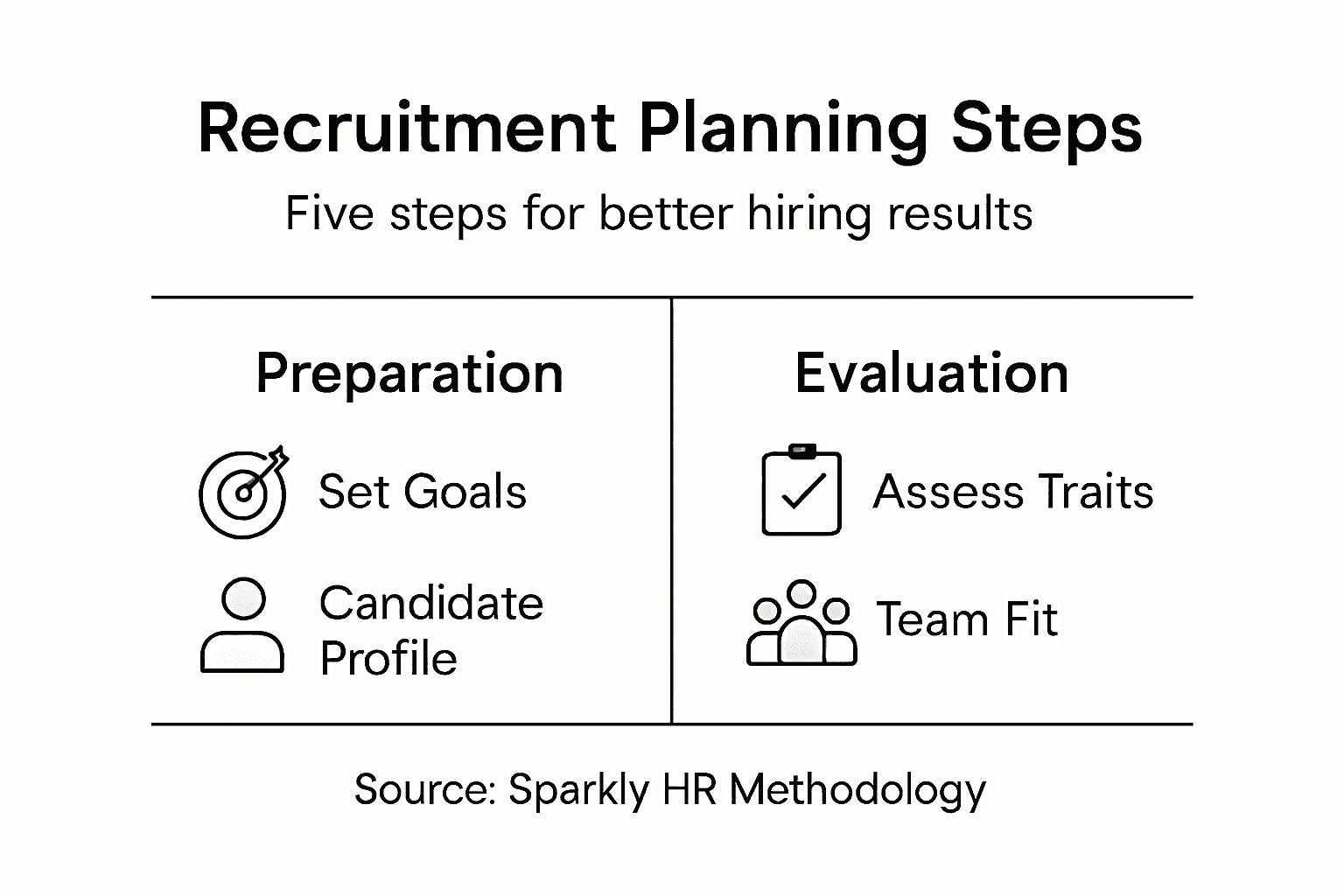
- Step 1: Define Recruitment Goals And Ideal Candidate Profiles
- Step 2: Assess Personality Traits Using Advanced Tools
- Step 3: Design Role Fit And Team Alignment Strategies
- Step 4: Integrate Insights For Interview And Selection
- Step 5: Verify Outcomes And Refine Recruitment Process
Quick Summary
| Key Point | Explanation |
|---|---|
| 1. Define clear recruitment goals | Establish specific recruitment objectives to strategically align hiring with organizational needs and team dynamics. |
| 2. Use advanced personality assessments | Implement AI-driven tools that assess candidates’ traits through multiple data sources for better insights on fit. |
| 3. Focus on role fit and team alignment | Evaluate how candidates integrate into existing teams and promote long-term organizational goals beyond technical skills. |
| 4. Integrate data for decision making | Combine quantitative assessments with personal evaluations to enhance candidate selection processes and accuracy. |
| 5. Continuously refine recruitment strategies | Regularly analyze recruitment outcomes to identify improvements, adapting strategies to meet changing organizational needs. |
Step 1: Define recruitment goals and ideal candidate profiles
Defining precise recruitment goals transforms your hiring strategy from reactive to strategic. Organizations that strategically plan recruitment create stronger teams and drive long-term organizational success.
To design effective recruitment goals, start by analyzing your organization’s current talent landscape and future needs. This involves understanding skill gaps, projected growth, and team dynamics. Ask yourself critical questions: What specific capabilities does your team need? Which personality traits will complement existing team members? How can you attract talent that not only meets job requirements but also enhances organizational culture?
Build your ideal candidate profile by mapping out both technical requirements and personality characteristics. Focus on traits like adaptability, collaboration potential, and intrinsic motivation rather than just technical skills. Remember that skills can be trained, but fundamental personality alignments are harder to change. Create a comprehensive profile that includes technical competencies, desired personality traits, cultural fit indicators, and potential for growth within your organization.
Pro Tip: Conduct an internal team assessment before defining recruitment goals to understand existing team dynamics and identify the precise personality traits needed for seamless integration.
Step 2: Assess personality traits using advanced tools
In the modern recruitment landscape, assessing personality traits goes far beyond traditional interviews. Organizations can now leverage advanced AI personality assessment techniques that provide deeper insights into candidate potential and organizational fit.
Multimodal assessment tools analyze candidates through comprehensive data collection methods. These include video interviews, psychological assessments, natural language processing, and behavioral analysis. Video interview AI technologies can objectively evaluate candidates by examining verbal and non verbal communication cues, offering a more holistic view of personality traits compared to traditional screening methods.
When implementing personality assessment tools, focus on gathering data across multiple dimensions. Look for platforms that combine machine learning algorithms with psychological frameworks like the Big Five personality model. These tools should provide nuanced insights into traits such as openness, conscientiousness, extraversion, agreeableness, and emotional stability. By integrating these advanced assessment technologies, you can make more informed hiring decisions that go beyond surface level skill matching.
Pro Tip: Regularly calibrate your personality assessment tools by comparing AI predictions with actual employee performance to improve prediction accuracy and reduce potential algorithmic biases.
Here’s a comparison of traditional versus AI-enhanced personality assessment methods in recruitment:
| Assessment Approach | Data Sources Used | Type of Insights Provided | Primary Benefit |
|---|---|---|---|
| Traditional Interviews | Face-to-face Q&A | Subjective, interviewer-based | Gauges communication and demeanor |
| Psychological Tests | Standardized questionnaires | Trait scores | Measures cognitive and character traits |
| AI Video Analysis | Video, speech, gestural cues | Nonverbal and verbal patterns | Uncovers hidden behaviors and biases |
| Multimodal AI Tools | Video, language, psychometrics | Comprehensive personality data | Multi-dimensional candidate profiling |
Step 3: Design role fit and team alignment strategies
Creating successful team dynamics requires a strategic approach to understanding person job fit and organizational alignment. Modern recruitment demands more than matching technical skills with job requirements it requires a holistic view of how candidates will integrate into existing team structures and contribute to long term organizational goals.
To design effective role fit strategies, start by conducting a comprehensive team dynamics assessment. Analyze your current team’s personality composition, skill gaps, communication patterns, and collaborative styles. Look beyond traditional job descriptions and focus on identifying candidates who can complement existing team members while bringing unique perspectives. Strategic recruitment practices should emphasize adaptability, cultural alignment, and potential for growth rather than rigid skill matching.

Implement a multi dimensional evaluation process that goes beyond technical competencies. Use personality assessments, team compatibility questionnaires, and simulated collaborative exercises to gauge how potential candidates might interact with existing team members. Create role profiles that highlight not just technical requirements but also desired personality traits, communication styles, and potential for cross functional collaboration. This approach ensures that new hires are not just qualified but truly integrated into your organizational ecosystem.
Pro Tip: Create dynamic role descriptions that focus on team contribution and growth potential rather than static job responsibilities.
Step 4: Integrate insights for interview and selection
Transforming recruitment requires a sophisticated approach that blends technological insights with nuanced human judgment. AI driven recruitment analytics offer unprecedented opportunities to enhance candidate evaluation processes while maintaining critical human perspectives.
Develop a comprehensive integration strategy that combines quantitative assessments with qualitative observations. Utilize advanced deep learning algorithms to score candidate responses objectively, ensuring consistency and depth in evaluation. Automated candidate response scoring can provide detailed insights that complement traditional interview techniques, allowing recruiters to make more informed decisions based on both technological analysis and human intuition.
Create a structured evaluation framework that balances technological insights with interpersonal assessment. Design interview protocols that incorporate data driven personality assessments, skill matching algorithms, and structured behavioral interviews. Develop a scoring system that weighs both technical competencies and cultural fit, ensuring that candidate selection goes beyond surface level qualifications and addresses deeper organizational alignment.
Pro Tip: Implement a hybrid evaluation model that uses AI insights as a supplement to human judgment rather than a replacement.
Step 5: Verify outcomes and refine recruitment process
Evaluating and improving your recruitment strategy is crucial for long term organizational success. Systematic recruitment process monitoring reveals critical insights that can dramatically enhance workforce performance and retention.
Implement a comprehensive feedback and analysis framework that tracks recruitment outcomes across multiple dimensions. Use data driven metrics to assess the effectiveness of your hiring strategies by examining key performance indicators such as time to hire, candidate quality, employee retention rates, and team productivity. Leverage AI powered recruitment analytics to generate predictive insights that can help you continuously refine your approach, identifying patterns and potential improvements in your recruitment methodology.
Develop a cyclical refinement process that includes regular reviews of recruitment data, candidate feedback, and employee performance. Create mechanisms for ongoing assessment that allow you to adapt your strategies based on real world outcomes. This approach ensures that your recruitment process remains dynamic, responsive, and aligned with evolving organizational needs and talent market trends.
Pro Tip: Establish quarterly recruitment performance audits that compare expected versus actual hiring outcomes to drive continuous improvement.
Below is a summary of key recruitment metrics and their business impact:
| Metric | What It Measures | Business Impact |
|---|---|---|
| Time to Hire | Days from job post to accept | Affects productivity continuity |
| Candidate Quality | Skill and fit effectiveness | Drives team performance |
| Employee Retention | Length of tenure post-hire | Reduces turnover costs |
| Team Productivity | Output post new hire integration | Boosts overall organizational output |
Unlock Strategic Recruitment Success With Sparkly HR
Recruitment planning is more than filling positions it is about aligning personality, team dynamics, and long term organizational goals as highlighted in “Step by Step Recruitment Planning for Better Hiring Results.” The article points out key challenges like assessing personality traits beyond skills and integrating multiple data sources for better hiring decisions. If you want to overcome unreliable traditional assessments and gain deeper candidate insights Sparkly HR offers a powerful solution by merging human intuition, AI, psychometric tools, and Human Design into one employee assessment SaaS.
Sparkly focuses primarily on personality because skills can be learned but true cultural fit and team compatibility come from who people really are. By using our advanced approach you can redesign jobs and shift team members effectively following the strategic planning steps described. Experience higher probability data and actionable insights that transform interviews into meaningful conversations. Learn how to evaluate candidates for true role fit and team alignment with our innovative platform.
Explore more insights in our Uncategorized – Sparkly HR section and start redefining your hiring strategy today.
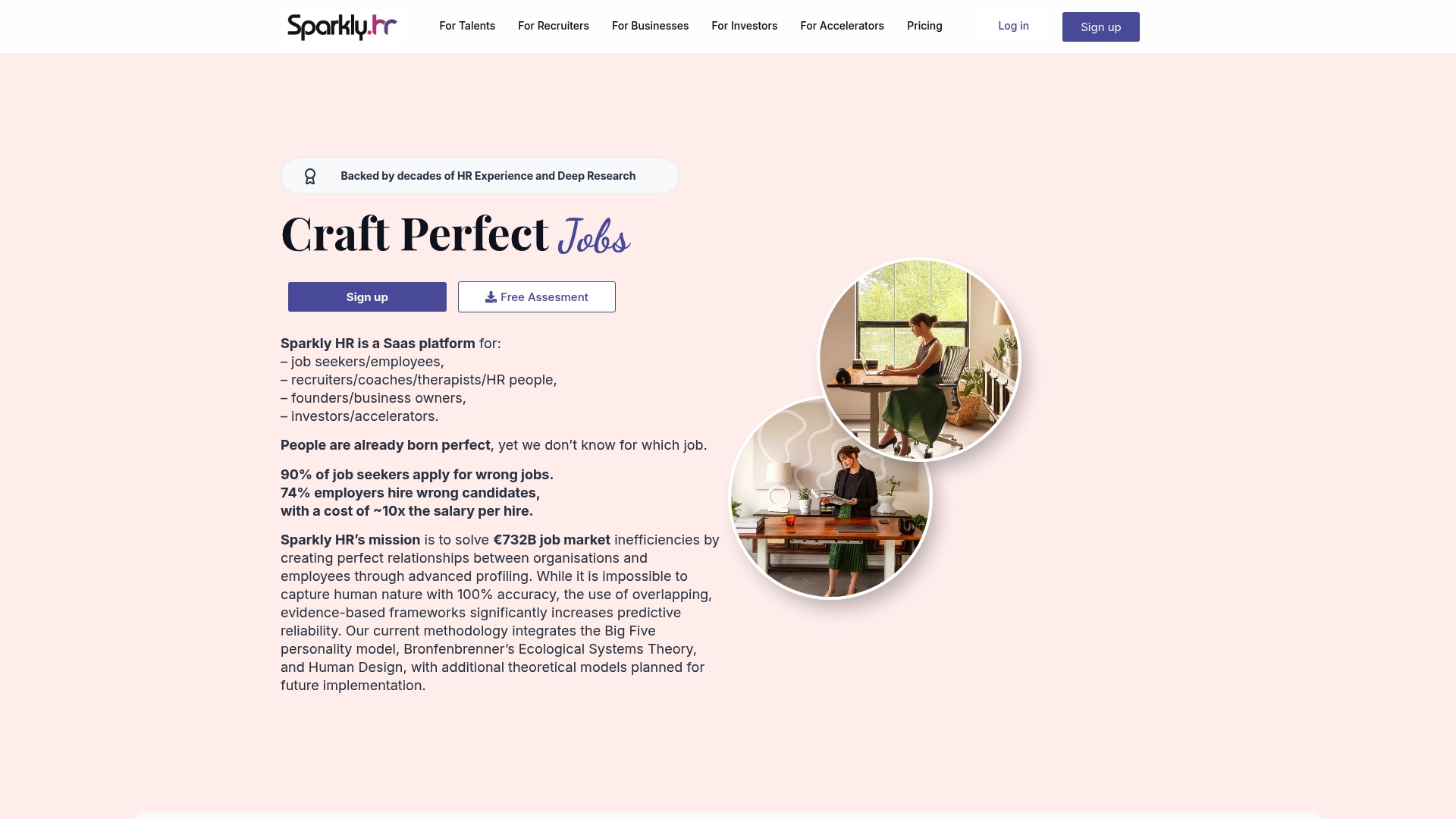
Take control of your recruitment outcomes now by visiting Sparkly HR to see how we can help you plan for better hiring results. Don’t wait to build the team that drives your success.
Frequently Asked Questions
What are the first steps in creating effective recruitment goals?
Defining effective recruitment goals begins with analyzing your organization’s current talent landscape and future needs. Start by identifying skill gaps, projected growth areas, and team dynamics within your organization.
How can I develop an ideal candidate profile?
To create an ideal candidate profile, map out both the necessary technical skills and desired personality traits. Focus on traits that enhance collaboration and adaptability while ensuring alignment with your organizational culture.
What tools can I use to assess personality traits during recruitment?
Leverage advanced AI personality assessment tools that analyze candidates through video interviews, psychological assessments, and language processing. Implement platforms that utilize the Big Five personality model to gain deeper insights into each candidate’s traits.
What strategies can improve role fit and team alignment during hiring?
To enhance role fit, conduct a team dynamics assessment that evaluates skill gaps and existing communication styles. Focus on candidates who not only meet the technical requirements but also bring unique perspectives to your team.
How can I integrate insights from AI for interview and selection?
Develop an integration strategy that combines quantitative insights from AI with qualitative evaluations from human interviewers. Create structured interviews that use data-driven scoring systems to ensure balanced assessments of candidate skills and cultural fit.
What metrics should I track to assess the effectiveness of the recruitment process?
Track metrics such as time to hire, candidate quality, employee retention rates, and team productivity. Regularly review and analyze these metrics to identify areas for improvement, aiming to optimize your hiring strategies continuously.