What makes talent retention truly effective in a mid-sized technology company? HR managers worldwide recognize that keeping top performers goes far beyond salary adjustments and sporadic bonuses. The challenge is more nuanced, requiring meaningful development programs and personalized engagement built on comprehensive talent management strategies. By embracing personality assessments and understanding what drives each employee, organizations position themselves to reduce turnover and cultivate stronger, more resilient teams.
Table of Contents
- Defining Talent Retention And Key Misconceptions
- Variations In Talent Retention Approaches
- Personality-Based Assessment For Long-Term Retention
- Integrating Technology And Data-Driven Insights
- Avoiding Common Mistakes In Retention Efforts
Key Takeaways
| Point | Details |
|---|---|
| Talent Retention Is Multifaceted | Successful retention strategies involve creating engaging and supportive environments that prioritize employee growth and alignment with organizational goals. |
| Compensation Is Not the Sole Driver | Employees value purpose, professional development, and workplace culture more than monetary compensation, highlighting the need for comprehensive management strategies. |
| Generational Differences Matter | Tailoring retention approaches to the unique priorities of different generations enhances retention effectiveness by addressing specific employee needs. |
| Leverage Technology for Insights | Integrating data-driven tools can enable proactive talent management by predicting turnover risks and designing personalized engagement strategies. |
Defining Talent Retention And Key Misconceptions
Talent retention represents a strategic organizational approach to maintaining critical workforce talent through targeted engagement, development, and satisfaction practices. Unlike common misconceptions, retention is far more nuanced than simply preventing employees from leaving – it involves creating comprehensive environments where professionals feel genuinely valued, challenged, and aligned with organizational goals.
Most organizations misunderstand talent retention as a transactional process involving salary increases or periodic bonuses. However, comprehensive talent management strategies demonstrate that workforce stability requires multifaceted approaches. Successful retention involves understanding individual motivations, providing meaningful growth opportunities, and creating workplace cultures that foster psychological safety and professional development.
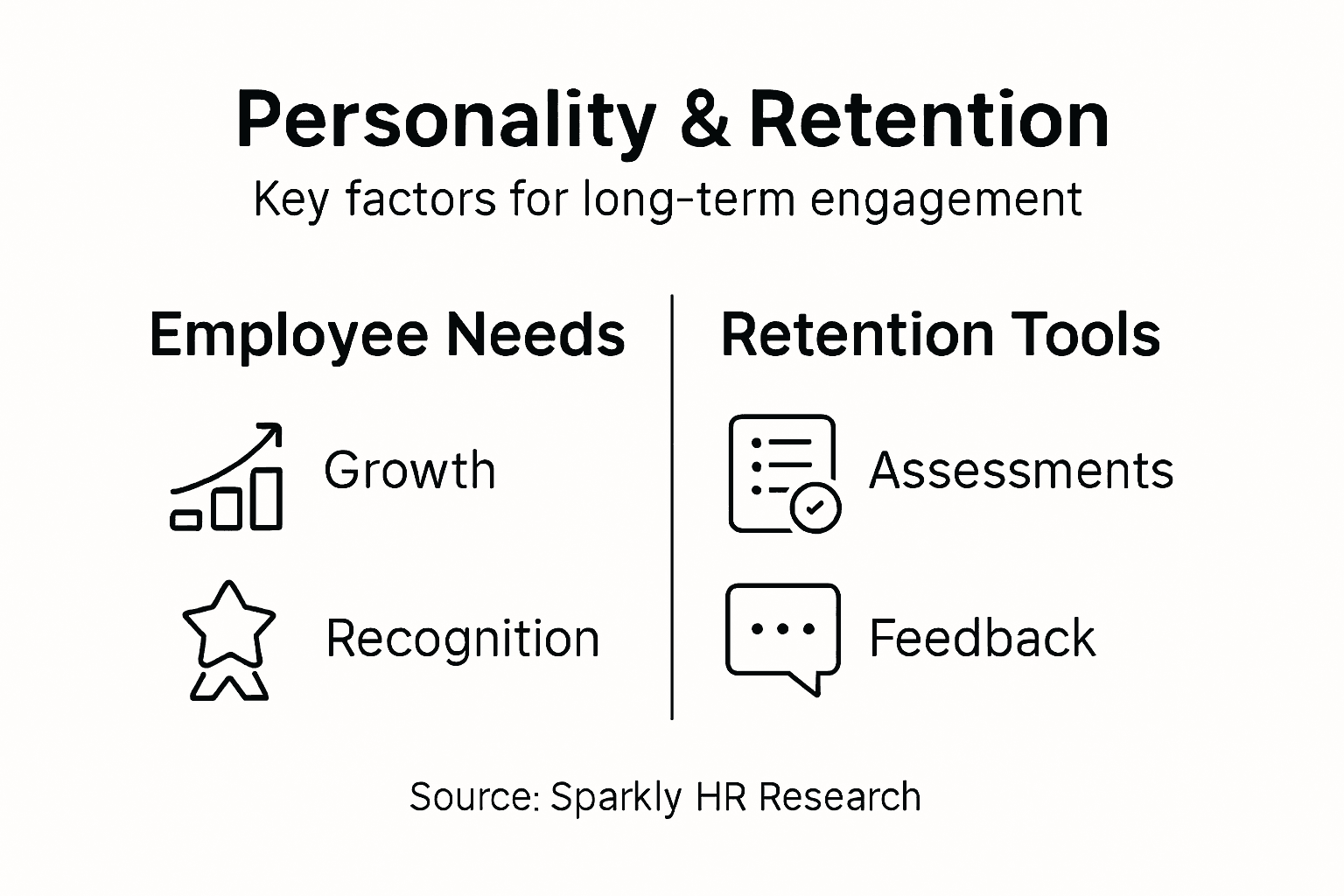
Key misconceptions about talent retention include believing that compensation is the primary retention driver. Research consistently reveals that employees prioritize purpose, professional growth, and positive workplace dynamics over monetary compensation. Organizations must recognize that modern professionals seek environments offering:
- Continuous learning opportunities
- Clear career progression pathways
- Meaningful work aligned with personal values
- Supportive management and collaborative team structures
- Flexibility and autonomy in role execution
Pro tip: Conduct quarterly personality assessments to understand evolving employee motivations and design roles that genuinely match individual strengths and organizational needs.
Variations In Talent Retention Approaches
Talent retention strategies are not one-size-fits-all but rather complex approaches that adapt to organizational contexts, generational differences, and specific workforce dynamics. Talent management strategies vary dramatically across industries, company sizes, and cultural environments, requiring nuanced and sophisticated approaches to workforce engagement.
Generational differences play a critical role in shaping retention approaches. Millennials typically prioritize work-life balance, professional development, and meaningful organizational missions. In contrast, Generation Z professionals focus more intensely on career growth trajectories, job security, and opportunities for rapid skill acquisition. Small and medium enterprises often implement more personalized retention strategies compared to larger corporations, leveraging closer interpersonal relationships and more flexible organizational structures.
Here’s a comparison of generational talent retention priorities:
| Generation | Top Retention Priority | Preferred Engagement Tactic |
|---|---|---|
| Millennials | Work-life balance | Flexible schedules |
| Generation Z | Fast skill growth | Personalized learning plans |
| Baby Boomers | Job security | Long-term benefits programs |
Organizational retention approaches can be categorized into several key variations:
- Cultural Retention Strategies: Focusing on creating inclusive, supportive workplace environments
- Performance-Based Retention: Implementing robust professional development and advancement pathways
- Compensation-Driven Approaches: Designing competitive salary and benefits packages
- Flexibility-Centered Models: Offering remote work, flexible hours, and autonomous work structures
- Personal Growth Frameworks: Providing continuous learning and skill enhancement opportunities
Pro tip: Design retention strategies that blend multiple approaches, recognizing that individual employees respond differently to various engagement techniques.
Personality-Based Assessment For Long-Term Retention
Personality-based assessments represent a transformative approach to talent retention, moving beyond traditional skill evaluation to understand the deeper psychological drivers of employee engagement and organizational fit. Psychometric testing provides critical insights into an individual’s cognitive abilities, emotional intelligence, and intrinsic motivational patterns that traditional recruitment methods often overlook.

Modern organizations are increasingly recognizing that technical skills alone do not guarantee long-term employee retention. Personality assessments help predict job satisfaction, team compatibility, and potential career trajectory by mapping individual traits against specific role requirements and organizational culture. These sophisticated evaluations consider complex psychological dimensions such as communication style, stress tolerance, collaborative tendencies, and personal growth orientation, enabling more strategic talent placement and development.
Key components of effective personality-based retention strategies include:
- Comprehensive Trait Mapping: Identifying precise personality characteristics
- Cultural Alignment Assessment: Matching individual values with organizational mission
- Motivation Pattern Analysis: Understanding intrinsic drivers and career expectations
- Potential Development Tracking: Predicting future growth and adaptation capabilities
- Interpersonal Compatibility Evaluation: Assessing team dynamics and collaboration potential
Pro tip: Implement periodic personality reassessments to track employee evolution and proactively adjust roles, ensuring continued engagement and alignment with organizational objectives.
Integrating Technology And Data-Driven Insights
The landscape of talent retention is experiencing a profound transformation through advanced data integration technologies, which are revolutionizing how organizations approach workforce management. By leveraging machine learning, natural language processing, and predictive analytics, companies can now develop more nuanced, personalized strategies that go beyond traditional human resource practices.
Modern data-driven approaches enable HR professionals to move from reactive to proactive talent management. These sophisticated technologies analyze multiple data points, including performance metrics, psychological assessments, communication patterns, and professional development trajectories. Such comprehensive insights allow organizations to create highly tailored engagement strategies, predict potential turnover risks, and design intervention approaches that address individual employee needs before they become retention challenges.
These technology tools can improve retention outcomes:
| Tool Type | Main Function | Potential Benefit |
|---|---|---|
| Predictive Analytics | Forecast turnover risk | Reduce sudden departures |
| Sentiment Analysis | Gauge team morale | Address issues proactively |
| Custom Learning Platforms | Tailor career development | Foster long-term engagement |
Key technological integration strategies for talent retention include:
- Predictive Analytics: Forecasting employee potential and retention probability
- Machine Learning Models: Identifying complex patterns in workforce behavior
- Real-Time Performance Tracking: Monitoring employee engagement continuously
- Personalized Development Algorithms: Creating custom growth pathways
- Sentiment Analysis Tools: Understanding workplace emotional dynamics
Pro tip: Invest in integrated technology platforms that combine multiple data sources, ensuring a holistic and dynamic approach to understanding workforce potential and engagement.
Avoiding Common Mistakes In Retention Efforts
Retention strategies frequently falter due to fundamental misunderstandings about workforce dynamics and employee expectations. Critical talent retention mistakes often stem from outdated management approaches that fail to recognize the evolving needs of modern professionals.
Organizations consistently underestimate the complexity of employee engagement. Typical errors include treating retention as a purely transactional relationship, neglecting individual professional aspirations, and failing to create adaptive work environments that respond to changing workforce preferences. Successful retention requires a holistic approach that goes beyond compensation, focusing on meaningful professional development, psychological safety, and genuine organizational commitment.
Most prevalent retention mistakes organizations must avoid include:
- Ignoring Individual Career Trajectories: Assuming uniform career expectations
- Inadequate Recognition Systems: Failing to acknowledge consistent performer contributions
- Poor Communication Practices: Creating opacity around organizational changes
- Rigid Work Structure: Resisting flexible working arrangements
- Superficial Feedback Mechanisms: Conducting generic performance reviews
Pro tip: Implement regular, personalized career conversations that map individual professional goals directly to organizational opportunities, creating transparent and mutually beneficial development pathways.
Unlock Lasting Talent Retention with Personality-Driven Insights
The article highlights a crucial challenge faced by organizations today: traditional retention strategies often miss the mark by focusing only on skills or compensation. Employees crave meaningful growth, cultural alignment, and a deep understanding of their intrinsic motivations. Sparkly HR addresses these pain points by offering an innovative SaaS solution that centers on personality assessments rather than just skills. This approach helps HR professionals design jobs, shift team members, and foster engagement tailored to individual strengths and evolving motivations.
By merging humans, AI, psychometric assessments, and human design, Sparkly creates a higher probability data set that elevates talent retention efforts beyond guesswork. If you want to move from transactional retention tactics to a holistic, data-driven model that drives long-term employee engagement explore how Sparkly transforms workforce strategies today.
Discover more details in our Uncategorized – Sparkly HR resources and see why companies trust us to unlock employee potential at Sparkly HR.
Take the bold step to boost retention by integrating personality-first insights. Visit Sparkly HR now and start transforming how you engage and retain your top talent.
Frequently Asked Questions
What are talent retention strategies?
Talent retention strategies are approaches organizations use to maintain critical workforce talent by enhancing engagement, development, and satisfaction within the workplace.
How can personality-based assessments improve employee retention?
Personality-based assessments help organizations understand employee motivations, compatibility with company culture, and potential career trajectories, leading to better job satisfaction and engagement.
What common mistakes do organizations make in their retention efforts?
Common mistakes include ignoring individual career aspirations, inadequate recognition systems, poor communication practices, and rigid work structures that do not adapt to employee needs.
How does technology play a role in talent retention?
Technology, especially through predictive analytics and machine learning, helps organizations analyze employee data to create personalized retention strategies, forecast turnover risks, and ultimately improve employee engagement.